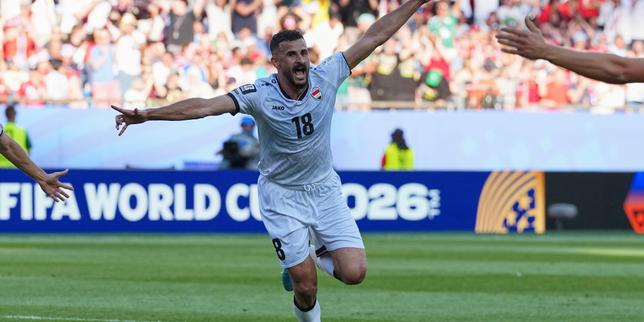
The global football press is currently engaged in its favorite recurring ritual: the premature coronation of a teenager. Following Lamine Yamal’s dazzling performance on the international stage, the consensus has solidified. He said, "I'm here." The media swooned. The narrative was written before the final whistle blew: a savior has arrived to anchor Spanish football for the next fifteen years.
It is a beautiful story. It is also a dangerous delusion.
The breathless coverage of Yamal’s breakthrough ignores a brutal, mathematical reality about the modern football calendar and the physical limitations of the adolescent human body. We are treating a seventeen-year-old’s raw, unvarnished talent as an infinite resource. In reality, every ninety-minute shift we demand from him right now is a withdrawal from a bank account that cannot be replenished.
Spain is not witnessing the birth of a generational era. If history and data are any indication, we are watching the opening chapters of a tragedy we have seen play out too many times before.
The Exploitation of the Adolescent Engine
The lazy analysis focuses entirely on what Yamal can do with the ball at his feet. His body orientation when receiving a pass, his decision-making in the final third, his spatial awareness—all of these are truly elite. But football matches are not played in a vacuum of pure skill. They are played in a high-velocity, high-impact environment that requires physical maturity.
An elite male footballer usually reaches peak physical capacity between the ages of 24 and 28. This is when bone density, muscular development, and kinetic efficiency reach their absolute zenith. When a club or country plays a teenager for 50-plus matches a season, they are forcing an underdeveloped musculoskeletal frame to absorb forces it is simply not equipped to handle.
Consider the sheer volume of competitive minutes. By the time most modern academy graduates turn 20, they have played more top-flight football than legends of the 1990s had played by 23. This is not advancement; it is systemic over-use. The knee joints, the hamstrings, and the growth plates of a seventeen-year-old are still adapting. Forcing them to endure the mechanical stress of playing against grown men twice a week is a form of athletic malpractice.
The Ghost of Pedri and the Failure to Learn
We do not need to look far for a case study. We only need to look across the same Barcelona and Spain dressing rooms.
In the 2020-21 season, a young midfielder named Pedri was hailed exactly like Yamal is today. He was the undisputed engine of both his club and his national team. He played in the Euros. He played in the Olympics. He racked up over 70 competitive appearances in a single calendar year. The football world applauded his stamina and his maturity.
What happened next? His body broke.
The subsequent three years of Pedri's career have been a agonizing cycle of hamstring tears, relapses, and lengthy rehabilitation stints. The explosive bursts of acceleration that defined his early breakthrough vanished, replaced by the cautious movements of a player who knows his muscles are frayed. He went from a permanent fixture to a luxury item, managed with bubble wrap and minutes restrictions.
The exact same pattern claimed Ansu Fati. Gavi suffered an anterior cruciate ligament tear after being pushed relentlessly for both club and country. The Spanish football infrastructure operates on a scorched-earth policy: burn the asset today for immediate gratification, and worry about the medical bills tomorrow.
The Myth of "Maturity"
Pundits love to praise Yamal's "psychological maturity." They claim he plays with the head of a 30-year-old. This psychological praise is often used to justify physical exploitation. Just because a player has the tactical intelligence to navigate a low block does not mean his tendons are ready for a lunging tackle from a veteran center-back.
Let's dissect the concept of load management. True load management isn't resting a player for a dead-rubber group stage match. It is a structural limitation of their seasonal output.
Imagine a scenario where a financial manager tells you that investing all your capital in a highly volatile asset today will guarantee bankruptcy in four years, but will give you a minor return this weekend. You would fire that manager immediately. Yet, international managers consistently burn through young talent because their own job security is measured in weeks, not decades. They need the win now to keep their jobs. The player's long-term health is someone else's problem.
What the Data Actually Tells Us About Early Peak Minutes
Sports science literature from institutions like the basque center for sports science has consistently demonstrated a correlation between excessive minutes before the age of 19 and chronic soft-tissue injuries later in a career.
Players who accumulate more than 3,000 minutes of top-flight football in a single season before their 18th birthday show a statistically significant increase in recurring muscular strains during their early twenties. The body simply cannot repair itself at the rate required when subjected to that level of elite intensity. The micro-tears in muscle fibers become scar tissue. The tendon attachments become inflamed.
Michael Owen broke onto the scene at a similar age, possessing terrifying, electrifying pace. By 25, his hamstrings were ruined, and he spent the remainder of his career adjusting his game to survive his own physical decline. Cesc Fàbregas burst onto the scene at Arsenal at 16, playing massive minutes. By his late twenties, his physical output had cratered, forcing him to adapt into a stationary playmaker because his legs had effectively aged prematurely.
Dismantling the Premise of the Greatness Narrative
The public asks: "Is Lamine Yamal the next Messi?"
This is the wrong question entirely. The right question is: "Will Lamine Yamal be allowed to reach his 23rd birthday without a major surgical intervention?"
Lionel Messi’s early career at Barcelona was handled with far more structural caution than the current regime provides. Frank Rijkaard regularly substituted Messi, brought him off the bench, and protected him from the grueling demands of carrying a team entirely on his shoulders. Furthermore, the physical intensity of European football in 2005 was vastly different from the high-pressing, hyper-athletic, transitional machine that exists in 2026. The distance covered at high intensity by modern wingers has increased by almost 30% over the last two decades. The game is faster, heavier, and more violent.
To expect a teenager to carry the creative burden of a top-tier European nation under these conditions isn't just optimistic—it is mathematically absurd.
The Actionable Pivot: Subverting the Hype
If Spain actually wants to protect the talent they claim to cherish, the approach must change completely. It requires a level of restraint that modern football, with its obsession with clicks and instant results, utterly loathes.
- Implement a Hard Minute Cap: No teenager should exceed 2,500 competitive minutes across all competitions in a single season. Period.
- Enforce Mandatory Off-Seasons: Complete prohibition from participating in back-to-back international tournaments in the same summer. If a player participates in a major senior tournament, they are strictly barred from youth tournaments or Olympic selection.
- Shift the Tactical Burden: Systematically design tactical structures that do not rely on an isolated teenager to win 1v1 duels for 90 minutes. Use them as a tactical weapon, not the entire strategic foundation.
The current celebration of Yamal’s emergence isn't a sign of a healthy football culture. It is an indictment of a system that refuses to protect its children from its own insatiable appetite for entertainment. Celebrate the goals all you want. Praise the dazzling dribbles. But do not pretend you aren't watching a brilliant asset being systematically depreciated in real-time for your amusement.
Stop treating young bodies like infinite engines. The bill always comes due.