The floodlights at the municipal ground do not hum so much as they wheeze. They are tired lights, bolted to rusted pylons that have weathered decades of industrial rain and the particular brand of grey winter that settles over western Germany like a wet wool blanket. Below them, twenty-two men are colliding with the heavy, joyous desperation of people who have day jobs in logistics or masonry.
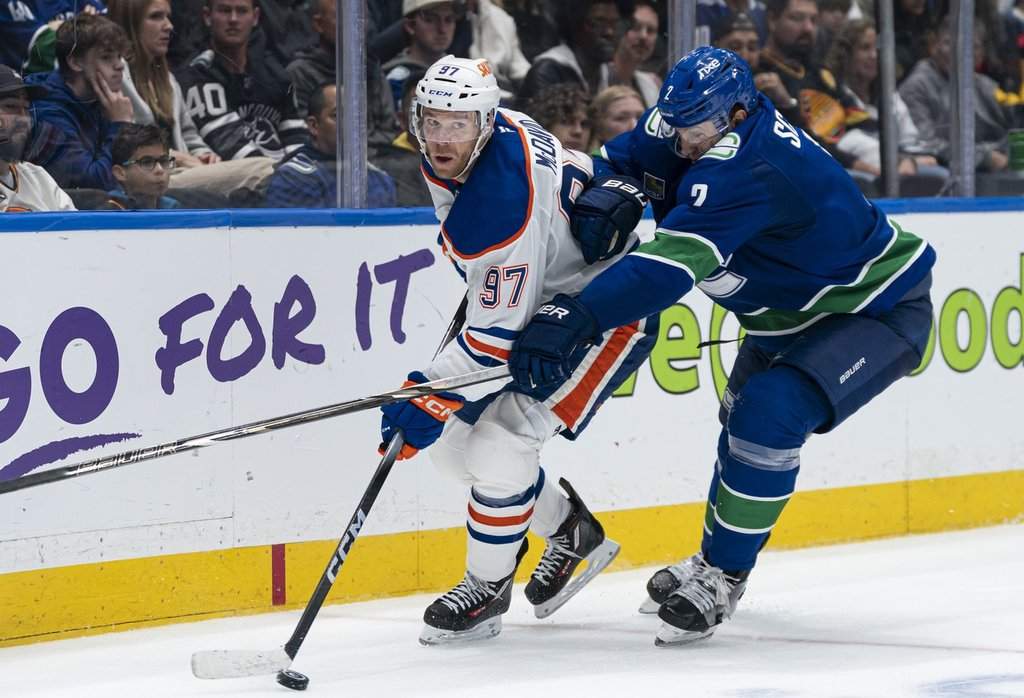
It is the eighty-fourth minute. The score is two to one. When the winger cuts inside, drops his shoulder, and curls a left-footed shot into the far top corner, the sound that erupts from the concrete bank is not polite applause. It is a roar born of bruised shins, missed anniversaries, and forty-five matches played on pitches that double as community dog walks on Sunday mornings. Recently making news in related news: Inside the Edmonton and Vancouver Chaos Factory Why Wild Hockey is a Dangerous Blueprint.
Men embrace who met each other only three months ago at the preseason sausage sizzle. The coach, wearing a zip-up track jacket that has seen better administrations, kicks a water bottle twenty feet into the air.
They have done it. They are champions. More insights on this are detailed by Yahoo Sports.
And then, somewhere in the damp chill of the dugout, an unwritten calculation settles over the celebration. Everyone knows the arithmetic. Next weekend, the medals will be handed out. The beer will flow from oversized plastic jugs. But when August rolls around, the fixtures will look identical to the ones they just finished. They will play the same teams, travel the same fifty-kilometer radius on damp buses, and chase the exact same ghost.
They are the champions who are legally, financially, and structurally barred from going anywhere.
To understand this strange purgatory, you have to unlearn everything American sports taught you about triumph. In North America, winning is an elevator. You win the division, you move up a floor. You win the conference, you climb higher still, until you are breathing the thin, expensive air of the major leagues. There is a sacred architecture to ambition: success equals expansion.
German football, however, is built on a different logic. It is a medieval cathedral of interlocking tiers, regional federations, and ironclad licensing laws. At the very top sits the Bundesliga, a glittering corporate technocracy of sleek stadiums, multi-million-euro television deals, and global brand strategies. At the bottom lies a sprawling, subterranean network of amateur and semi-professional divisions stretching down into the county leagues where the referee is often a retired butcher jogging in a high-visibility vest.
Between these two worlds lies a Great Wall made not of stone, but of balance sheets.
Consider the Regionalliga, the fourth tier of German football, split geographically into five distinct zones. It is a terrifying bridge-zone. On one side, you have historic clubs with professional ambitions and bloated wage bills; on the other, reserve teams of Bundesliga giants and stubborn local outfits whose entire financial strategy relies on the local bakery sponsoring the kit jerseys.
To cross from the fourth tier into the professional third division, the 3. Liga, is to step through a financial airlock that leaves many clubs gasping for oxygen.
The German Football Association, known by its acronym DFB, does not hand out promotions like ribbons at a county fair. To enter the professional ranks, a club must submit to a forensic financial audit that would make a Swiss private banker sweat. They require verifiable bank guarantees, modern stadiums with minimum seating capacities, segregated fan blocks, certified youth academies, and floodlight illumination standards that cost more than an entire village’s annual heating budget.
This is where the dream meets the spreadsheet.
Imagine a club in a post-industrial rust-belt town. Let us call them Rot-Weiss Stahl, though their real-world equivalents answer to names like SV Rödinghausen, Wuppertaler SV, or various reserve squads of giants who find themselves trapped by bureaucratic ceilings. They have a loyal core of six hundred supporters who stand behind the goal with red scarves wrapped tight against the drizzle. They have a striker who works as a forklift driver by day and scores twenty-five goals a year on sheer willpower.
They win their league. They fight through the promotion playoffs—a notoriously brutal two-legged gauntlet that breaks the hearts of regional champions on a regular basis. They survive extra time in front of three thousand screaming lunatics.
And then the auditor’s report arrives in a thick manila envelope.
The club needs five hundred thousand euros in liquid capital by June 1st just to register for the license. Their stadium, built in 1968 with municipal concrete that is slowly turning back into sand, lacks the required number of covered seats. Their youth setup does not employ enough full-time licensed trainers.
The board members, local businessmen who run car dealerships and plumbing firms, look at the figures. They look at their wives. They look at the bank balances.
Promotion does not mean glory. Promotion means bankruptcy.
So, the club makes the most heartbreaking administrative choice in sports. They decline to apply for the license. Or worse, they apply, fail the audit, and are handed a polite letter of rejection from Frankfurt.
They remain champions of a division that offers no escape hatch.
This creates a psychological landscape entirely unique to European football. In most sports, dynasties are built on momentum. In the lower depths of German football, dynasties are sometimes abandoned because success is simply too expensive to maintain.
I once spoke to a veteran midfielder who had won his regional league three times with two different clubs. He was thirty-two, his knees sounded like a bag of dry twigs when he walked down stairs, and he had never played a single minute on television.
"People think winning is an open door," he told me over a lukewarm Pilsner in a clubhouse that smelled faintly of liniment and damp socks. "It is not a door. Sometimes, winning is a wall that you built yourself, and now you have to stare at it."
He wasn't bitter. That is the strange part. The beauty of German amateur and semi-professional football does not reside in the promise of the Champions League anthem or the prospect of an endorsement deal with an energy drink. It resides in the ritual. It lives in the collective groan when a penalty sails over the crossbar, the smell of grilled pork sausages drifting across the pitch at half-time, and the unshakeable camaraderie of men who bleed for a crest that is embroidered by someone’s grandmother on an old sewing machine in the back room of the clubhouse.
When a team is locked out of promotion, a strange alchemy occurs. The stakes paradoxically become purer. Without the corrupting gravity of multi-million-euro broadcast rights and corporate sponsorships, the game shrinks back to its ancient, elemental dimensions. It is eleven against eleven on a patch of grass that is half mud by November.
Yet, the structural tragedy remains. It creates a ceiling on ambition that frustrates the very engine of sport. What happens to a twenty-year-old prodigy who scores forty goals for a team that cannot afford a stadium upgrade? He leaves. He is poached by a wealthier academy or a club with a richer sugar daddy, leaving his hometown heroes behind in the fourth tier to start the cycle anew.
The champions stay behind. They polish trophies made of cheap brass. They hang banners that read Meister 2026 from chain-link fences.
And then, when the autumn leaves begin to rot in the corners of the pitch and the floodlights flicker to life against the early evening dark, they lace up their boots again. They step onto the pitch not because it leads to the promised land, but because there is nowhere else they would rather be, even if the door is permanently bolted from the other side.