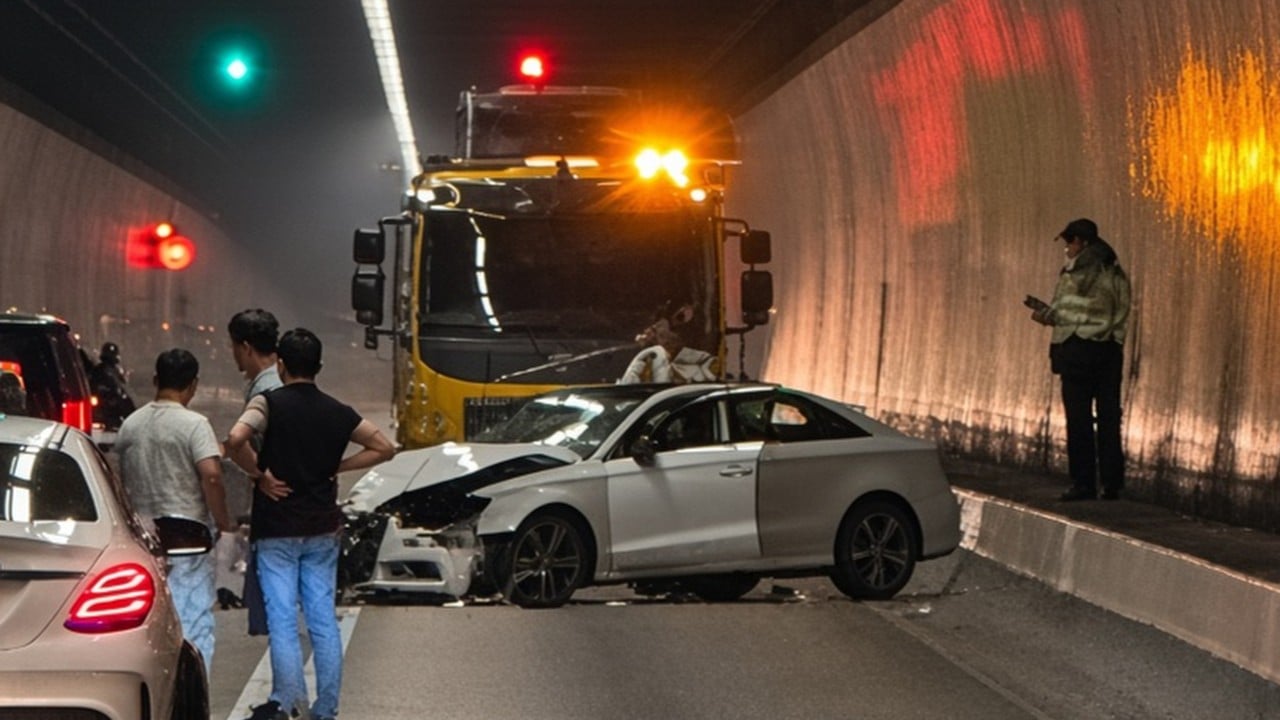
Bad criminals make terrible getaway drivers. A 3.00 AM crash inside the Tate's Cairn Tunnel just blew open another piece of the high-profile HK$7 million airport gold robbery.
If you think you can pull off a multi-million-dollar precious metals heist and slip quietly into the night, reality usually hits you hard. Sometimes, that reality looks like crumpled metal inside a busy tunnel.
The Midnight Crash That Changed Everything
It started with a routine traffic disaster. Two private cars collided during single-tube, two-way maintenance traffic. When local traffic officers arrived to sort out the mess, they didn't just find a fender bender.
The 21-year-old driver of one vehicle was already a wanted man. He drove without a license or third-party insurance. To make matters worse, officers discovered about 66 grams of suspected cocaine alongside e-cigarette cartridges packed with etomidate.
A quick check turned up something much bigger. Investigators tied the young driver directly to the brazen June 18 airport car park robbery, where a courier was slashed with a knife and stripped of a backpack carrying six kilograms of gold bars.
This single accident pushed the total number of arrests in the sprawling case to 18. Suspects now range in age from 17 to 49.
Anatomy of an Inside Job
Gold heists look clean in the movies. In reality, they are messy, desperate operations that rely heavily on insider information.
Back on June 18, a 36-year-old courier flew in from Indonesia hauling precious cargo for a mainland businessman. He walked toward Car Park 3 at Hong Kong International Airport. Three masked attackers materialized out of the shadows, wielding knives. They hacked at his limbs, snatched the heavy backpack, and sped away in a waiting vehicle.
Police knew instantly it wasn't random. Criminals don't just hang around airport terminals hoping someone walks past with millions in bullion. They tracked the flight details, the exact itinerary, and the parking slot.
Investigators quickly zeroed in on an inside connection. Someone close to the operation leaked the movements. While initial police raids scooped up several suspects within 12 hours of the original crime, the web of accomplices spread far wider than expected.
Tracking the Scattered Loot
Cracking a syndicate like this takes patience. Some primary conspirators fled across the border into mainland China almost immediately, thinking international boundaries would shield them.
Hong Kong law enforcement didn't stop at the border. They partnered closely with mainland authorities, sharing intelligence and surveillance footage. Local sweeps recovered getaway cars and discarded weapons in areas like Tsuen Wan.
Yet, lower-level operatives often stay behind, sliding back into old habits, local drug networks, and reckless driving. That complacency leads right back to jail cells.
The 21-year-old driver now faces a brutal lineup of six separate charges. These include conspiracy to rob, drug trafficking, taking a conveyance without authority, driving without a license, lacking insurance, and careless driving. He goes straight to the Kowloon City Magistrates' Courts.
Why High-Value Courier Crimes Keep Failing
Smuggling physical wealth through commercial transit hubs creates massive security risks. Couriers carrying unsecured bullion make prime targets for organized crime syndicates and triad-linked street thugs.
When millions move in a simple backpack, word travels fast. Greed destroys criminal loyalty. Once the police start peeling back layers, informants talk, associates panic, and street-level mistakes compound into massive institutional failures for the gang.
If you are tracking international cargo security, the lesson is clear. Human vulnerability remains the weakest link in any logistical chain. No amount of operational planning survives a reckless driver crashing inside a tunnel at three in the morning.