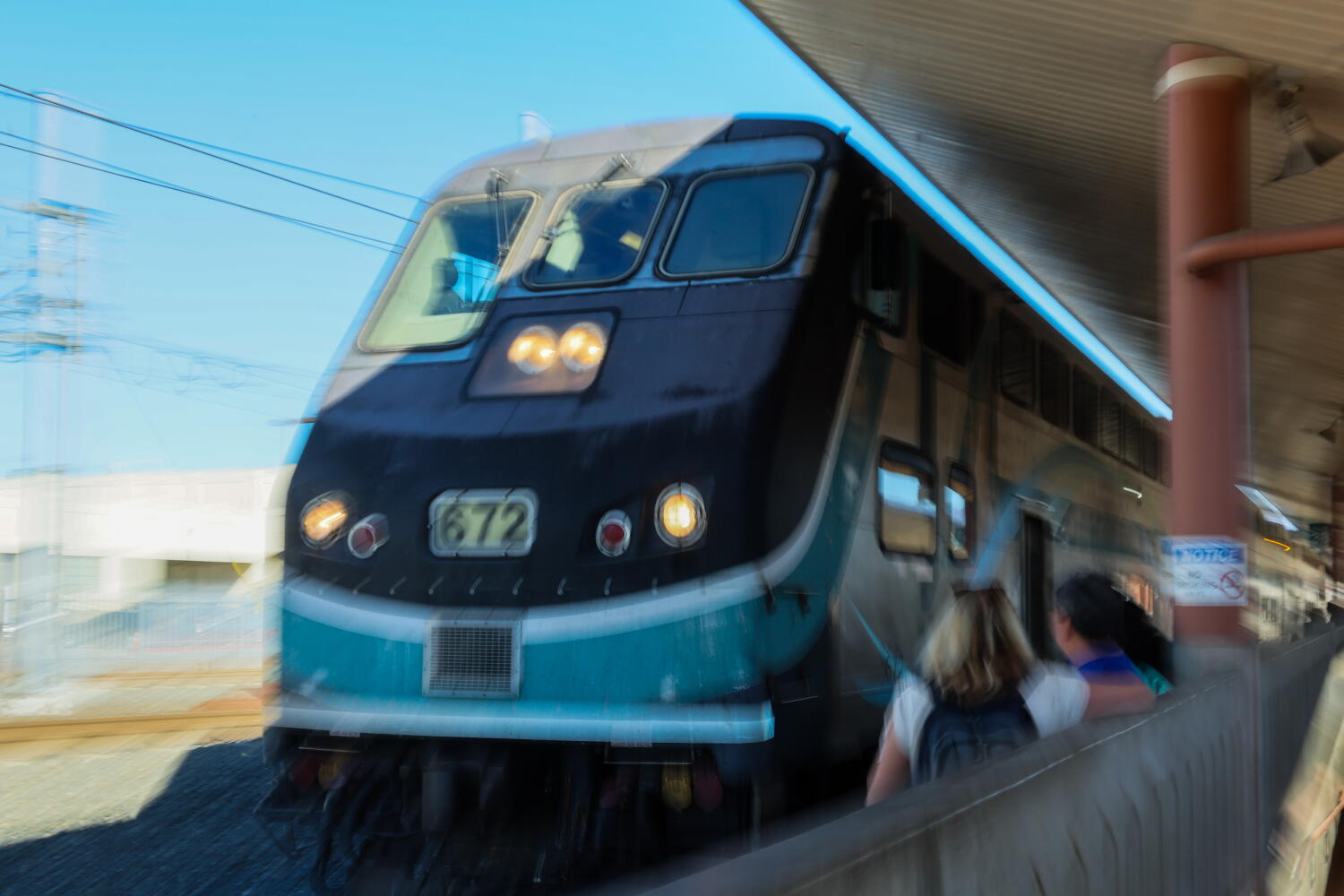
The platform smells faintly of stale rain and diesel exhaust at six in the morning. Before the sun has managed to burn through the coastal marine layer, the crowd gathers. They wear sensible shoes and carry travel-stained backpacks. They hold insulated travel mugs like hand warmers against the morning chill. Everyone is quiet. This is not the companionable silence of a Sunday morning park. It is the cautious, defensive quiet of people calculating fractions in their heads before the day has even properly begun.
Then the digital sign above the tracks clicks over, and with it, the quiet breaks.
Sticker shock is a cold, sharp thing. It does not arrive with fanfare. It appears as an extra digit on a monthly pass, an unexpected surcharge on a tapped-out transit card, a quiet recalculation of household mathematics. For the riders of Metrolink, the Southern California commuter rail network spanning miles of concrete, freeway corridors, and sprawling suburban arteries, the latest fare increase has landed like a physical blow.
Everyone is struggling. That phrase has become the baseline frequency of modern urban life, hummed beneath the clatter of railcars and whispered across kitchen tables where bills are laid out like game pieces. But a fare increase on a commuter train is not merely an adjustment in the price of a ticket. It is an alteration of gravity for thousands of working households. It asks a simple, brutal question: How much of your labor is consumed just getting you to the place where you perform your labor?
Consider a hypothetical rider named Elena. Elena lives forty miles inland from downtown Los Angeles, in a tract home where the lawn has long since given way to drought-tolerant gravel. Every weekday morning at five-fifteen, she drives her sedan to the nearest Metrolink station, feeds a plastic slip of paper into the parking meter, and boards the train. For forty-five minutes, the train tracks lift her above the gridlock of the interstate, bypassing the shimmering expanse of brake lights on the Golden State Freeway. During those forty-five minutes, she closes her eyes, answers early emails on her phone, or simply stares out the window at the gray concrete wash channels sliding past.
It is her transition time. It is the breathing room between the demands of home and the demands of an office that pays her enough to live forty miles away, but not enough to live four.
When fares rise, that breathing room becomes a luxury line item.
To understand why this stings so deeply, you have to look at the geometry of modern survival. Wages have crawled upward like ivy on a brick wall, tethered to inflation formulas that rarely reflect the actual cost of groceries, utilities, and shelter. Meanwhile, transportation costs have behaved like rockets. When a regional transit agency raises fares, officials point to the unyielding pressures of operation: rising diesel costs, aging rolling stock, deferred maintenance schedules, and the post-pandemic evaporation of federal relief funds. The math from their perspective is stark. If the system costs more to run, the people who ride it must pay more to keep it moving.
Fair enough. On a spreadsheet, the logic is airtight.
But spreadsheets do not feel the sting of a thirty-dollar monthly increase when your grocery budget is already measured down to the last carton of eggs. They do not account for the psychological calculus of a commuter looking at their bank balance and wondering if it makes more sense to surrender to the freeway—to trade the sanity of the train for the soul-crushing purgatory of bumper-to-bumper traffic on Interstate 5.
This is the hidden danger of raising the price of public transit. It treats a public good like a boutique commodity.
Transit systems are the circulatory system of a metropolitan region. When cholesterol clogs an artery, the heart works harder until it stumbles. When fares rise past the threshold of affordability, riders do not simply absorb the cost; they bleed away. Some shift to cars, adding their vehicles to the very highway congestion that regional planners spent billions trying to alleviate. Others sacrifice elsewhere, cutting back on fresh produce, skipping dental checkups, or delaying car repairs until a faulty brake pad becomes an emergency.
The conversation around transit funding is usually buried beneath technical jargon. We hear about enterprise funds, farebox recovery ratios, capital improvement grants, and operational subsidies. These terms are linguistic Kevlar. They protect decision-makers from the raw, unvarnished human reality of what they are discussing.
Let us strip away the jargon. A fare increase is a decision about who gets to participate in the economic life of the city.
For decades, the promise of commuter rail in Southern California was built on a grand bargain. Come live in the suburbs where housing is somewhat within reach, and we will build a steel bridge that carries you to the center of opportunity without destroying your car or your nerves. It was an ambitious attempt to tame a sprawling desert metropolis defined by asphalt and exhaust. It was supposed to be the great equalizer, a clean, efficient alternative to the brutalist reality of the freeway commute.
When the price of that bridge goes up, the bargain fractures.
The people bearing the brunt of these increases are rarely corporate executives who can expense their travel or remote workers who log in from minimalist home offices overlooking the ocean. They are teachers, administrative assistants, nurses, logistics coordinators, and municipal workers. They are the structural columns of the regional economy. Without them, downtown office towers are hollow shells, hospitals lack staff, and schools stall.
When you make it harder for them to reach their posts, you put sand in the gears of the entire region.
There is a profound irony in how we fund our transit infrastructure. We treat roads and highways as public infrastructure, paid for through broad-based taxes because we all benefit from moving goods and people. We accept that an interstate highway does not need to turn a profit on every vehicle that passes over it. Yet, we subject mass transit—the most space-efficient, environmentally sustainable way to move masses of human beings—to the tyranny of the farebox. We demand that trains pay for themselves through the pockets of the people riding them, as if they were private airline companies rather than public lifelines.
When Metrolink riders look at the new fare schedules, they are not just seeing numbers go up. They are seeing a fundamental shift in priorities. They are watching a society tell them that the burden of a fractured fiscal system rests squarely on their shoulders.
The train still arrives on time, mostly. The diesel engines still rumble to life in the pre-dawn darkness. The conductors still punch tickets with practiced, rhythmic efficiency. But the atmosphere inside the passenger cars has shifted. There is a heavier weight in the air now.
We talk endlessly about building sustainable cities, about reducing carbon footprints, about creating resilient communities that can weather economic storms. But resilience is not just an engineering term for concrete and steel. It is a human quality. It is the capacity of ordinary people to absorb shocks without breaking.
When the cost of simply getting to work becomes an act of financial gymnastics, we are eroding that resilience. We are testing the limits of how much weight a working life can carry before something snaps.
The train rolls past a row of warehouses glowing under sodium-vapor lights, picking up speed as it clears the suburban fringe and hits the open corridor. Inside, a woman in a gray wool coat looks down at her phone, her thumb scrolling slowly through her banking app, checking numbers that refuse to change. Outside, the first pale streak of daylight cuts across the smoggy horizon, indifferent to the math, indifferent to the struggle, waiting for another day to begin.


