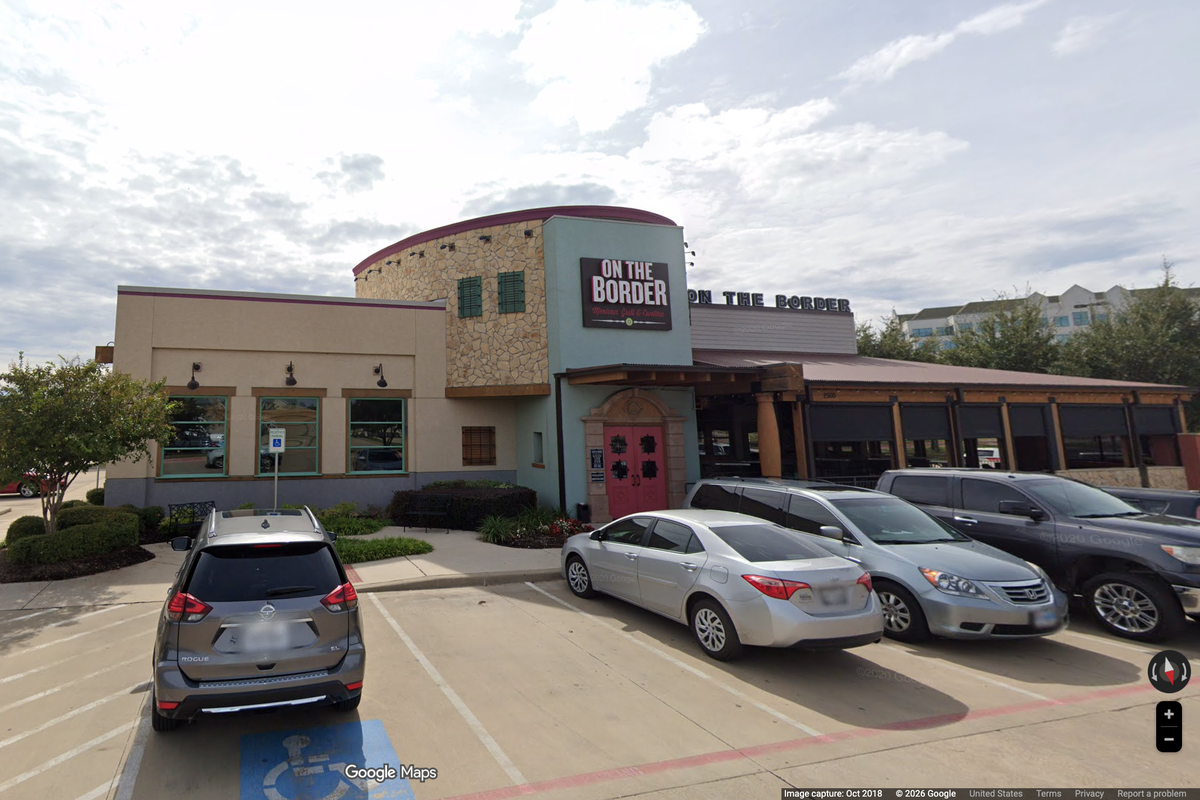
The financial press loves a good autopsy. When a massive Tex-Mex chain abruptly shutters every single one of its company-owned locations, the headlines write themselves. Analysts line up to blame inflation, rising labor costs, or changing consumer tastes. They treat the corporate retreat as an admission of defeat.
They are looking at the balance sheet upside down.
In modern restaurant economics, holding onto massive portfolios of corporate-owned real estate isn't a sign of strength. It is an anchor. The blanket closure of company-operated stores while maintaining a franchised network isn't a bankruptcy pre-game show. It is a aggressive, calculated capital reallocation strategy that separate the elite operators from the sentimental hobbyists.
The lazy consensus screams that the brand is dying. The reality is that the brand is finally shedding its dead weight.
The Mirage of the Corporate Flagship
For decades, the restaurant industry operated under a stale dogma: corporate-owned stores demonstrate skin in the game. Wall Street looked favorably on companies that built, staffed, and managed their own units because it meant they captured 100% of the top-line revenue.
I have watched executive teams blow through tens of millions of dollars in venture backing trying to maintain this illusion. They build gleaming, company-owned flagship locations in tier-one markets, convincing themselves that high volume equals high profitability.
It is a lie. Top-line revenue is a vanity metric.
When a corporate entity owns the restaurant, it inherits every piece of operational friction. It bears the brunt of localized supply chain disruptions. It negotiates lease renewals with predatory commercial landlords. It takes the direct hit when local minimum wage laws shift overnight.
More importantly, corporate-owned stores suffer from the classic principal-agent problem. A regional manager drawing a fixed salary with a modest bonus structure will never manage food waste, labor scheduling, or local marketing with the same ferocious intensity as an owner-operator whose life savings are tied to the daily profit and loss statement.
When a chain axes its corporate stores, it is not abandoning the market. It is abandoning the role of the operator.
The Franchise Pivot Is Not a Failure
To understand why this move is brilliant, you have to understand the stark difference between the restaurant business and the franchising business. They are entirely separate industries.
- The Restaurant Business: Low margins, high capital expenditure, brutal labor liabilities, and constant operational firefighting.
- The Franchising Business: High margins, asset-light, predictable royalty streams, and localized risk mitigation.
When a Tex-Mex chain or any fast-casual giant purges its corporate footprint, it is executing a pure play conversion to a 100% franchised model.
Consider the financial mechanics. In a corporate-owned model, the parent company needs to invest roughly $1.5 million to $2.5 million in capital expenditure just to open a single doors. If that unit underperforms due to a bad demographic shift, the corporate parent eats the losses and the depreciation.
In a franchised model, the franchisee hooks up the capital. They take the real estate risk. The parent company collects a steady 4% to 6% royalty fee on gross sales, alongside marketing fund contributions and technology fees.
The margins look completely different. A typical corporate-owned restaurant operates on a 15% to 18% restaurant-level EBITDA margin if it is run exceptionally well. A pure-play franchisor, however, frequently enjoys corporate EBITDA margins exceeding 40% or 50%.
By shutting down company-owned units, leadership removes volatile, low-margin revenue from the books and replaces it with high-margin, predictable royalty revenue. The company’s stock valuation multiple instantly shifts from that of a capital-intensive retailer to that of a high-growth intellectual property licensor.
Dismantling the Panic Queries
When these closures hit the news cycle, the public and amateur investors ask the wrong questions. Let's look at the flawed premises driving the panic.
If the food was good, wouldn't the stores stay open?
This question fundamentally misunderstands restaurant unit economics. A location can have a line wrapped around the block and still lose money. If the lease was signed at the peak of the commercial real estate bubble, or if local property taxes spiked by 40%, the unit is economically unviable regardless of how many burritos it rolls. Closing the store isn't a reflection of the product; it is a reflection of the toxic lease structure.
Aren't they hurting the brand by abandoning loyal customers?
Customers are loyal to the brand experience, not the corporate entity structure behind it. If a corporate location closes on Monday and a well-capitalized franchise group opens three miles away six months later, the consumer does not care who signs the paychecks. They care about speed, accuracy, and taste. Shifting the footprint to local operators who actually understand the nuances of their specific neighborhoods yields a better customer experience than a detached corporate office trying to micro-manage from a thousand miles away.
Isn't this just a sign that fast-casual dining is dead?
Fast-casual isn't dead; the traditional corporate-heavy operating model is. Data from industry benchmarks like Black Box Intelligence consistently shows that brands utilizing asset-light strategies recover faster from economic downturns. They do not have their capital locked up in underperforming dirt. They can pivot their menu, upgrade their tech stack, and deploy nationwide marketing campaigns while the franchisees handle the ground war.
The Brutal Tradeoff of the Asset-Light Strategy
Let’s be entirely transparent: this strategy is not without blood. The contrarian view demands acknowledging the severe downside risks of a total corporate retreat.
When you eliminate company-owned stores, you lose your primary testing ground.
Historically, corporate stores serve as the R&D labs for a brand. If you want to test a new point-of-sale system, a streamlined kitchen layout, or an unproven menu item, you deploy it in your corporate units first. You eat the operational chaos so your franchisees don't have to.
Without corporate stores, you are forced to experiment on your franchisees. This inevitably creates friction. Independent operators resist changes that threaten their short-term cash flow, making system-wide innovation significantly slower and more political. You trade operational control for financial insulation.
Furthermore, you become entirely dependent on the quality of your franchise pipeline. If you sell territories to under-capitalized operators or private equity roll-ups looking for a quick flip, the brand equity will erode rapidly.
But in an economic environment defined by volatile interest rates and unpredictable consumer spending, financial insulation wins every single time.
Stop Misinterpreting Retrenchment for Ruin
The next time you see a legacy brand shuttering dozens of corporate locations, stop joining the chorus of doom-mongers.
The corporate restaurant footprint is an antiquated relic of a time when capital was cheap and scaling required physical ownership. Today, value lies in intellectual property, proprietary supply chains, and digital infrastructure.
Closing corporate stores isn't a funeral. It is a corporate metamorphosis. The brand is shedding its heavy, capital-intensive shell to emerge as a lean, high-margin asset-light machine designed to extract maximum value from royalties while leaving the operational headaches to the local operators.
If you want to invest in real estate and labor management, buy a single restaurant. If you want to build a resilient, scalable empire, you build a brand and get out of the kitchen.