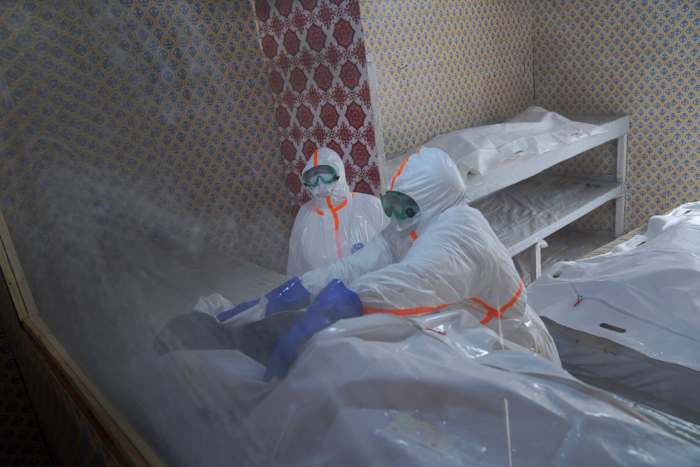
The numbers coming out of eastern Congo are terrifying. We are looking at the fastest-growing Ebola outbreak on record, and it's breaking containment lines faster than health agencies can respond.
Africa's top health body issued a blunt warning this week: the epidemic is no longer contained to its original zone. While cases are finally dropping slightly in the original Ituri province epicenter, they are exploding in neighboring North Kivu and Haut-Uele.
Government figures pin the total tally at over 6,800 cases and more than 3,300 deaths. Behind those raw numbers is a brutal reality of a public health infrastructure buckling under severe pressure. If you think this is just a localized regional issue, you are missing the bigger picture.
The Reality on the Ground in Eastern Congo
Fighting an aggressive viral pathogen is hard enough under normal conditions. In eastern Congo, health workers are battling an invisible enemy while dodging active conflict zones.
Decades of armed conflict have left the region fractured. Right now, active clashes between government forces and M23 rebels—who control parts of North Kivu, including Goma—are completely hamstringing medical access. You can't run contact tracing when humanitarian corridors are closed and medical teams are locked out of hot zones.
Displacement camps are turning into ticking time bombs. Thousands of people live crammed together in squalid conditions with minimal clean water or sanitation. When a virus like this enters a crowded camp, transmission rates go vertical in days.
The Nightmare of the Bundibugyo Strain
This isn't the standard Zaire strain of Ebola most people remember from previous outbreaks. This crisis involves the rare Bundibugyo virus.
That distinction matters immensely for medical intervention.
- The strain was missed for weeks because local labs lacked specific testing capabilities.
- Standard vaccines used in past outbreaks didn't have immediate cross-protection ready out of the box.
- Clinical trials for specific treatments are scrambling to catch up to a virus that has already infected thousands.
Authorities have started rolling out the Ervebo vaccine for frontline workers, relying on cross-reactive protection while new clinical trials test specific alternatives in Tshopo and Haut-Uele. But with only about 70,000 doses delivered to Congo so far, supply shortages remain a massive bottleneck.
Why This Outbreak Threatens Global Health Stability
The World Health Organization notes this epidemic is tracking dangerously close to the historic West Africa crisis from a decade ago that killed over 11,000 people.
Human movement is relentless. Traders, refugees, and families fleeing violence cross provincial and national borders daily. A handful of cases have already bled over into Uganda, and the Africa CDC has flagged multiple surrounding countries as high-risk.
When detection systems fail early on—allowing a virus to circulate silently for months before confirmation—containment becomes an uphill battle of pure damage control. Health workers are dealing with a striking health workers' strike, profound community mistrust, and severe funding shortages.
Containing the spread requires immediate, unrestricted safe access corridors, massive logistical backing, and aggressive community engagement. Without a dramatic shift in security and resource deployment on the ground, this outbreak will continue to outpace every defensive line thrown in its path.
DRC Ebola Outbreak Could Be 3 Times Larger
This video provides an in-depth look at how the unfolding Ebola crisis in the Democratic Republic of the Congo is vastly outstripping official projections and why health authorities warn true infection numbers could be significantly higher.