The Atlantic does not care about borders. It rolls in with a dull, heavy roar, slamming against the black volcanic rocks of the northern African coast before pulling back, dragging dark sand and salt into the deep. Standing on the breakwater in Ceuta, the salt spray hits your lips before you even realize you are holding your breath.
Look one way, and you see the steep hills of Morocco, rising in shades of dusty olive and sun-bleached clay. Look the other, and you see Europe. A European Union flag snaps stiffly in the wind atop a concrete outpost, its blue field and circle of gold stars looking strangely fragile against the immense, indifferent expanse of the sea.
Ceuta is a geographic paradox. It is a scrap of Spain pinned to the northern edge of Morocco. Barely seven square miles of asphalt, apartment blocks, and military history. For centuries, it has been a doorway. Today, it has become a pressure valve.
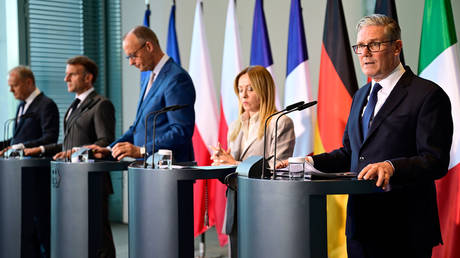
When the news breaks that Brussels is calling an emergency meeting over the sudden surge of migrant crossings here, cable news anchors in distant capitals furrow their brows. They speak in crisp, bureaucratic acronyms. They throw around numbers like cargo manifests. Inflows. Border infrastructure. Diplomatic levers.
They are miles away from the damp chill of the border fence at Tarajal.
Consider what happens long before a politician picks up a phone in Belgium.
Imagine a young man named Bilal. He is twenty-four, and his hands are permanently calloused from mixing mortar on construction sites outside Casablanca. For three years, he watched his wages shrink while the cost of bread, fuel, and medicine climbed. He didn't want to leave. Nobody wants to leave. You leave when staying becomes a slow form of suffocation.
Bilal’s journey to the fence wasn't a sudden impulse. It was a calculus born of desperation. He walked, hitched rides in the back of onion trucks, and slept under olive trees until he reached the rugged hills overlooking this tiny Spanish enclave.
To Bilal, that double-layered fence topped with razor wire is not a political talking point. It is a physical monster made of galvanized steel and mesh, engineered to keep him out. When the emergency meetings happen in air-conditioned rooms in Brussels, Bilal is crouched in a thicket of scrub brush three miles away, waiting for a break in the thermal cameras, shivering as the coastal fog rolls in.
That is the human element that gets lost in the transcripts.
The European Union operates on a grand scale. It is a continent-sized administrative machine designed to harmonize trade, regulate digital privacy, and ensure that olive oil standards are identical from Lisbon to Helsinki. But machinery struggles with human tides.
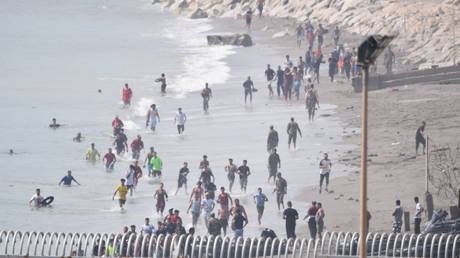
When hundreds of people swim around the maritime breakwaters or rush the border perimeters in coordinated surges, the machine stutters. Emergency meetings are called not because European leaders woke up cruel, but because they are caught off guard by the sheer, relentless velocity of human need.
Geography is destiny. Because Ceuta and its sister enclave Melilla share the only land borders between the European Union and the African continent, they carry an absurdly disproportionate weight. They are tiny keys trying to lock a massive door against a rising tide.
When Brussels convenes these high-level summits, the conversation inevitably splits into two opposing languages.
One side speaks the language of security. They talk about reinforcements, Frontex deployments, motion sensors, and stronger deterrents. They view the border as a dam holding back a flood. If the water rises, you build the wall higher. It is a clean, mechanical logic that appeals to voters who fear chaos.
The other side speaks the language of humanitarian duty. They talk about international law, the right to seek asylum, and the moral stain of turning away the desperate. They view the border not as a dam, but as a sieve, and argue that focusing solely on walls only redirects human traffic into deadlier routes—further out to sea, deeper into the unforgiving desert.
Both sides are trapped in a reactive loop. Neither the wall nor the lifeboat solves the underlying equation.
Why do people keep coming? The answer is etched into the dry soil of the Sahel, the inflation rates of North African markets, and the quiet despair of youth unemployment rates hovering near fifty percent in parts of the developing world. As long as the gap in human dignity and survival between the global North and South remains an ocean wide, no amount of razor wire will hold back the tide. Steel can deter, but it cannot persuade.
Down at the border fence today, the wind is dying down. The sun dips toward the Mediterranean, turning the water the bruised purple of a plum.
A Spanish Guardia Civil patrol vehicle crawls slowly along the dirt track beside the barrier. The officers inside look tired. They are ordinary men and women wearing Kevlar vests in the stifling heat, caught between the impossible orders of remote politicians and the raw, pleading eyes of people they have to push back or pull out of the surf.
They don't talk about geopolitics. They talk about their shift schedules and whether the canteen is still open.
In Brussels, the diplomats are pouring another round of mineral water into crystal glasses. They are drafting conclusions, allocating emergency funds, and drafting joint communiqués that will be praised for their unity or criticized for their toothlessness by tomorrow morning.
Back in the thicket, Bilal pulls his thin jacket tighter around his shoulders. He listens to the crunch of gravel as the patrol truck passes. He looks up at the lights of the city glowing faintly against the dark ridge of the hills.
The meeting in Europe will end. The press releases will be published. But the tide will still come in tomorrow, cold and heavy, washing against the stones of a continent that has yet to figure out how to look its own reflection in the water.