The air in Hanoi carries a particular kind of weight. It is thick with the scent of roasting coffee, damp earth, and the perpetual, high-pitched buzz of millions of motorbikes weaving through streets that refuse to stay still. If you stand on a balcony in the Tay Ho district long enough, you begin to understand that Vietnam is a place in a perpetual sprint. People are building their lives in real-time, stacking bricks on top of ambitions, racing against a horizon that moves faster than the asphalt can dry.
For decades, the engine driving a massive share of that asphalt and ambition has been Vingroup. Also making news lately: Why Bank of Japan Normalisation Will Keep Rattling Markets.
To call Vingroup a conglomerate is to call the ocean a puddle. They build your apartment, sell you your car, check you into a hotel, educate your children, and staff the hospital where you were born. When you walk through a high-end shopping mall in Ho Chi Minh City or step into an ultra-modern residential tower in Hanoi, you are walking on Vingroup concrete. They became synonymous with the domestic rise of a nation shaking off the heavy shadows of the twentieth century. They were the architects of the local dream.
Then, the music slowed. More details into this topic are detailed by Harvard Business Review.
Domestic property markets tightened. Regulations grew teeth. Consumers, facing global economic jitters, began to hold onto their dong a little tighter. The home turf, once an endless pasture of rising towers and booming sales, started to plateau.
What does a giant do when the room gets too small?
It breaks the glass.
The Architecture of Ambition
To understand what Vingroup is doing right now by charging onto the global stage—spearheaded by its high-stakes electric vehicle bet, VinFast—we have to look at how empires actually grow. They do not grow by playing it safe. They grow by stepping off cliffs and building wings on the way down.
Imagine sitting in a boardroom in Hanoi a few years ago. The charts are green, but the slope is flattening. The executives know a simple truth: if you stay confined within your borders, you eventually eat your own tail. The domestic market has limits. Gravity applies to everyone.
So, they looked outward. Specifically, they looked toward the glaring lights of Western highways and the fiercely contested battleground of the global electric vehicle market.
It sounds audacious. Almost absurd. A real estate and retail giant from Southeast Asia deciding to build electric cars to rival legacy automakers in the United States and Europe. Critics scoffed. Skeptics pointed to the graveyard of automotive startups that burned through billions of dollars of investor cash before producing anything more than a glossy brochure.
Yet, momentum has a strange way of defying the odds.
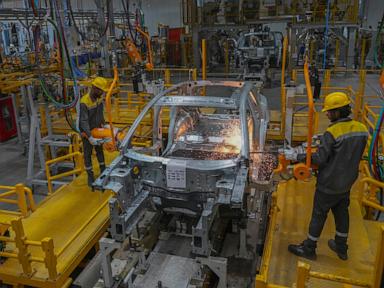
Vingroup poured staggering capital into an ultra-modern manufacturing plant in Hai Phong, turning swampy coastal land into a robotic symphony of sparks and steel in record time. They hired veterans from global automotive giants. They designed cars with Italian styling houses. They did not just want to export products; they wanted to export proof. Proof that a Vietnamese brand could stand shoulder-to-shoulder with companies that have been turning wrenches for a century.
Crossing the Ocean
Building a car is hard. Selling it in a foreign country where nobody knows your name is an entirely different kind of warfare.
Ask anyone who has tried to launch a consumer brand in the United States from scratch. The American consumer is notoriously fickle, brand-loyal, and saturated with choices. When VinFast ships rolled off cargo vessels and arrived at ports in California, they were met with a mixture of curiosity and deep skepticism. Early reviews were rough. Software glitches, stiff rides, range anxieties—the teething pains of a newborn manufacturer playing in the major leagues were laid bare for automotive journalists to dissect.
This is where the human element matters most.
Behind the corporate press releases and the glossy stock tickers are engineers who left their families in Hanoi to live out of hotels in Los Angeles and Frankfurt. They are pulling fourteen-hour days, rewriting code to fix dashboard responsiveness, listening to angry customer feedback, and iterating faster than traditional corporate bureaucracies ever thought possible.
They are absorbing the hits because they know what is at stake. This is not just a corporate balance sheet expansion. This is national pride dressed up in sheet metal.
When a Vietnamese company competes on global soil, every vehicle sold is an ambassador. Every charging station installed is a stake in the ground. It signals a shift in the global economic geography. For generations, developing nations were viewed merely as low-cost manufacturing basements for Western and East Asian brands. Brands like Vingroup are attempting to flip the script, proving that high-end engineering, design, and innovation can originate from the very countries that used to only assemble parts.
The Cost of the Leap
Expansion of this magnitude is not a fairy tale. It is an expensive, bruising gamble.
Building out international dealership networks, absorbing steep R&D costs for electric vehicle technology, and weathering a cooling domestic real estate market creates a severe financial pinch. The cash burn has been immense. Observers frequently wonder if the parent company bit off more than it can chew, spreading its capital too thin across multiple continents while its domestic bread-and-butter faces headwinds.
Markets hate uncertainty. Stock prices fluctuate. Pundits issue warnings.
Yet, history rarely rewards the timid. The giants that survive decades of disruption are the ones willing to cannibalize their own comfort zones for the sake of future relevance. Vingroup’s pivot outward is an admission that the old playbook—relying solely on domestic property development—has an expiration date. Vietnam is urbanizing rapidly, but no market grows to the sky.
Consider the alternative. They could have stayed home, protected their domestic margins, and slowly watched their growth curdle into stagnation. Instead, they chose the arena. They chose the brutal, unforgiving global market where nobody cares about your past achievements, only whether your product works today.
The Road Ahead
Night falls quickly in Hanoi. The neon signs of Vincom malls flick on, casting long, colorful reflections over the wet pavement where motorbikes roar past in an unbroken river of light. Inside those buildings, families eat dinner, teenagers shop, and life moves with fierce, unyielding energy.
Thousands of miles away, on a quiet suburban street in North America, a sleek electric SUV sits in a driveway, quietly charging overnight. Its badge bears the stylized V of a company that started out building apartments in a rapidly changing socialist-market economy and ended up challenging the world.
The transition is messy. The road is full of potholes. The financial ledgers are scarred with heavy investments that may take years to yield fruit. But the direction is set.
The concrete dragon has left its island. It is testing its wings against a global wind, and the sky is wider than it has ever been.