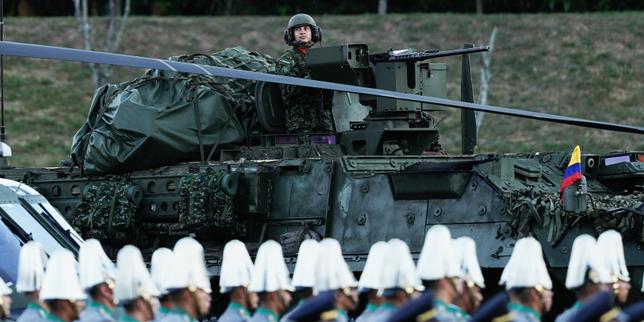
The headlines celebrate a clean statistic. Six members of armed groups killed during the inaugural military operations of a new presidency. The press calls it a decisive signal of strength, an immediate display of security governance, a return to order. It is none of those things. It is political theater dressed up as progress, and everyone cheering from the sidelines is falling for the oldest trick in the book of Latin American counterinsurgency.
I have watched analysts and pundits fawn over these early casualty figures for decades, treating body counts as a proxy for operational success. It is a fatal error. Counting dead insurgents tells you nothing about the health of a state, the strength of an economy, or the durability of peace. It tells you only that a firefight happened.
The Fallacy of the First Strike
Every incoming administration feels the immediate itch to prove its machismo. The moment a new leader takes office, the pressure mounts from editorial boards, business elites, and international partners to drop the hammer. Show you are in control. Show you won't tolerate armed actors.
So the military obliges. They launch high-profile raids, rack up a handful of casualties in remote jungle corridors, and hand the communications team a shiny press release. The lazy consensus is that these operations break momentum and shatter rebel morale.
That is nonsense.
Armed groups in Colombia—whether dissidents, cartels, or residual factions—do not run like traditional corporate hierarchies where a lost foot soldier stalls the business model. They are distributed, resilient networks funded by transnational cocaine markets, illegal mining, and extortion. Take out six members in a jungle skirmish, and the recruitment pipeline replaces them by sundown. The local commander simply promotes a teenager from the periphery, adjusts the logistics route, and moves on.
By treating tactical body counts as strategic victories, the state mistakes motion for progress.
Why the Wrong Question Dominates the Debate
Scroll through the standard coverage and you will find a chorus of analysts asking the wrong question: How aggressive will the new administration's security policy be?
It is a useless inquiry. It assumes that more aggression automatically yields less violence. Decades of data from Plan Colombia onward prove the opposite. High-intensity kinetic operations often accelerate displacement, trigger retaliatory bombings against civilian infrastructure, and force fragmented groups to splinter into even more unpredictable, predatory criminal cells.
The real question nobody wants to ask is this: Can the state hold territory once the troops clear out?
Killing six insurgents in a dawn raid is easy. Establishing a functioning municipal presence, building all-weather roads, securing land titles, and deploying honest civil servants who do not take bribes from local mafias—that is the work that actually breaks insurgent control. Yet, governments consistently choose the quick dopamine hit of a kinetic operation over the grueling, unglamorous reality of institutional state-building.
The Economics of Permanent War
Let us look at the structural mechanics here. Insurgency in Colombia persists not because rebels love living in damp tents hiding from air support, but because the local war economy is wildly lucrative.
Imagine a scenario where a remote municipality in the Cauca department generates millions of dollars annually from coca paste processing and illegal gold dredging. The armed group controlling that territory extracts a tax on every single transaction. When the military sweeps in, kills a few fighters, and leaves a temporary garrison, what happens to the local economy? Nothing. The revenue streams remain completely untouched.
As long as the economic engine of the insurgency stays intact, kinetic pressure is nothing more than a tax on personnel.
We saw this play out during the height of the democratic security policies of the 2000s. The military achieved staggering body counts, pushing insurgent groups deep into remote corridors. But the moment security budgets tightened or political priorities shifted, those same groups bounced right back into their historical strongholds, often larger and better armed than before. They adapted. They outsourced enforcement, diversified into migrant smuggling, and plugged directly into global financial networks.
The Danger of Chasing Headlines
When a new president feels compelled to deliver immediate body counts to satisfy the gallery, perverse incentives infect the chain of command. Officers know what the boss wants to hear. They know promotions and career survivability depend on delivering scalp counts.
This creates fertile ground for operational drift and human rights abuses. When the metric of success is dead bodies rather than territory stabilized or communities protected, units stretch the rules of engagement. They redefine suspects. They cut corners.
I have watched well-funded security programs blow millions of dollars chasing tactical ghosts while ignoring the rot in urban intelligence networks and financial intelligence units. Tracking a guerrilla commander in the jungle gives good television footage. Tracking illicit capital flows through shell companies in Panama and Miami is boring, technical, and politically dangerous because it exposes the white-collar enablers who launder the blood money.
What Actually Disrupts the Cycle
If you want to dismantle armed groups, you stop measuring success in body bags. You measure it in jurisdiction, taxation, and rule of law.
- Choke the Capital, Not Just the Jungle: Redirect intelligence assets away from low-level jungle patrols and toward the real estate agents, corrupt notaries, and shadowy trading companies turning illicit proceeds into legitimate assets.
- Permanent Civilian Footprints: If the military takes ground, a civilian administration must occupy it within 48 hours. Schools, hospitals, agricultural extension offices, and courts must follow the boots. If the soldier leaves and the teacher never arrives, you have achieved nothing.
- Dismantle Impunity for White-Collar Enablers: Insurgents are the infantry of a much larger, sophisticated criminal enterprise that relies on bankers, politicians, and legal loopholes. As long as the boardroom is safe, the jungle will never run out of foot soldiers.
The next time a press release boasts about six insurgents neutralized in a new president's opening salvo, do not applaud. Ask who owns the land they died on, who is laundering the money that pays their replacements, and whether a single school was built in that municipality this year.
Until those answers change, the body counts are just noise.