The shelf is empty. That is the first thing one notices when entering the small, privately owned pharmacy tucked into a side street in central Tehran. It smells of dust and the faint, antiseptic tang of rubbing alcohol. A woman stands at the counter, clutching a paper prescription that has been folded and unfolded so many times the ink is beginning to fray. She is asking for insulin. Not the luxury brand, not the latest synthetic breakthrough, but the basic, lifesaving, daily necessity.
The clerk looks at her, then at the empty plastic bin behind him. He says nothing. He doesn't have to. The look in his eyes—a mixture of exhaustion and a profound, quiet shame—tells the story. The medicine exists somewhere in the world, manufactured in a factory in Europe or Asia, sitting in a warehouse, ready for distribution. But it cannot reach this street in Tehran. Expanding on this theme, you can find more in: Why the Foreign Gift Air Force One Narrative is Pure Financial and Security Illiteracy.
This is the invisible architecture of international sanctions. It is a system of wires, bank codes, and diplomatic memos that, when tightened, stops the movement of goods as effectively as a physical blockade.
We are told this is high-stakes geopolitics. We are told it is a tool of coercion, a way to force a state to the table, to curtail nuclear ambitions, to redirect behavior. Yet, in the back room of that pharmacy, it feels less like a strategic tool and more like a slow, suffocating weight. The money that could pay for that insulin is locked away, frozen in accounts thousands of miles away, held in a state of suspended animation. Experts at TIME have provided expertise on this matter.
Now, the air is shifting. The United States and Qatar have begun a delicate dance. They are talking about unfreezing some of these funds, not to release them into the wild of the Iranian treasury, but to funnel them through a mechanism that guarantees, in theory, that the money buys only food, medicine, and medical supplies.
Consider the complexity of this task. It is not as simple as flipping a switch.
For years, the global banking system has been so terrified of secondary US sanctions that it has essentially opted out of doing business with Iran entirely. Even when the law allows for humanitarian exemptions, the risk of misinterpretation—of a bank executive seeing a transaction and fearing a massive fine or exclusion from the US dollar market—is enough to kill the deal. No bank wants to be the one that accidentally processes a transaction for a prohibited entity.
So, the funds sit. They gather digital dust in accounts in South Korea, or Iraq, or elsewhere, legally owed to Iran but practically unreachable.
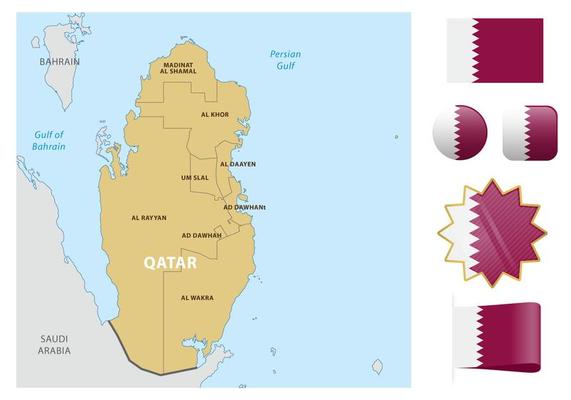
Qatar has stepped into this breach. They are the quiet broker, the party that maintains open channels with both the White House and the Iranian leadership. They are the bridge in a world where almost every other bridge has been burned or bombed. The current discussions are focused on establishing a verified pipeline.
Imagine a hypothetical scenario. Let us call the negotiator "Farhad." Farhad is a career diplomat, a man who has spent three decades in rooms with bad coffee and worse lighting, trying to stitch together the frayed edges of international relations. He sits in a suite in Doha, his phone buzzing with messages from Washington. The Americans are nervous. They are worried about optics. They are terrified that if even one dollar from this pool of funds is misused, if it finds its way into the hands of the wrong military wing, the political blowback will be catastrophic.
"Prove to us," the American side says, "that this money is untouchable for anything but the intended purpose."
Farhad nods. He knows the mechanics. They are looking at creating an escrow structure. The money doesn't go to Tehran. It goes to a supervised account in Qatar. When a shipment of grain or insulin is confirmed to be on its way to an Iranian port, the funds are released directly to the vendor. It is a payment system, not a transfer. It is a bypass.
But Farhad also knows the friction. The Iranian side is suspicious. They see this as an insult to their sovereignty, a mechanism that treats them like a ward of the state rather than a nation-state. They want their money back without strings. They want the freedom to manage their own economy. They see the Qatari involvement as a necessary evil, a hurdle they must clear to get access to the capital they desperately need.
The irony here is sharp. Both sides are playing a game of trust, yet neither trusts the other.
The United States needs to maintain the appearance of strength, a "maximum pressure" posture that doesn't yield easily. They cannot be seen as lifting sanctions. They cannot be seen as rewarding behavior they find abhorrent. Yet, they also recognize the reality: that the status quo is becoming unsustainable, that the humanitarian cost is starting to eclipse the strategic benefit, and that providing a narrow escape valve might actually lower the regional temperature.
The Iranians need the relief, but they cannot afford the domestic political cost of looking weak. They need to secure the funds without appearing to capitulate to American oversight.
This is the reality of the stalemate. It is a tension that lives in the space between the sterile, high-definition displays of diplomatic headquarters and the dusty shelves of a pharmacy in a city where the exchange rate changes by the hour.
What happens if the deal goes through?
It will not be a sudden flood of prosperity. It will not fix the structural rot of the Iranian economy, which is plagued by mismanagement, corruption, and the relentless pressure of a collapsing currency. It will not end the standoff over regional influence or nuclear capability. It will not silence the hawks in Washington or the hardliners in Tehran.
But for the woman in the pharmacy, it might mean one thing. It might mean that, next month, when she walks back to the counter, the clerk will be able to reach under the table and pull out a box of insulin.
That is the true, hidden scale of these high-level negotiations. It is the distance between a policy memo in Washington and a box of medicine in Tehran.
The process is fragile. It is prone to collapse at the slightest provocation. A stray missile, a harsh statement, a leaked document—any of these can derail the conversation. Trust, once broken, is nearly impossible to repair, and in this relationship, the trust is not just broken; it is non-existent.
Yet, the talks continue. Qatar persists. The US State Department and the Iranian Foreign Ministry engage through intermediaries, exchanging demands and concessions like a coded conversation played out in whispers.
There is something strangely hopeful, in a cynical sort of way, about these negotiations. It suggests that even in the deepest freeze of conflict, there is a recognition that some things—a sick child’s treatment, the basic caloric intake of a population—should remain outside the battlefield. It is a faint, flickering acknowledgment of a common humanity that persists even when the states themselves have decided they are enemies.
We watch these headlines, seeing the names of countries and the jargon of finance, and we forget that it is all a proxy for the human condition. The accounts represent lives. The bank codes represent the survival of individuals who have no say in the policies of their governments.
The discussions are not about winning. They are about managing the fallout of the losing.
If this deal succeeds, it will be hailed as a diplomatic breakthrough. If it fails, it will be written off as another predictable collapse of negotiations. But for the people on the ground, the distinction between breakthrough and collapse is binary. It is existence or erasure. It is the medicine on the shelf, or the empty plastic bin.
The diplomatic machine keeps turning, fueled by the hope that if you can move the money, you might just move the needle. And if you move the needle, even a fraction of a millimeter, you might just be able to save a life. That is the only reason they sit in these rooms. That is the only reason the wires are kept open.
As the sun sets over the Persian Gulf, the screens in the negotiation rooms remain lit. The ledger is open. The numbers are moving, shifting from one digital space to another, chasing a promise of relief. Across the water, in the dim light of the pharmacy, the woman turns to leave, the empty prescription still in her hand, waiting for the news that will never make the front page of the international newspapers, but which will change everything for her.
The world waits. The money waits. The heart still beats.