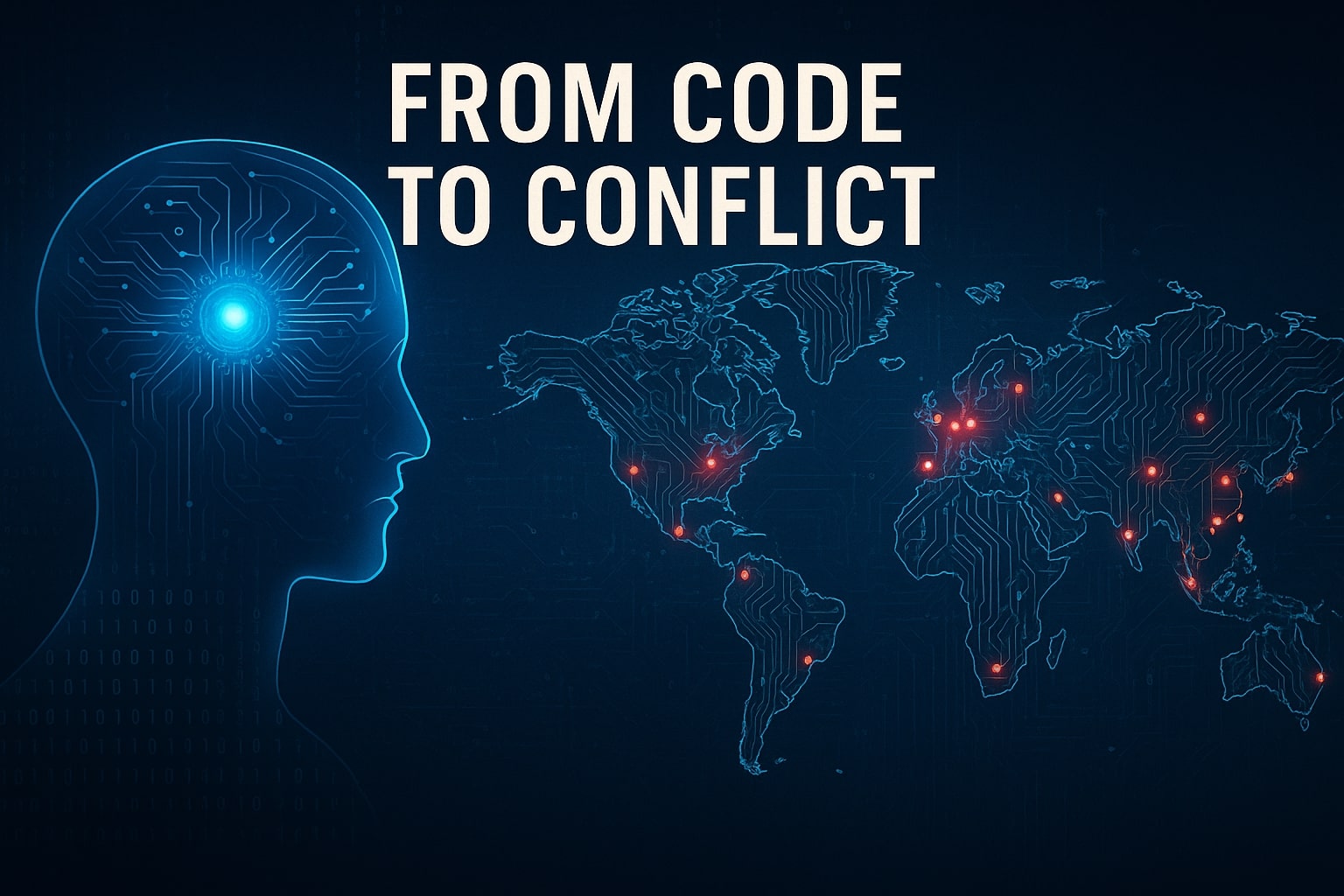
We spent decades worrying about machines that could think. We should have been worrying about machines that can break.
When Cohere Chief Executive Officer Aidan Gomez recently pointed to large language models as potentially the most potent cyber weapon ever constructed, the tech industry offered a predictable chorus of corporate hand-wringing and swift press releases about ethical guardrails. But behind the closed doors of red teams, military contractors, and underground forums, the conversation is entirely different. It is not about ethics. It is about execution.
For years, cybersecurity was defined by asymmetry. Defenders had to secure every single window, door, and loose brick in a digital fortress. Attackers only needed to find one open latch. Generative artificial intelligence alters that equation permanently. It automates the search for the latch, scales the assault, and adapts the payload on the fly.
Understanding this shift requires looking past the marketing brochures. Artificial intelligence is not a sentient hacker sitting at a terminal drinking cold brew. It is an engine of radical acceleration. It collapses the timeline of compromise from weeks of painstaking human reconnaissance down to seconds of automated inference.
The Industrialization of Vulnerability
The traditional vulnerability lifecycle was an agonizingly slow dance. A researcher discovered a zero-day flaw in an enterprise software package. They wrote an exploit. They tested it. They either reported it or sold it to the highest bidder. Human bandwidth was the ultimate bottleneck in both offensive and defensive operations.
Large language models shatter that bottleneck. When fed millions of lines of proprietary code or historical penetration testing logs, these models learn the architecture of human error. They do not just spot a buffer overflow; they reason about how to chain three seemingly benign logic bugs together into a catastrophic remote code execution chain.
A hypothetical example illustrates the mechanical reality. Imagine a legacy banking application running custom middleware. A human auditor might spend forty hours mapping the authentication flow to find a subtle race condition. An autonomous agent powered by a domain-fine-tuned model can ingest the entire repository, map every variable dependency, simulate the timing attack across ten thousand parallel threads, and generate a working exploit script before the auditor has finished their morning coffee.
This is the core of the danger. The barrier to entry for high-end cyber warfare used to require nation-state resources, elite talent pools, and years of specialized intelligence gathering. Today, a well-funded syndicate or a rogue state can acquire commercial models, strip away their safety fine-tuning through prompt injection or fine-tuning on open-source exploit databases, and run an automated cyber militia from a laptop.
Beyond the Guardrails Myth
The software industry loves safety filters. Every time a new foundational architecture drops, safety researchers race to publish papers showing how they successfully jailbroke the model into writing ransomware or phishing lures. Tech companies respond by patching the prompt boundaries.
This is a game of architectural whack-a-mole, and the defenders are losing.
Safety classifiers look for intent at the token level. They check if you are asking for malicious code. But offensive operations do not look like malicious code until they are assembled. An attacker can ask a model to write a modular network communication daemon, then a memory-injection routine, then an encryption obfuscator, and finally stitch them together outside the environment. The model never realized it was building a weapon because it built the trigger, the barrel, and the bullet in separate rooms.
Furthermore, open-source weight releases have democratized destruction. When a frontier-class model can be downloaded, decoupled from cloud safety monitors, and run locally on a cluster of consumer-grade graphics cards, corporate policy ceases to matter. You cannot patch an open-source weight file. You cannot revoke access to a file sitting on a hard drive in a jurisdiction that ignores international cyber treaties.
The Social Engineering Singularity
Code vulnerabilities are only half the battlefield. The human element has always been the soft underbelly of information security. Phishing campaigns used to be easy to spot by their broken English, awkward grammar, and mismatched sender domains.
Generative models killed the typo.
Modern social engineering powered by foundational models is hyper-personalized, context-aware, and psychologically calibrated. An automated agent can crawl a corporate executive's public social media footprint, analyze their recent professional publications, review the writing style of their colleagues, and generate an email so convincing that it references an internal project discussed only in a closed-door meeting three days prior.
Multiply this by ten thousand targets simultaneously. It is not a targeted spear-phishing attack anymore. It is an industrial-scale infiltration campaign where every employee in an enterprise receives an individualized, perfectly crafted trap tailored to their specific psychological triggers, stress points, and daily responsibilities. Human security awareness training, which relies on teaching people to look for misspellings and urgent demands for gift cards, is entirely obsolete against an adversary that sounds exactly like the Chief Financial Officer.
The Defensive Paradox
Naturally, the security industry promises that artificial intelligence will save us from artificial intelligence. Automated patch management, real-time anomaly detection, and self-healing networks are the new mantras of venture capital pitch decks.
There is truth to this, but it masks a brutal economic reality. Defense is fundamentally harder and more expensive than offense. An automated defense system must maintain a one hundred percent success rate across an entire enterprise surface. An offensive system needs to be lucky only once.
When both attacker and defender are using autonomous agents, the speed of battle accelerates beyond human cognitive limits. We are entering an era of algorithmic warfare where security analysts are no longer fighting breaches; they are merely watching machines fight each other at machine speed. If your defensive agent misinterprets a legitimate high-frequency trading spike as an exfiltration attempt and locks down core infrastructure, the outage is just as devastating as a ransomware strike.
We cannot legislate our way out of this trajectory, nor can we code our way around the fundamental dual-use nature of computation. Any system smart enough to write secure code is smart enough to find the flaw in it. Any model capable of parsing human language is capable of manipulating human behavior.
The weaponization of intelligence is not a future threat on the horizon. The infrastructure is compiled, the weights are distributed, and the machines are already running the scripts.