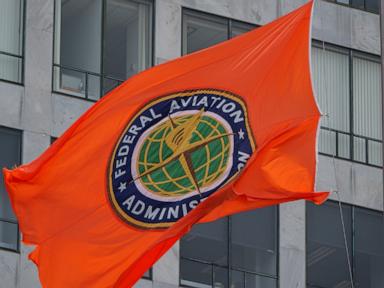
Dean DelleChiaie, a 35-year-old contractor for the Federal Aviation Administration, was arrested Monday on charges of threatening to kill President Donald Trump. While the arrest of a federal worker for making threats against a sitting president is significant, the DelleChiaie case reveals a much deeper, more systemic shift in how the federal government monitors its own. This was not a sudden lapse in security. This was a slow-motion collision between personal digital footprints and an increasingly aggressive federal surveillance apparatus designed to identify internal dissent before it turns violent.
The Federal Bureau of Investigation and the U.S. Secret Service allege that DelleChiaie used his government-issued computer to research how to smuggle a firearm into a federal facility. He allegedly studied previous assassination attempts and queried the percentage of the American population that "wants the President dead." Most damningly, prosecutors claim he eventually abandoned the anonymity of a search bar and sent a direct email to the White House on April 21, explicitly stating his intent to "neutralize" the president.
The Paper Trail of a Modern Dissident
The timeline of DelleChiaie’s descent is a case study in the modern "insider threat" profile. It began in January, not with a crime, but with a series of digital breadcrumbs. DelleChiaie, a mechanical engineering contractor based in Nashua, New Hampshire, allegedly used his FAA terminal to look up the home addresses of the Vice President’s children.
This behavior triggered internal flags within the FAA’s information technology department. In an era where federal agencies are under immense pressure to purge political non-conformists, the response was swift. When DelleChiaie realized he had overstepped and asked the IT department to delete his search history, they didn't just refuse. They reported him to the authorities.
He was suspended immediately. In February, Secret Service agents visited his home. At the time, DelleChiaie admitted to the searches, cited depression, and claimed he had no actual intent to harm anyone. He was a man in the middle of a mental health crisis, frustrated by the current administration, but supposedly harmless. The agents left. They didn't arrest him then. They watched.
The Gap Between Threat and Action
The arrest on May 4, 2026, only occurred after DelleChiaie allegedly sent the April email. This raises a critical question for national security analysts: Why did the system wait for an overt threat when the "pre-attack" indicators were already glowing red in January?
The reality is that the federal government is currently navigating a legal minefield. Monitoring search terms is one thing; arresting a citizen—even a federal employee—for "thought crimes" or curiosity is another. However, the political climate has changed the threshold for intervention. Just over a week ago, a separate incident at the White House Correspondents' Association dinner saw a gunman, Cole Tomas Allen, attempt to storm the event. With the Secret Service already on high alert and suffering from a shot officer, the tolerance for "unstable" federal employees has evaporated.
Institutional Paranoia
This case is a symptom of a broader institutional paranoia. Across the federal landscape, employees are reporting a tightening of digital monitoring. The DelleChiaie arrest serves as a warning shot to the three million people employed by the federal government.
We are seeing the end of the "private" government workspace. If you are an engineer at the FAA or a clerk at the Social Security Administration, your browser history is now a political document. DelleChiaie's defense will likely focus on his admitted depression and the lack of a concrete plan, but the Department of Justice is signaling that intent is irrelevant when the rhetoric is this specific.
The Legal Fallout
DelleChiaie now faces up to five years in federal prison and a $250,000 fine. This prosecution is being handled by Assistant U.S. Attorney Mike Shannon, and it is expected to be a swift, high-profile trial. The government wants to prove that the internal "tripwires" work.
But for the thousands of other federal employees watching this unfold, the takeaway is different. The line between workplace misconduct and federal felony has been blurred. It isn't just about the threat; it's about the data that led to the threat. The FAA contractor's biggest mistake wasn't just the email—it was the belief that he could look into the abyss from a government-issued desk and not have the abyss look back.
The arrest of Dean DelleChiaie is the logical conclusion of a system that has decided it can no longer afford to ignore the warning signs, even if those signs are the byproduct of a crumbling mental state. The federal government is no longer just a workplace. It is an observer.
The case continues in Concord, where DelleChiaie is scheduled for his initial appearance. He remains innocent until proven guilty, but the digital evidence against him is a permanent record that no IT department can delete.