The Emotional Trap of the "Sad Superstar" Narrative
Standard sports media loves a funeral. When a championship contender falls, the cameras zoom in on the star player’s face, searching for a twitch of agony or a tear to validate the fans’ own disappointment. If the player isn't mourning in public, the vultures circle. They call him "checked out." They claim he "doesn't care."
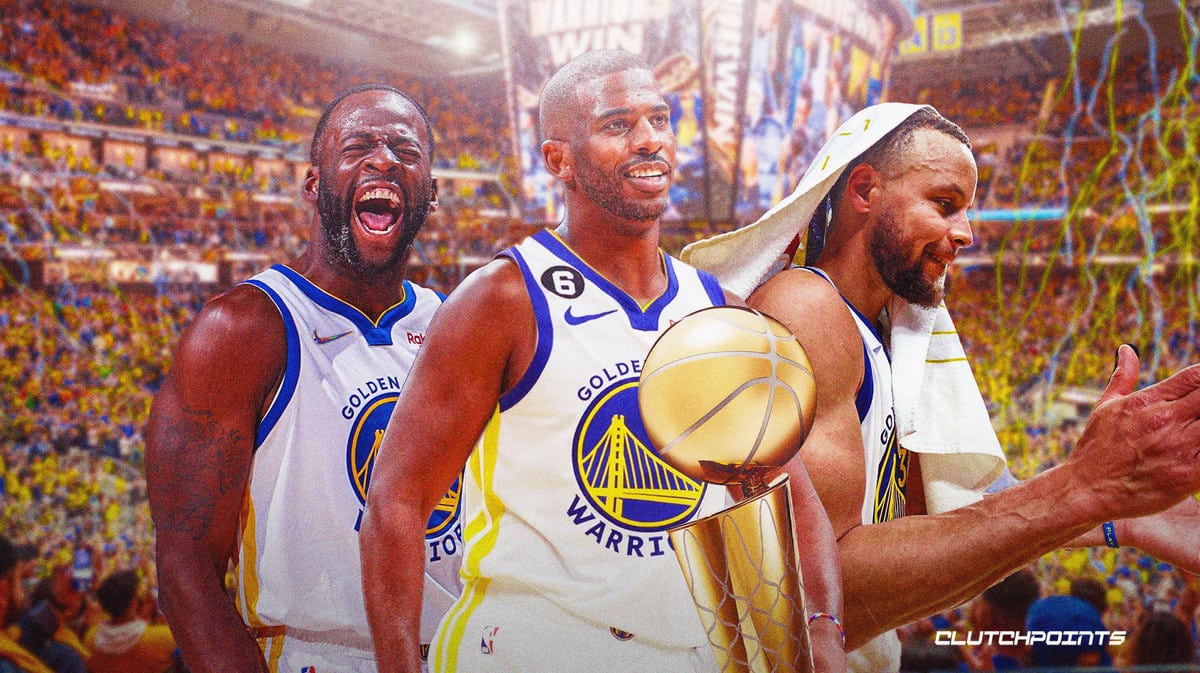
The recent chatter surrounding Chris Paul’s lack of visible grief following the Clippers' elimination by the Warriors is the perfect example of this lazy, surface-level analysis. The consensus view is that Paul should be devastated. He’s the "Point God." He’s the veteran without a ring. He’s the guy who should be staring at the locker room floor until the janitors kick him out.
But here is the truth that traditional pundits are too scared to admit: For a player of Chris Paul’s IQ, sadness is a low-value emotion.
Professional basketball is a business of cold, hard logistics. If you’re a 19-year veteran who has seen every defensive scheme and every front-office failure imaginable, you don't cry when the math doesn't add up. You look at the spreadsheet, see the deficit, and start planning the next hedge. Chris Paul isn't "not sad." He’s just finished with a failed experiment.
The Myth of the Pure Competitor
We’ve been fed a lie since the 1990s that "winning is everything" means you have to be miserable 24/7 if you aren't holding a trophy. We want everyone to have the psychopathic intensity of Michael Jordan, forgetting that Jordan’s path led to burnout and a mid-career pivot to baseball.
The idea that a player’s worth is measured by how much they suffer after a loss is a toxic remnant of "embrace the grind" culture. It’s performance art for the fans.
Let’s look at the actual mechanics of that Warriors-Clippers series. The Clippers were outgunned. The Warriors had a better offensive rating and a deeper bench. Paul, as the floor general, knew the outcome three games before the buzzer sounded. Why would he provide the media with a "sad face" thumbnail for their morning shows?
Real expertise in this industry means recognizing when the ceiling has been hit. In the NBA, there is a specific type of fatigue that isn't physical; it’s the fatigue of trying to carry a flawed roster against a dynasty. When that weight finally drops, the primary emotion isn't sadness. It’s relief.
The Logic of the Exit Strategy
The "Point God" nickname isn't just about passing. It’s about probability. Chris Paul plays basketball like an actuary. He understands the $E$ (expected value) of every possession.
$$E = P(\text{make}) \times \text{Value} - P(\text{miss}) \times \text{Opponent Transition Opportunity}$$
When the probability of winning a series drops below a certain threshold, a rational actor stops investing emotional capital. This isn't quitting; it’s resource management.
I’ve seen front offices burn through decades of relevance because they couldn't detach themselves from the "heart" of a team that clearly lacked the talent to win it all. They keep "running it back" because they’re afraid of the optics of moving on. Chris Paul is smarter than your average GM. He knows that once the clock hits zero, the Clippers' season is a sunk cost. To mourn a sunk cost is a logical fallacy.
Why Fans Hate Rationality
People ask: "How can he smile after a loss?"
The answer is simple: Because his life is more than your three-hour entertainment window.
The "People Also Ask" sections are filled with queries about "Chris Paul’s legacy" and whether this loss "tarnishes his greatness." This is a flawed premise. A legacy isn't built on a single postseason exit in the twilight of a career. It’s built on the fact that every team Chris Paul joins immediately sees a 10-15% jump in win percentage.
- Hornets: Put them on the map.
- Clippers: Turned "Lob City" into a perennial threat.
- Rockets: Came within a hamstring pull of dethroning the greatest team ever assembled.
- Suns: Took a bottom-feeder to the Finals.
If you’re looking for a reason to criticize him, you’ll find it in his lack of a ring. But if you’re looking at the actual tape, you see a player who has mastered the game to such an extent that he no longer needs the validation of a championship to know he’s the smartest person in the arena.
The Tactical Advantage of Indifference
There is a massive strategic advantage to the "not sad" approach. In the NBA, the offseason is the real game. The minute the season ends, the negotiation begins.
A player who looks broken and defeated has less leverage. A player who looks composed, healthy, and ready for the next challenge is an asset. By refusing to play the part of the grieving loser, Paul maintains his market value. He signals to the rest of the league that he is not "spent." He is merely "available."
Imagine a scenario where a CEO’s company loses a major contract. If that CEO goes on TV crying about the loss, shareholders panic. If the CEO shows up to the press conference with a smirk and a plan for the next quarter, the stock stabilizes. Chris Paul is the CEO of CP3 Inc. His stoicism is a fiscal necessity.
Dismantling the "Veteran Leader" Cliche
We expect veterans to be the moral compass of the locker room. We want them to give the "Win one for the Gipper" speeches. But at some point, a leader’s job is to show the younger players how to handle failure with dignity.
Hysteria is contagious. If the veteran leader loses his cool or falls into a deep depression, the younger guys—the ones who need to develop for next year—see that failure is something to be feared.
By staying even-keeled, Paul teaches a more valuable lesson: The game ends, life continues, and the work starts again tomorrow. This is the nuance the "sadness" narrative misses. It’s not about a lack of passion; it’s about a surplus of perspective.
The Downside of This Take
Let’s be honest: This approach makes you a villain. Fans pay a lot of money for tickets. They invest their identities into these teams. When they see a player who doesn't seem to match their level of heartbreak, they feel betrayed.
The downside of being a "rational actor" in a "sentimental industry" is that you will never be the beloved hero. You will be the mercenary. You will be the guy people love to hate because you refuse to let them see you bleed. Chris Paul has accepted this trade-off. He’d rather be right than be liked.
Stop Asking if He Cares
The question "Does Chris Paul care about winning?" is the wrong question. He has spent twenty years obsessing over every inch of the court. He cares more about the mechanics of winning than any person sitting on a couch with a bag of chips ever will.
The real question is: "Why do we demand a public display of misery as a price of admission for greatness?"
We’ve become addicted to the theater of sports. We want the drama, the tears, and the "redemption arcs." When a player refuses to give us the script we wrote for them, we lash out.
Chris Paul isn't sad because he knows the truth about the NBA: It’s a giant, rotating wheel of talent and luck. This year, the wheel stopped on the Warriors. Next year, it might stop somewhere else.
If you’re still waiting for him to break down in a press conference, you’re going to be waiting a long time. The man has already moved on to the next play while you're still complaining about the last one.
Stop projected your own emotional fragility onto athletes who have spent their entire lives training to be bulletproof.
The Clippers lost. The season is over. Chris Paul is fine.
Get over it.