Every morning, long before the sun hits the glass towers of Riyadh or the ancient stone of Jerusalem, captains on the deck of massive oil tankers look out over a narrow strip of water. It is the Strait of Hormuz. At its narrowest point, it spans just twenty-one miles. It feels fragile. It looks small on a map. Yet, through this single liquid corridor passes one-fifth of the world’s petroleum.
For decades, this stretch of water has been a geopolitical trigger. If a hostile power threatened to close it, global stock markets shuddered. Gas prices at pumps in Ohio and Tokyo spiked instantly. The world was held hostage by geography.
But geography is losing its grip.
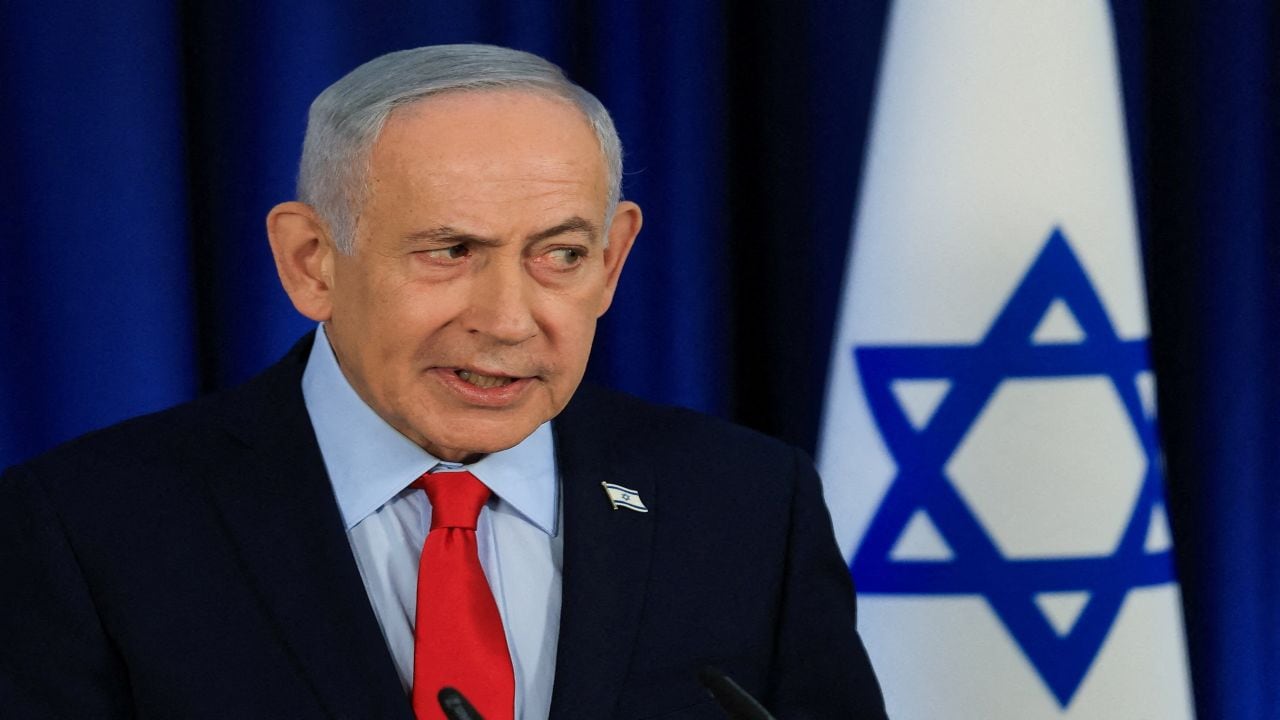
During a recent address, Israeli Prime Minister Benjamin Netanyahu pointed to a quiet, seismic shift in global trade. Nations are no longer waiting for the next crisis in the Persian Gulf. They are actively bypassing it. The traditional arteries of global commerce are hardening, and a new network of veins is spreading across the desert floor. The implications stretch far beyond oil prices. They rewrite the balance of power in the Middle East.
The Invisible Anxiety of the Open Sea
To understand why this matters, imagine a logistics manager in Seoul or a factory owner in Frankfurt. Let’s call him Marcus. Marcus does not study Middle Eastern policy for fun. He studies it because his business dies without predictability. When tensions flare in the Gulf, insurance premiums for cargo ships skyrocket overnight. A single drone strike or a hijacked vessel means delayed shipments, broken contracts, and millions of dollars evaporating into the ether.
This is the invisible tax of the Chokepoint Dilemma.
For half a century, the global economy accepted this tax because there was no alternative. The oil was in the Gulf; the markets were in the West and East. The water was the only highway wide enough to carry the burden.
Now, look at a modern map of Saudi Arabia. You will see pipelines cutting through the red earth, stretching from the eastern oil fields straight to the western coast on the Red Sea. These are not just engineering feats. They are escape hatches. By moving crude overland to the port of Yanbu, millions of barrels of oil per day completely ignore the Strait of Hormuz. They bypass the threat entirely.
The Abraham Accords as an Economic Engine
This transformation is not purely mechanical. It is deeply political. Netanyahu’s remarks highlight a broader reality: the normalization of relations between Israel and several Arab nations—formalized through the Abraham Accords—was never just about diplomatic handshakes. It was about survival and efficiency.
Consider the proposed land bridges. For centuries, moving goods from Asia to Europe meant sailing around the Arabian Peninsula, through the Bab el-Mandeb, up the Red Sea, and through the Suez Canal. It is a long, vulnerable journey.
Now, imagine a container ship dropping its cargo at a port in the United Arab Emirates. Instead of continuing by sea through dangerous waters, those containers are loaded onto high-speed trains. They cut across the Saudi desert, move through Jordan, and arrive at Israel’s Mediterranean ports in Haifa or Ashdod. From there, it is a short, safe sail to Europe.
This alters the calculus of global trade. It shaves days off transit times. More importantly, it removes the vulnerability of maritime chokepoints.
The Friction of Change
It sounds simple on paper. It is brutally difficult in practice.
Building a trans-continental rail network across shifting sands and through politically complex borders requires immense capital and trust. Trust is a rare commodity in this region. Skeptics rightly point out that land routes have their own vulnerabilities. Trains can be derailed. Pipelines can be sabotaged.
But the motivation to succeed is fueled by a shared fear of obsolescence.
The nations of the Gulf know the world is transitioning, however slowly, toward greener energy. They cannot afford to be viewed as unreliable suppliers trapped behind a volatile gate. They need to become global logistics hubs, not just gas stations. Israel, meanwhile, views these trade corridors as the ultimate insurance policy. When your economy is woven into the fabric of your neighbors' daily survival, peace becomes a financial necessity rather than a diplomatic luxury.
The Human Toll of Logistics
We often view geopolitics as a chess match played by leaders in wood-paneled rooms. We read quotes from prime ministers and analyze satellite imagery of pipelines. But the true impact lands on the people who keep the world moving.
Think of the merchant mariners. These crews spend months at sea, navigating waters where the threat of naval mines or missile attacks is a daily reality. For them, a route that avoids a tense naval standoff isn't about macroeconomic stability. It is about going home to their families.
When nations find alternatives to the Strait of Hormuz, they are buying safety for these crews. They are removing a geopolitical wildcard from the lives of ordinary citizens who will never see the Persian Gulf, but whose livelihoods depend on the cargo it carries.
A New Architecture
The old world order was defined by natural bottlenecks. The new world is being built on redundancy.
If one route closes, another opens. If a strait is threatened, the oil flows through a pipeline or onto a train. This redundancy dilutes the power of nations that use threats as leverage. It makes the global economy resilient, less prone to sudden panics, and fundamentally more stable.
Netanyahu’s declaration wasn't just a boast about diplomatic success. It was an acknowledgment of a irreversible trend. The map is being redrawn, not by armies, but by engineers, financiers, and the relentless human desire to find a safer path forward.
The narrow waters of Hormuz still shimmer under the desert sun, and ships still crowd its lanes. But the walls of the bottleneck are beginning to crumble, replaced by the quiet, steady hum of progress moving across the sand.


