Salt.
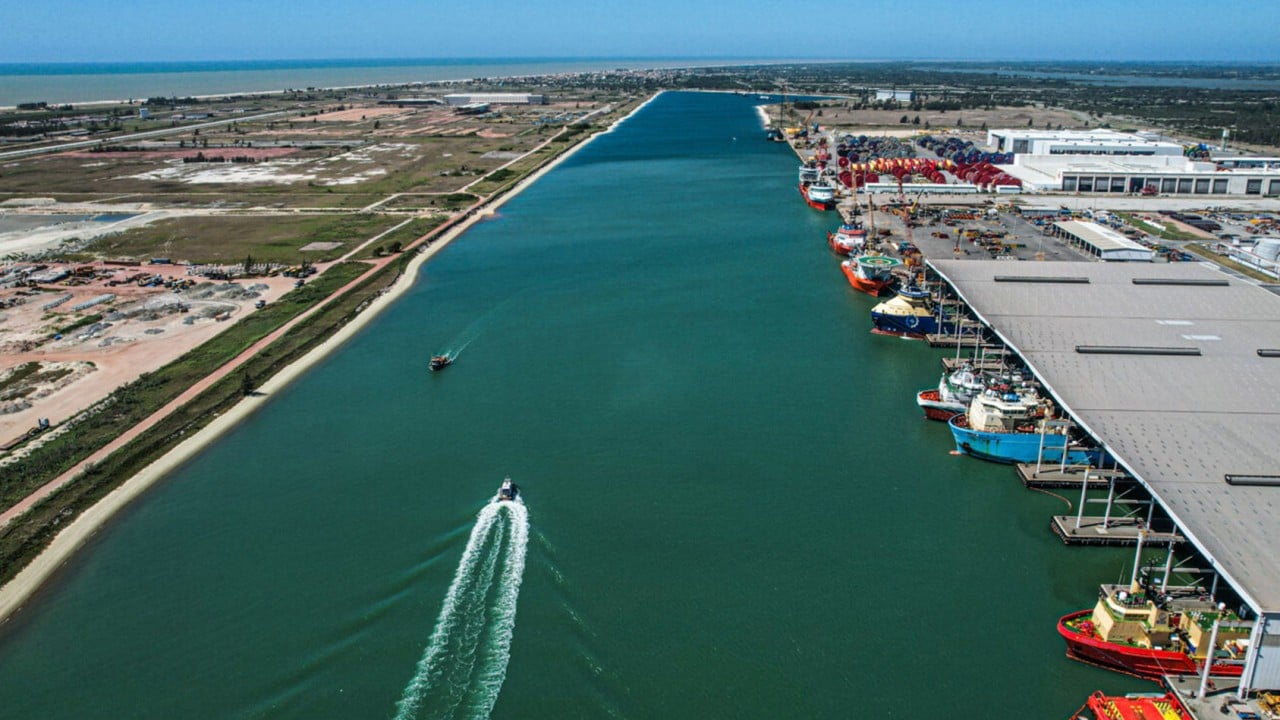
That is the first thing you taste near a deepwater terminal in the South Atlantic when the trade winds pick up off the open swell, carrying fine mist from grey-green rollers against steel hulls that sit half-submerged like sleeping whales. If you liked this post, you might want to read: this related article.
I have stood on cold docks before dawn watching freighters line up in quiet, heavy patience while diesel generators hummed beneath our boots. Nothing looks urgent on the surface. No sirens wail. No alarms flash across the harbor. Yet inside the shipping offices three miles inland, phones ring before sunrise and coffee goes cold in ceramic mugs because a narrow ribbon of water ten thousand miles away has suddenly choked off global energy arteries.
When hostilities around Iran shut down transit through the Strait of Hormuz, the shock did not stay in the Persian Gulf. It traveled across oceans, rewired maritime routes, and sent Beijing’s buyers sweeping across the Atlantic toward Brazil’s offshore oil fields. Half of Brazil’s oil exports went to China during the crunch, pushing Brazilian crude sales to record highs even as refineries across the globe scrambled for barrels. For another look on this development, see the recent coverage from MarketWatch.
Numbers like "half of exports" and "record sales" sound tidy on a spreadsheet. They rarely feel human until you trace a single barrel from a deep pre-salt reservoir off Brazil’s coast to a refinery gate in eastern China, or until you sit with the people whose livelihoods bend when a chokepoint slams shut.
The Narrow Throat of the World
Maps shrink distances and flatten drama. On a screen, the Strait of Hormuz looks like a pinch between Oman and Iran—barely twenty-one miles wide at its narrowest point, with shipping lanes even tighter. In reality, it is a pressure valve for a huge share of seaborne crude and liquefied natural gas.
When conflict shuts that throat, tankers do not simply turn around and whistle a different tune. Freight rates spike overnight. War-risk insurance premiums jump to eye-watering levels. Shipowners hesitate to send vessels into waters where a stray mine or missile can turn a two-hundred-million-dollar hull and its cargo into a smoldering wreck.
I remember watching crude prices jump during past Middle East flare-ups and wondering why a pump price two continents away moved before a single drop of physical shortage reached my local station. Markets trade on fear and forward supply long before tanks run dry. When Hormuz closes, traders do not wait to see how long the blockade lasts. They bid up alternative crudes immediately.
Brazil sits right in that crosshairs of substitution. Deep beneath thick layers of salt off the Brazilian coast lie massive pre-salt oil reserves—heavy and medium crudes that many complex refineries are tuned to process. When Persian Gulf barrels get trapped or priced out by risk, buyers look west across the Atlantic.
A Hypothetical Morning in Santos and Qingdao
To see how a geopolitical shock ripples into daily lives, let us step into a hypothetical scenario grounded in real trade mechanics. Picture two people who have never met, linked by a single Very Large Crude Carrier—a VLCC stretching over a thousand feet long and carrying roughly two million barrels of oil.
In a hypothetical port office in Santos, Brazil, imagine Rafael, a logistics coordinator who has spent fourteen years matching export cargoes to incoming tankers. Usually, his week follows a steady rhythm: nominations from producers, weather windows in the Atlantic, berth schedules, customs clearance. When Hormuz shuts down, his inbox turns into a storm. Refiners in Asia that normally split their purchases between Middle Eastern grades and Atlantic barrels suddenly want every available cargo out of Brazil. Prices climb to records. Bonuses and overtime rise with the volume, yet Rafael feels a tight knot in his stomach. Record sales feel less like a celebration and more like a rush to board a train that is moving faster than the platform.
Now shift ten thousand miles across the globe to a hypothetical coastal refinery complex in Qingdao, China. Imagine Mei, a crude procurement analyst staring at supply schedules at midnight. Her plant relies on steady deliveries to keep cracking units balanced and diesel and petrochemical feedstocks flowing to factories inland. With Hormuz choked, Persian Gulf shipments stall or become prohibitively expensive. Buying half of Brazil’s export stream is not an act of casual generosity toward South America; it is an urgent survival play to keep domestic industry running and strategic reserves from bleeding down.
Neither Rafael nor Mei wrote the geopolitical script that closed the strait. Both are reacting to forces far larger than a single contract. Still, their decisions—and hundreds like them across trading desks and ports—determine which ships sail, which refineries run at full tilt, and which economies absorb the highest friction.
Why China Turned So Heavily to Brazil
A natural question arises when headlines say China bought half of Brazil’s oil exports: why Brazil specifically, and why so much all at once?
Geography plays a role, though not a simple one. Shipping oil from Brazil to China takes roughly forty to fifty days depending on the route and vessel speed—far longer than a short haul from the Gulf. In calm markets, long voyage times tie up ships and capital. In a crisis, availability beats transit time. When Hormuz is closed, a barrel forty-five days away on a safe ocean lane beats a barrel five days away behind a blocked strait.
Refinery compatibility matters just as much. Crude oil is not a single uniform liquid; it varies in density and sulfur content. Many large Chinese refineries have invested heavily in upgrading units capable of processing heavier, sourer, or medium-heavy crudes rather than only light sweet grades. Brazilian pre-salt crude fits well into those processing slate calculations when traditional Gulf suppliers are cut off.
There is also the weight of established trade architecture. Over the past two decades, China and Brazil built deep commercial ties—backed by long-term supply agreements, financing arrangements, and regular tanker traffic. When a sudden crisis hits, buyers rarely start from scratch with strangers. They lean hardest on partners where port procedures, quality testing, and payment rails already work under pressure.
When a routine trade route breaks, commerce does not vanish into thin air. It redirects along paths of least resistance—and the widest available pipes.
Yet concentration carries its own quiet tension. If half of Brazil’s oil exports flow to one giant buyer during a Hormuz shutdown, Brazil gains record revenues and heightened geopolitical relevance, while also becoming more exposed to shifts in Chinese demand, refining margins, or diplomatic leverage once the crisis cools.
The Invisible Stakes Beneath Record Numbers
Let us be honest about something that often gets lost in triumphalist coverage of "record exports."
Record trade figures feel good on balance sheets. They lift export revenues, support currency inflows, and give politicians talking points about booming commodities. But a record driven by war and a maritime blockade is a bittersweet milestone.
Consider what happens to other buyers when one major importer scoops up half of an exporter’s outbound crude. European refiners, Indian processors, or smaller Asian buyers competing for non-Gulf barrels face steeper price differentials and tighter cargo availability. Freight rates climb across the tanker market because ships are rerouted onto longer Atlantic-to-Asia voyages, pulling vessels away from shorter routes.
Even inside Brazil, a surge in exports is not a free lunch for every household. Global crude benchmarks ripple into domestic fuel pricing dynamics, transport costs, and inflation pressures, even for a country with vast offshore oil wealth. Oil is a globally priced commodity; pumping more of it does not magically make every local cost cheaper.
And what about the environmental and operational side of longer hauls? Sending more mega-tankers on marathon voyages across oceans increases total ton-miles traveled, maritime fuel burn, and crew fatigue on long rotations. These costs rarely appear in the headline about record export value, yet real sailors spend months away from family and real ecosystems bear the risk of any spill along busy sea lanes.
Fear, Uncertainty, and What Markets Cannot See
I will admit something plainly: whenever a major energy chokepoint closes, even seasoned observers have to hold two contradictory truths at once.
On paper, models can estimate how many millions of barrels per day normally pass through Hormuz and how much spare capacity or alternative supply exists elsewhere. In practice, war is messy and unpredictable. A strait can reopen faster than traders expect, or stay tense for months through intermittent attacks, naval standoffs, and insurance freezes.
Nobody knows with certainty how long a crisis will last while it is unfolding. Anyone who claims total certainty during an active blockade is selling confidence rather than clarity. What we can observe is human and institutional behavior under stress: buyers lock in reliable supply wherever they can reach it; sellers capture peak prices while scarcity premiums hold; governments watch fuel inventories like hawks to prevent domestic shortages and social unrest.
History shows a familiar rhythm in energy shocks. First comes panic and rapid price spikes. Next comes adaptation—rerouted tankers, refinery blend adjustments, releases from strategic stocks, and aggressive buying from secure regions like Brazil. Eventually, either the chokepoint reopens or alternative flows settle into a new normal, though some trade shifts stick permanently because buyers discover new suppliers or habits.
What This Shift Means Going Forward
If you are trying to make sense of why a story about Brazilian oil and Chinese buyers matters beyond today’s news cycle, look at what it reveals about global fragility.
Modern supply chains look remarkably efficient right up until a narrow bottleneck closes. We build just-in-time habits, lean inventories, and specialized infrastructure assuming sea lanes stay open and predictable. A single closed strait exposes how tightly connected our economies truly are—and how quickly a local conflict can reshape trade balances across hemispheres.
For Brazil, hitting record crude sales by supplying half its exports to China underscores its status as an indispensable energy supplier in a fractured world. Yet it also raises sharper questions about diversification, downstream value creation, and resilience if global energy demand gradually shifts or trade tensions flare.
For China, leaning so heavily on Brazilian crude during a Hormuz closure highlights both the strength of its long-term Atlantic partnerships and the vulnerability that comes when maritime chokepoints threaten traditional routes. Every barrel shipped around the Cape of Good Hope or across the South Atlantic is a reminder of how much physical distance separates energy production from industrial demand.
Out on the water, past the breakwater where the salt spray stings your face, another loaded tanker slips toward the horizon, hull dark against the swell, carrying two million reasons why distant wars still shape life at home.