When NASA rushed Apollo to the moon in 1969, it proved that raw national power and deep pockets could bend spaceflight to America’s will. Five decades later, the race back to the lunar south pole looks radically different. The US is banking on a hyper-complex, multi-vendor architectural web under the Artemis program. China, meanwhile, is sticking to a rigid, step-by-step assembly model that reads like a classic Soviet textbook modernized with 21st-century avionics.
If you look past the political theater, a simple question remains. Which strategy is actually safer and more likely to stick the landing on time?
China's space agency presented a clear four-step flight campaign for its crewed lunar push. They aren't trying to invent a completely new paradigm for space travel overnight. Instead, Beijing is using two medium-heavy launches to meet in lunar orbit, running fully uncrewed dry runs of every single piece of hardware before putting taikonauts on top of a single candle.
NASA, on the other hand, is building the most ambitious lunar architecture in history. But that ambition brings massive technical dependencies, especially surrounding orbital cryogenic refueling. Every time SpaceX or NASA hits a snag with Starship test flights or Orion heat shield redesigns, the Artemis schedule slips.
China's slower, methodical ladder isn't just about playing it safe. It might be the pragmatic approach that actually works first.
Comparing the Architectures Two Launches versus Orbital Refueling
To understand why China's plan might be safer, you have to look at the mechanics of how both countries plan to get to the lunar surface.
China's strategy relies on two identical Long March 10 carrier rockets launched from Wenchang. One rocket carries the Mengzhou crewed spacecraft with three astronauts. The second rocket carries the Lanyue lunar lander. Both craft fly straight to lunar orbit independently, meet up, and dock. Two astronauts crawl into the lander, descend to the surface for three days, then launch back up to dock with Mengzhou for the ride home.
It’s clean. It’s predictable. It uses hypergolic or standard semi-cryogenic fuels that don't boil off rapidly in deep space.
NASA's Artemis III landing scheme is far more complex. NASA launches four astronauts in an Orion capsule atop the Space Launch System (SLS). But SLS can't carry a lander capable of returning to lunar orbit with today's payload requirements. NASA contracted SpaceX to provide a modified Starship Human Landing System (HLS).
For Starship HLS to get from Earth to the moon, SpaceX must first launch an orbital fuel depot into Low Earth Orbit. Then, SpaceX needs to launch anywhere from 10 to 20 Starship tanker flights in rapid succession to fill that depot with super-cooled liquid methane and liquid oxygen. Only after the depot is full can the Starship HLS fill its tanks in orbit, burn for the moon, wait for Orion to arrive, and land.
Think about the failure points. China requires two successful launches and one docking maneuver in lunar orbit. NASA's plan requires over a dozen launches, precise zero-g cryogenic propellant transfer between dozens of massive tanks, and multiple dockings across both Earth orbit and lunar orbit.
If a single link breaks in a 15-launch chain, your entire mission sits stranded on the ground.
The Power of Uncrewed Rehearsals
China's China Manned Space Agency (CMSA) laid out an explicit test schedule leading up to its 2030 target:
- Early 2027: A Low-Earth-orbit test of the Mengzhou capsule on the Long March 10A.
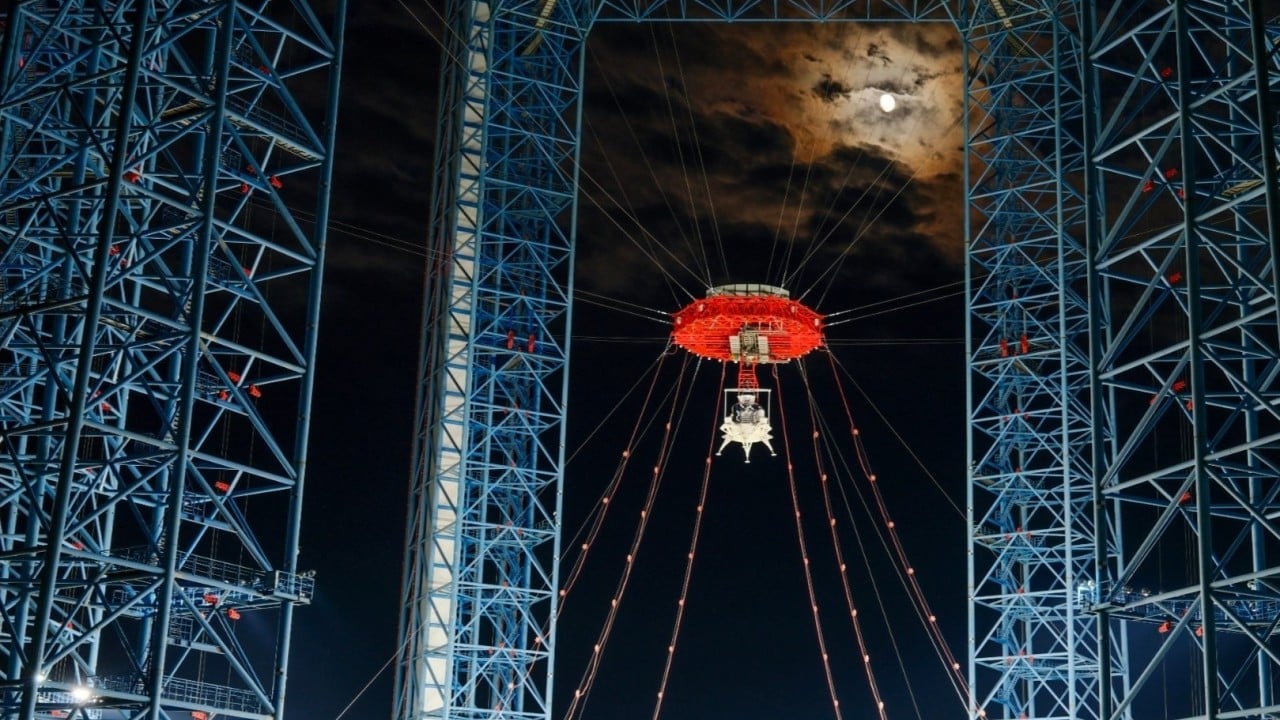
- 2028: An uncrewed lunar lander descent and ascent demonstration with Lanyue.
- 2029: A full, uncrewed lunar-orbit rendezvous and docking rehearsal featuring both spacecraft.
- Before 2030: The first crewed landing mission.
Notice what China is doing here. They are executing a complete, full-scale dress rehearsal without a human heart beating on board. When Chinese taikonauts finally strap into Mengzhou for a lunar landing, every single stage of that journey—the staging, the lunar orbit insertion, the autonomous docking, the descent burn—will have been flight-tested in space under realistic conditions.
NASA used this exact philosophy during the 1960s. Apollo 8 orbited the moon. Apollo 9 tested the lunar module in Earth orbit. Apollo 10 took the lander down to within 47,000 feet of the lunar surface before Apollo 11 ever touched down.
Yet for Artemis, budget constraints and compressed timelines mean NASA skipped an uncrewed landing rehearsal for the crewed vehicle architecture. Artemis II will fly humans around the moon without landing. Artemis III is slated to be the very first time astronauts land using Starship HLS.
Asking astronauts to perform the first operational landing on a massive 50-meter-tall Starship vehicle without an identical uncrewed landing dress rehearsal on the lunar surface introduces undeniable operational risk.
Political Stability versus Bureaucratic Agony
Hardware isn't the only thing that decides who stays on target. Politics matters just as much.
The US space program is subject to four-year election cycles, changing congressional budgets, and shifting strategic priorities. Every time a new administration takes office, NASA administrators often spend two years defending or reframing existing programs. Artemis itself is a franken-architecture stitched together across multiple decades—combining Apollo-era political mandates for SLS engines with commercial procurement models for landers like SpaceX's Starship and Blue Origin's Blue Moon.
China doesn't suffer from political whiplash. The Central Military Commission and the Central Committee set long-term aerospace goals that remain fixed across five-year and ten-year plans. When Beijing says it aims for a crewed landing before 2030, Chinese state aerospace contractors (like CASC) get guaranteed funding, clear requirements, and political backing for the entire decade.
That institutional consistency lets engineering teams focus on incremental reliability rather than constantly lobbying Congress to save their contracts.
The Downside of China's Playbook
China's approach is far from flawless. Their plan has critical vulnerabilities that space analysts often point out:
- Heavy reliance on two launches back-to-back. If the first Long March 10 suffers a pad delay or engine anomaly, the second rocket can't wait indefinitely on the pad with cryogenic fuel loaded.
- Lower overall payload capacity. China's initial surface stay will be short—around 72 hours—compared to the longer multi-week habitats NASA envisions with Artemis and Gateway.
- Lack of deep-space operational experience. While China has aced robotic missions like Chang'e 4, 5, and 6 on the far side of the moon, managing human life support in deep space outside Earth's magnetosphere is an entirely different discipline.
Why the Race to the South Pole Actually Matters
Getting to the moon first isn't just about bragging rights or flags and footprints. The real stakes center on scarce physical real estate.
The lunar south pole contains permanently shadowed craters where water ice survives in deep freeze. Water ice can be purified for drinking, split into hydrogen and oxygen for rocket propellant, or used to sustain long-term lunar outposts. But the sites with both continuous sunlight for solar power and easy access to ice-rich craters are tiny—often just narrow ridges a few hundred meters wide.
International space law under the 1967 Outer Space Treaty forbids nations from claiming sovereignty over lunar territory. However, both the US-led Artemis Accords and China's International Lunar Research Station (ILRS) framework introduce the concept of "safety zones" around operational hardware.
Whoever lands first at prime sites like Shackleton Crater or the Connecting Ridge gets to put down infrastructure, establish safety zones, and build out power grids. The second party to arrive has to work around those existing operations.
If China's slow, methodical strategy succeeds while Artemis faces delays, Beijing will set the practical norms, communications standards, and physical footprint at the most valuable real estate on the moon.
What to Watch Next
If you want to track which nation is actually ahead, ignore political speeches and watch these specific technical milestones over the next 24 months:
- Watch the Long March 10A debut flight in early 2027. This uncrewed test in Low Earth Orbit will show whether China's new heavy-lift engines and Mengzhou capsule work cleanly under flight loads.
- Monitor SpaceX Starship orbital refueling tests. Until SpaceX demonstrates multiple zero-g propellant transfers between Starships without boil-off issues, the Artemis landing timeline remains stuck.
- Track Orion's heat shield validation. NASA must prove the Orion heat shield issues seen during Artemis I are fully resolved before placing a crew on Artemis II.
- Follow China's Chang'e 7 and 8 robotic landers. These 2027-2028 precursor missions will survey resource sites and test 3D printing on the lunar surface, laying the groundwork for human arrival.
Methodical engineering rarely makes flashier headlines than giant starships, but history shows that in spaceflight, simple architectures with extensive uncrewed testing usually win out over hyper-complex shortcuts.