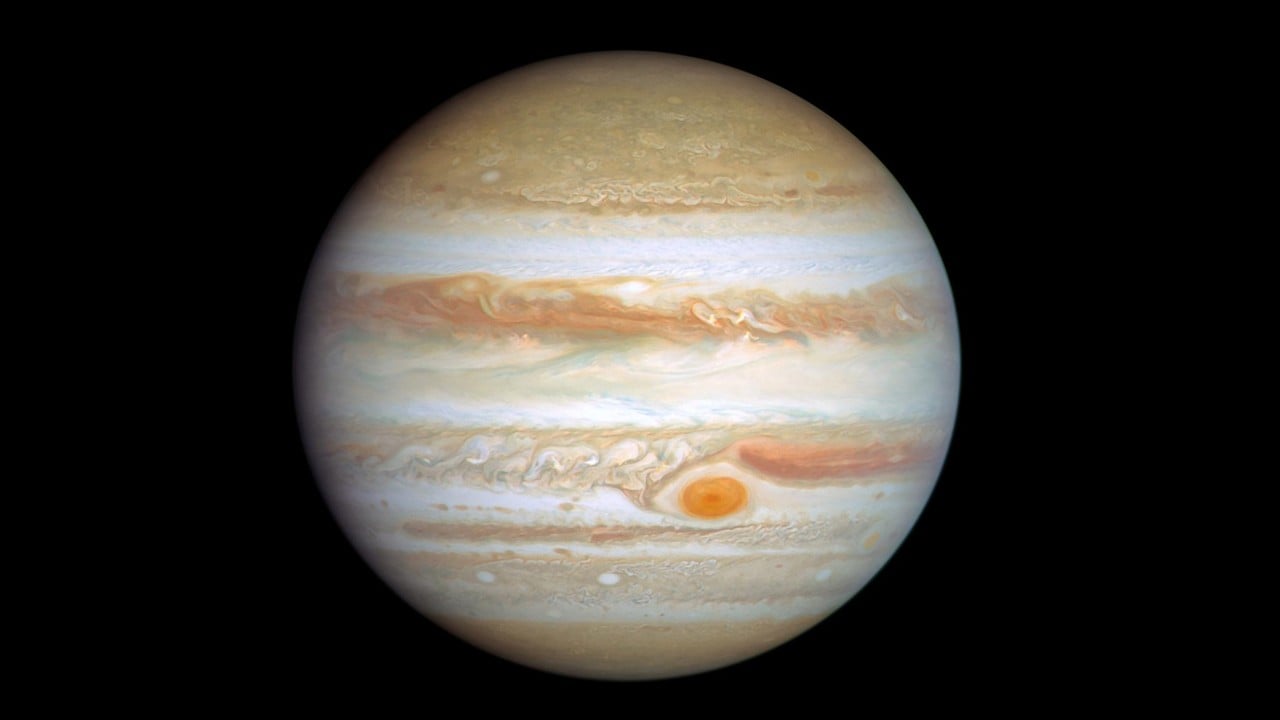
Radio signals take more than fifty minutes to travel one way between Earth and Jupiter. If a spacecraft encounters an unexpected hazard or needs an emergency trajectory adjustment, ground controllers back home are completely blind and helpless for nearly two hours round trip. That reality breaks traditional mission control models.
To fix this bottleneck, space agencies are racing to build autonomous systems that let probes navigate the solar system completely on their own. Recent orbital tests out of China show a major stride toward that goal by adapting a foundational concept once explored under NASA's StarNAV project.
Why Traditional Tracking Fails in the Outer Solar System
For decades, deep space missions have relied heavily on ground networks like NASA's Deep Space Network or equivalent antenna arrays. Huge radio dishes beam signals to distant probes, measure the Doppler shift, and calculate position based on round-trip travel times.
It works wonderfully for Mars or the Moon. But push out toward the gas giants, and the math falls apart.
Distance dilutes signal strength, and latency makes real-time course corrections impossible. Waiting fifty minutes for a distress signal to reach Earth, and another fifty minutes for the manual patch to arrive back at the spacecraft, is a recipe for disaster. If a probe is hurtling toward a planetary moon or threading a complex gravitational needle, it needs onboard intelligence that can calculate speed and heading instantly, without human oversight.
The Physics Behind Stellar Aberration Navigation
Instead of relying on radio pings from home, engineers are turning back to the oldest navigation tool known to humanity: the stars. But this isn't old-school maritime sextant sailing. It is a precise physical phenomenon called stellar aberration.
Think about driving through a heavy downpour on a straight highway. Even if the rain is falling vertically, the drops appear to slant toward your windshield because your car is moving forward into them. The faster you drive, the greater the apparent angle shift.
The exact same effect happens to starlight as a spacecraft moves through space. Because a probe travels at massive speeds relative to background stars, the apparent positions of those stars shift by tiny fractions of a degree. By measuring these minute angular variations, an onboard computer can calculate the exact velocity and direction of the craft.
Measuring stellar aberration requires extreme precision. Angles must be calculated down to milliarcseconds—an accuracy equivalent to spotting the apparent width of a single grain of rice from five hundred kilometers away.
Putting the Concept to the Test in Low Earth Orbit
To prove the concept works outside of computer simulations, Chinese researchers recently launched the Tianhui-7 satellite to test high-precision star cameras and infrared sensors in orbit.
Operating about five hundred kilometers above Earth, the satellite used our planet as a stand-in for deep space trials, running tests for twenty hours to validate its autonomous position-fixing algorithms. The hardware relied on next-generation star cameras designed to capture milliarcsecond-level data. Ground tests and orbital telemetry confirmed that stellar observation can match the positional accuracy of traditional ground-based tracking networks—hitting within roughly a five-kilometer margin of error during trials.
This technology is the core enabler for the upcoming Tianwen-4 mission, China's flagship endeavor targeting the Jupiter system around 2030. Tianwen-4 aims to study the gas giant and its complex system of moons, requiring deep-space autonomy to manage the extreme distances involved.
What Autonomous Navigation Means for Future Exploration
The shift toward stellar aberration navigation signals a wider evolution in aerospace engineering. As national space programs look further outward toward Saturn, Uranus, and the Kuiper Belt, continuous hand-holding from Earth-based mission control is becoming obsolete.
Building smart probes that can read the star patterns around them, compute their own vectors, and execute burns independently changes the economics and reliability of deep space exploration. Space agencies no longer have to build massive, power-hungry radio transmitters solely to keep a tether on distant hardware.
The hardware is graduating from laboratory benches to actual flight readiness. When the next generation of outer planet probes finally leaves Earth, they will be looking up at the stars to find their own way home.
China's Tianwen-4 Could Navigate to Jupiter Using the Stars!
This short video provides a quick visual breakdown of how China plans to utilize stellar navigation for its upcoming Tianwen-4 mission to Jupiter.