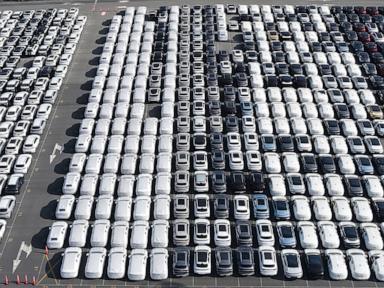
China’s auto industry is moving at a pace that traditional manufacturers simply refuse to comprehend. When you look at the raw numbers coming out of the shipping ports right now, the scale is staggering. China’s car exports in the first eight months have already crushed the total volume recorded for the entire previous year, driven almost entirely by a massive surge in electric vehicle demand. Western executives laughed at these cars a decade ago. They aren't laughing anymore.
If you still think Chinese automakers only build cheap, low-quality compliance cars, you're looking at a world that doesn't exist anymore. I've tracked this shift closely, and the speed of transformation catches everyone off guard. They didn't just catch up on manufacturing quality. They built an entire supply chain ecosystem from scratch that leaves legacy automakers scrambling to match costs and software integration.
The Numbers Do Not Lie
Let's look at the actual trajectory. We aren't talking about marginal year-over-year gains of five or ten percent. We're talking about structural shifts that reshape global trade routes. Ports in Shanghai and Ningbo are packed with specialized roll-on/roll-off cargo ships built specifically to haul millions of vehicles overseas.
Domestic overcapacity plays a huge role here. The local market inside China is hyper-competitive, featuring brutal price wars that weed out weak players daily. Brands that survive this domestic meat grinder emerge battle-tested. They bring cars to international markets that feature advanced battery tech, sprawling infotainment screens, and autonomous driving features that cost twice as much on a European or American badge.
Batteries change everything. Because China cornered the market on the critical minerals and processing facilities needed for EV production years ago, their domestic car companies hold a massive cost advantage. They build the batteries, they assemble the cars, and they even own the shipping logistics in many cases. That vertical integration breaks traditional Western cost models.
Why Legacy Automakers Are Panicking
Traditional car companies in Europe and North America built their businesses around the internal combustion engine over a century. They mastered fuel injection, transmissions, and complex exhaust systems. That expertise is basically worthless in the electric era.
Transitioning from gas to electric isn't just swapping out a motor. It requires completely rethinking factory floors, software architectures, and supply chains. Legacy brands move slowly because they have massive dealer networks, union obligations, and legacy debt. Chinese startups and state-backed giants pivot on a dime. They push out software updates over the air that fix bugs and add features overnight, while older brands take months to push a minor map update.
Tariffs try to slow the bleeding. Governments in Brussels and Washington throw up protective walls, slapping heavy duties on imported electric cars to keep domestic assembly lines alive. But protectionism only buys time. Chinese brands simply shift tactics. They build factories inside those target markets, partner with local dealerships, or focus on hybrid and plug-in options that navigate the loopholes in trade law.
What This Means for Buyers and Global Markets
You're going to see these vehicles on your local streets much sooner than you think. They are already dominating parts of Southeast Asia, Latin America, and the Middle East. Europe is next, and North America will follow once the regulatory landscape shifts or local manufacturing footprints get established.
The quality gap has vanished. Crash test ratings for top-tier Chinese electric models routinely match or beat traditional Western and Japanese competitors. The interiors feel modern, the ride is quiet, and the price point undercuts domestic alternatives by thousands of dollars.
Stop viewing this as a temporary trend. It's a permanent realignment of the global auto industry. If you run a legacy manufacturer, your margins are shrinking and your software looks outdated. If you're a consumer, you're about to get a lot more choices for your next car purchase, and they will cost significantly less than what you're used to paying.
Check your assumptions at the door. The future of driving is being built in Shenzhen and Shanghai, and the rest of the world is just trying to keep up. Take a hard look at your investment portfolio, your local dealership showroom, and your assumptions about global manufacturing power. The game has already changed.