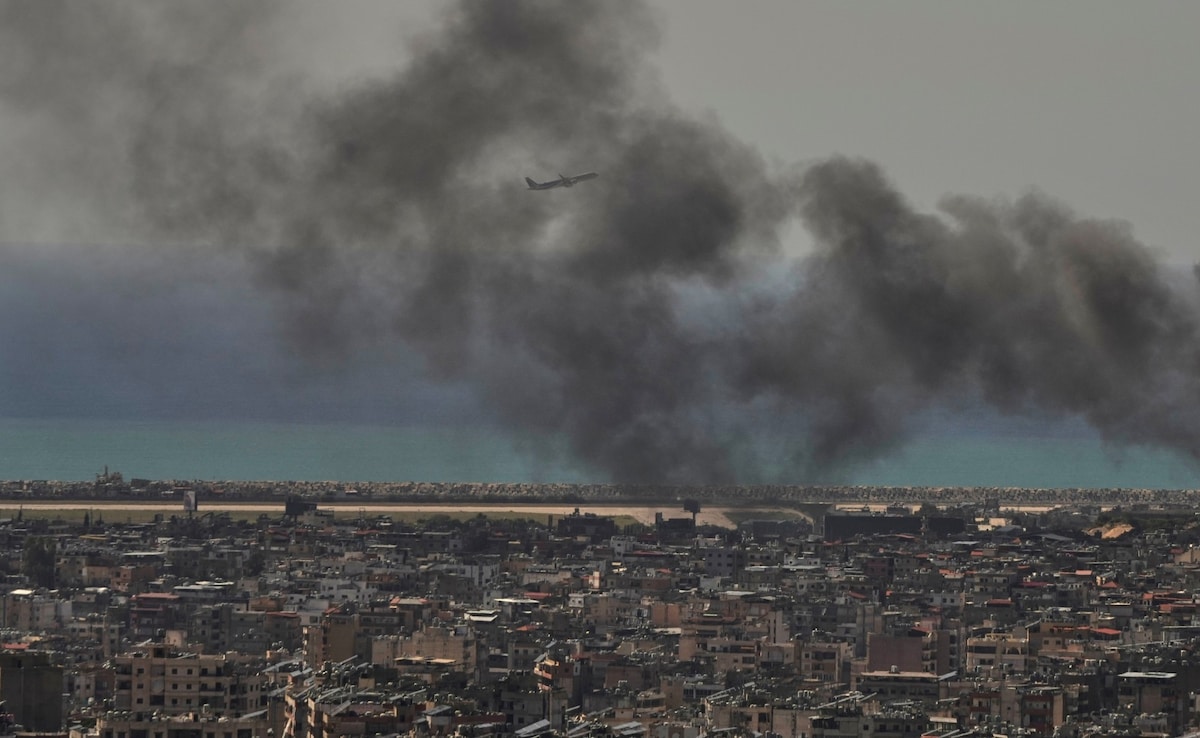
The prevailing wisdom in Western capitals suggests that a widening conflict in the Middle East is a strategic windfall for Beijing. The logic is simple enough on paper. Every Tomahawk missile launched by the United States and every carrier strike group deployed to the Red Sea represents a "pivot" away from the Indo-Pacific. If Washington is bogged down in a multi-front war involving Iran and its regional proxies, it has less bandwidth to contain Chinese ambitions in the Taiwan Strait or the South China Sea.
This assessment is wrong. Also making waves in this space: The Silence Left Behind by the Sea.
While the United States deals with the immediate tactical headache of regional instability, China is facing a structural threat to its economic foundation. Beijing’s grand strategy for the 21st century relies on a predictable, globalized energy market and the physical safety of maritime trade routes. Both are currently in shambles. For a nation that imports over 70 percent of its oil—much of it flowing through the very chokepoints now under fire—the current chaos isn't a distraction for its rivals. It is a direct assault on the Chinese Communist Party’s domestic legitimacy, which is built entirely on the promise of continued industrial growth.
The Energy Trap
China’s rise was fueled by the "Peace Dividend." For decades, Beijing enjoyed the luxury of being a free rider on the security architecture provided by the U.S. Navy. Chinese tankers moved freely from the Persian Gulf to the Port of Ningbo-Zhoushan, protected by the very "hegemon" Beijing decries in its official rhetoric. Further information on this are detailed by USA Today.
That era has ended. As tensions between Israel and Iran-backed groups escalate, the risk premium on crude oil is no longer a theoretical concern for analysts. It is a line item on the balance sheets of Chinese state-owned enterprises. Unlike the United States, which has transformed into a net energy exporter thanks to the shale revolution, China remains desperately tethered to the Middle East.
If the Strait of Hormuz is blocked or if Iranian oil infrastructure is targeted, the impact on the Chinese economy would be catastrophic. We are talking about a systemic shock that could stall the Chinese manufacturing engine. When oil prices spike, the cost of everything from plastics to logistics in the Pearl River Delta rises. This happens at a time when the Chinese economy is already struggling with a massive property debt crisis and flagging consumer confidence. Beijing cannot afford an energy tax on its exports.
The Belt and Road to Nowhere
The Middle East was supposed to be the crown jewel of the Belt and Road Initiative (BRI). Beijing spent a decade signing "comprehensive strategic partnerships" with everyone from Riyadh to Tehran. The goal was to build a network of ports, pipelines, and digital infrastructure that would bypass Western-controlled nodes.
The current conflict has exposed the fundamental flaw in this "business-only" diplomacy.
China’s policy of non-interference—the idea that it can trade with everyone while taking sides with no one—is failing the stress test of a hot war. When Houthi rebels began attacking commercial shipping in the Red Sea, they claimed they would not target Chinese vessels. In reality, the chaotic nature of maritime warfare doesn't respect diplomatic memos. Chinese-linked ships have been caught in the crossfire, and the resulting hike in insurance premiums and shipping rates applies to everyone.
Beijing expected its influence over Tehran to act as a stabilizer. It assumed that because it is Iran’s largest oil buyer, it could simply pick up the phone and demand calm. It turns out that revolutionary ideology and regional survival take precedence over the commercial interests of a distant customer. China has the economic weight of a superpower but the security footprint of a spectator. This mismatch is now costing billions of dollars in redirected shipments and delayed projects.
The Myth of the New Mediator
Last year, the world watched as Beijing brokered a surprise rapprochement between Saudi Arabia and Iran. It was hailed as a sign that the "American Century" in the Middle East was over and that a new, more pragmatic broker had arrived.
That narrative has aged poorly.
Mediating a diplomatic handshake during peacetime is easy. Managing a regional war is a different beast entirely. Since the current cycle of violence began, China’s primary contribution has been a series of recycled talking points about "restraint" and "two-state solutions." While the U.S. sends its Secretary of State on grueling shuttle diplomacy missions to prevent a total regional collapse, China’s special envoys have largely stayed on the sidelines.
The region's players are noticing. The Gulf states—Saudi Arabia and the UAE in particular—have realized that while China can buy their oil and build their 5G towers, it cannot or will not provide the security guarantees required to keep the lights on during a crisis. If you are a monarch in Riyadh looking at a sky filled with hostile drones, a Chinese white paper on "global security" is useless. You need interceptors. You need intelligence. You need a partner willing to exert hard power.
By failing to act as a true guarantor of stability, China is losing the trust of the partners it spent twenty years courting. The "China Model" of development without security is being exposed as a fair-weather philosophy.
Economic Contagion at Home
We must look at the internal pressure within the CCP. Xi Jinping’s "Global Development Initiative" is predicated on the idea that the East is rising and the West is declining. But a global war that disrupts supply chains puts the "rising" part at risk.
China is currently fighting a battle against deflation. Its factories are overproducing goods that the rest of the world is increasingly hesitant to buy. To survive, China needs smooth, cheap access to markets in Europe and Africa. The Red Sea route is the primary artery for this trade. Every day that ships are forced to detour around the Cape of Good Hope is a day that Chinese goods become less competitive.
The logistical nightmare adds a "time tax" to Chinese exports. For high-end electronics or seasonal apparel, a two-week delay is the difference between profit and loss. For the workers in Guangzhou and Shenzhen, this translates to reduced shifts and lower wages.
The Strategic Miscalculation
There is a school of thought in Beijing that believes time is on their side. They argue that as the U.S. depletes its munitions and political capital in the Levant, China grows relatively stronger.
This ignores the reality of modern alliance building. The instability in the Middle East is actually driving Western and Asian allies closer together. We see a tightening of the security "quad" and a renewed focus on supply chain resilience that specifically excludes China. The more the world feels "unsafe," the more countries move away from the hyper-efficient, China-centric model of the 2000s toward a more secure, fragmented trade system.
China's greatest fear has always been "Malacca Dilemma"—the possibility that its energy supplies could be cut off at the Malacca Strait. The current conflict has shown that the dilemma starts much further west. Beijing is watching its energy security evaporate in real-time, and it lacks the naval capacity or the political will to do anything about it.
The hard truth for the leadership in Zhongnanhai is that they need the U.S. to succeed in stabilizing the Middle East. They need the American "policeman" to keep the sea lanes open and the oil flowing. It is a humiliating position for a would-be superpower to be in: praying for the success of its greatest rival's military operations because its own economy is too fragile to survive the alternative.
A Ghost in the Machine
China’s absence from the Red Sea security coalition was a calculated move to avoid being seen as an "imperialist" power. But in the eyes of the international business community, it looked like an admission of weakness. If you cannot protect your own merchant fleet, you are not a global leader; you are a regional power with an oversized bank account.
The financial markets are already pricing in this realization. Foreign direct investment into China has turned negative for the first time in decades. Investors aren't just worried about Chinese regulators; they are worried about the geopolitical volatility that Beijing seems unable to manage.
The conflict in the Middle East is not a gift to China. It is a mirror reflecting the limitations of Chinese power. It shows a nation that has mastered the art of the deal but remains an amateur in the art of the world.
Review the specific cargo manifests of vessels currently bypassing the Suez Canal. Look at the insurance premiums for ships docking in Jebel Ali. The numbers do not lie. The "cost" of this war for China is not just measured in fuel prices, but in the permanent erosion of the global trade stability that allowed China to rise in the first place.
Check the latest Brent crude fluctuations against the manufacturing purchasing managers' index (PMI) coming out of Beijing next month.


