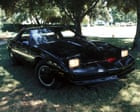
Imagine waking up to a $65 speeding ticket from a city you haven't visited in years. Now imagine that the "speeding vehicle" caught on camera isn't even moving. It's sitting on the back of a flatbed trailer. That's exactly what happened to Joe Robinson, a Chicago resident and owner of a famous KITT replica from the 1980s show Knight Rider. His iconic black Pontiac Firebird was "caught" speeding through New York City, despite the fact that Robinson was hundreds of miles away in Illinois.
This isn't just a funny story about a TV car. It’s a glaring look at the technical failures of automated traffic enforcement. The NYC Department of Finance sent a notice claiming the Chicago Knight Rider car was speeding. In reality, the car was being professionally transported by a shipping company. The camera didn't care. It saw a license plate and a blur of movement, then automatically generated a fine.
Automated Enforcement Is Lazy and Often Wrong
The logic behind speed cameras is simple. They’re supposed to make streets safer. But when the system is so poorly calibrated that it can't distinguish between a car driving and a car being towed, the "safety" argument starts to crumble. NYC's cameras are triggered by sensors that measure velocity. If a truck carries a car at 40 mph in a 25 mph zone, the camera takes a photo.
Usually, a human reviewer is supposed to look at these photos before the city mails the ticket. Someone missed this one. Or, more likely, they’re processing thousands of these a day and barely glancing at the screen. You’d think a glowing red scanner bar and a customized "KITT" aesthetic would stand out. Apparently not. For Robinson, the burden of proof fell entirely on his shoulders. He had to spend his own time proving he wasn't behind the wheel in a different state.
Why the Chicago Knight Rider Car Was in NYC At All
Joe Robinson doesn't just keep this car in a garage. He uses it for charity events and appearances across the country. The car is a dead ringer for the original, complete with the functional red light on the nose and the futuristic dashboard. It’s a piece of pop culture history.
At the time of the "violation," the car was being shipped from an event back to Chicago. Shipping a high-value replica requires professional haulers. These trailers move at the speed of traffic. When the hauler sped, the camera didn't tag the truck's plate—it tagged the most visible plate it could find, which was the one on the back of the Firebird.
The Problem With Out of State Plate Logic
When a camera catches a local, the process is streamlined. When it catches an out-of-state plate like Robinson’s Illinois tags, things get messy. Cities like New York rely on the hope that people will just pay the $50 or $100 because fighting it is too much of a headache.
- Most people can't afford to miss a day of work to fly to NYC for a hearing.
- Online dispute systems are notoriously clunky.
- Evidence like shipping manifests isn't always accepted on the first try.
Robinson’s case went viral because the car is famous. But think about how many regular people get these tickets while their car is on a trailer or even a tow truck. It happens more than the Department of Transportation likes to admit. They call them "glitches." I call it a revenue-first mindset that prioritizes volume over accuracy.
Dealing With a False Speeding Ticket
If you find yourself in a similar spot—framed by a camera for a crime your car committed while it was a passenger—don't just pay it. Paying is an admission of guilt. That can sometimes impact your insurance or your driving record, depending on the state’s reciprocity laws.
You need documentation. Robinson had his shipping receipts and the GPS logs from the transport company. If your car is being towed, get the invoice from the tow company immediately. You need to show the "Chain of Custody" for the vehicle. If the car was being moved by a third party, they are the ones responsible for the speed of the transport vehicle.
The Fight Against Robotic Bureaucracy
We’re moving toward a world where AI and automated sensors make more decisions about our lives. This Knight Rider incident is a perfect example of what happens when there’s no common sense in the loop. A computer saw a plate and a speed. It didn't see the trailer. It didn't see the straps holding the wheels down.
The Chicago Knight Rider car eventually got its "exoneration," but only after the story hit the news. The city eventually dismissed the ticket. But most people don't have a car that Michael Knight would be proud of. They just have a sedan and a bill they shouldn't owe.
Stop trusting that the city "checked the footage." They didn't. If you get a ticket in the mail, look at the photo with a magnifying glass. Check the background. Is there another car in the frame? Is your car on a lift? If anything looks off, contest it immediately. Use the online portal, upload your registration and any proof of your location at the time of the "incident." Force a human to actually do their job and look at the image. Usually, once a real person sees a car on a trailer being ticketed for speeding, they'll hit the delete key.
Check your mail, keep your shipping receipts, and never assume the camera is right.