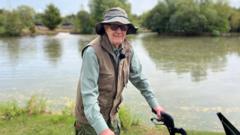
Every few years, the media finds a fossilized human being who has managed to survive a century on earth while engaging in some completely unremarkable habit. The headline writes itself: Centenarian credits daily walk for long life. We nod reverently. We lace up our sneakers. We log our mile. We feel virtuous.
We are also completely missing the point.
Let us dispense with the feel-good sentimentality right out of the gate. The media loves a hundred-year-old walker because it requires zero cognitive load, costs nothing, and lets everyone pretend that longevity is just a matter of putting one foot in front of the other for twenty minutes a day. It is the ultimate lazy consensus. It gives middle-aged professionals permission to check a box and call it fitness.
I have spent two decades in performance physiology trenches watching people optimize their lives around low-intensity habits while their actual physiological reserve quietly evaporates. I have seen healthy individuals blow years of potential capability on low-impact routines that do nothing to stave off the primary cause of late-life mortality: functional decay.
Walking a mile a day is a wonderful way to maintain baseline cardiovascular health if you are recovering from a hip replacement or ninety-eight years old. If you are fifty and want to remain independent, robust, and physically formidable when you hit eighty, treating a daily stroll as your primary training stimulus is an exercise in slow-motion self-sabotage.
The Survivorship Bias Fallacy
When a centenarian attributes their longevity to walking a mile a day, you are listening to survivorship bias speak directly to you from a microphone.
Think about the filtering mechanism at play. To reach one hundred years old, an individual requires a genetic deck of cards that very few of us hold. Their baseline cellular repair mechanisms, cardiovascular resilience, and immune response are statistical anomalies. They could have smoked cigars, eaten lard-soaked biscuits, and walked backward in high heels every Tuesday, and the headlines would still credit whatever mundane habit they mentioned to the local reporter.
Attributing a century of life to a casual daily walk is like asking a lottery winner if their secret strategy was buying a ticket with blue ink.
The biological reality is harsher. By the time the average person hits their fourth decade, they are losing muscle mass and bone mineral density at an accelerating rate. Sarcopenia and osteopenia do not care about your gentle afternoon promenade. Your skeleton remodels in direct response to mechanical load. If the only load your bones experience is the gentle impact of walking on flat asphalt, your body responds with brutal, ruthless efficiency: it deconstructs bone tissue because it assumes you do not need it.
Walking is locomotion, not conditioning. Treating them as interchangeable is how you end up brittle.
The Myth of Low-Intensity Salvation
The fitness industrial complex has spent the last decade convincing everyone that high-intensity exercise is dangerous and that low-intensity steady-state movement is the secret weapon for longevity. This is a brilliant marketing strategy because nobody ever got intimidated by a brisk walk.
Let us define terms. Low-intensity steady-state cardio has its place in a well-constructed program. It burns calories, aids recovery, and keeps cortisol manageable. But it does not build structural integrity. It does not improve force production. It does not challenge your neuromuscular system to adapt to unexpected chaos.
When people ask if walking is enough to keep them healthy, they are usually looking for absolution. They want an expert to look them in the eye and say, "Yes, your evening stroll around the subdivision is all you need to beat aging."
I will not lie to you.
Imagine a scenario where you trip over a curb at age seventy-five. A walker with decent cardiovascular health but zero explosive power or lower-extremity strength will hit the pavement like a sack of wet cement. Their hip breaks. The cascade begins: hospital bed, pneumonia, rapid cognitive decline, mortality. That centenarian on the news who walks a mile a day? They survived not because of the walk, but because their underlying genetics allowed them to retain enough structural scaffolding to keep moving despite the low stimulus.
You do not have those genetics. If you did, you would not be reading articles about how to age well. You would be too busy living.
What Real Physical Preservation Looks Like
If you want to age with teeth, you have to stop acting like your body is fragile glass that needs to be handled with extreme care. It is an adaptive machine that only responds to stress.
To build true physical autonomy, you need to turn your attention away from distance metrics and toward mechanics that actually matter.
Load the Skeleton Heavily
Bone density is not built by low-impact repetition; it is built by high-magnitude mechanical strain. You need to pick up heavy things. You need to squat, hinge, push, and pull against resistance that makes your muscles strain and your central nervous system wake up. Heavy resistance training signals the osteocytes in your bones to lay down new mineral matrix. A walk will never achieve this.
Train for Power, Not Just Endurance
As we age, we lose Type II fast-twitch muscle fibers at a much faster rate than slow-twitch fibers. These are the emergency-response fibers that catch you when you trip. If you only train slowly, your fast-twitch fibers atrophy permanently. You need to move fast against resistance—medicine ball slams, sled pushes, or controlled explosive movements. You need the capacity to generate force quickly.
Chase Range of Motion under Load
Flexibility without strength is just passive vulnerability. You need to move through full ranges of motion while under load. Deep squats, overhead presses, and lunges keep your joints lubricated, your connective tissue hydrated, and your nervous system confident in extreme positions.
The Downside of the Contrarian Approach
Let us be completely transparent about the cost of rejecting the walking gospel.
Lifting heavy weights hurts sometimes. Pushing yourself through high-threshold conditioning is uncomfortable. It requires supervision, attention to technique, and a willingness to look foolish while you learn how to move properly. You cannot zone out to a podcast while executing a heavy trap bar deadlift the way you can while shuffling down a sidewalk.
The low-intensity walk is comfortable. It requires no mental friction. That is precisely why people cling to it. It offers the emotional comfort of exercise without the biological cost of adaptation.
If you adopt the approach I am outlining, your joints will occasionally ache from productive stress. You will have to schedule recovery. You will have to admit that your current routine is inadequate.
The Verdict on Your Daily Routine
Should you stop walking? Of course not. Walking is a fundamental human movement pattern that clears your head, aids digestion, and keeps your baseline activity levels respectable.
Just stop pretending it is an insurance policy against the ravages of time.
If your entire fitness strategy consists of logging steps while your muscle mass wastes away and your bone density drops year by year, you are not investing in your future. You are just marching toward a frailer version of yourself with slightly better step-count data.
Put down the step counter. Pick up a barbell. Start building a body that can actually survive the century you are hoping to live.