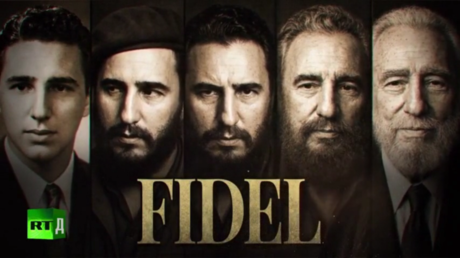
The Smoking Barrel
History smells like wet asphalt, cheap tobacco, and the ozone tang of an afternoon storm rolling off the Florida Straits.
Stand on the Malecón in Havana just as the sun dips below the horizon. The concrete is still radiating the day's punishing heat. Waves crash against the seawall, sending up salty plumes that mist the faces of old men playing dominoes under the flickering amber glow of sodium streetlights. They are talking about baseball. They are talking about the price of coffee. They are always, quietly, talking about him. Meanwhile, you can explore related events here: The Serpent With Many Heads And The Shadows Cast Over The Red Fort.
Fidel Alejandro Castro Ruz.
A full century has elapsed since a fiery infant was born to a wealthy sugar plantation owner in Birán, yet his ghost still sits uninvited at every Cuban dinner table. Think about what a hundred years actually means. Empires crumble in less time. Digital currencies rise and vanish. Entire generations are born, grow old, and turn to dust. Yet, mention the Comandante to a twenty-year-old hustling tourists for convertible pesos outside the Hotel Nacional, and you will see the exact same complex fire that burned in the eyes of their great-grandparents. To explore the full picture, check out the detailed article by USA Today.
Adoration. Exhaustion. Defiance. Fatigue.
We try to box him up in standard historical categories. Dictator. Liberator. Pariah. Visionary. But simple labels are lazy shields against the terrifying complexity of a man who reshaped the Western Hemisphere from an island ninety miles off the coast of Key West. To understand him at his centenary is to understand the seductive, dangerous architecture of absolute conviction.
The Grammar of Revolution
Picture a young lawyer in 1953, standing before a Cuban courtroom, stripped of his jacket, sweating through his shirt, defending an assault on the Moncada Barracks that ended in bloody catastrophe. Most men would have calculated the odds, accepted defeat, and slipped quietly into exile.
Castro did something entirely different. He turned his trial into a manifesto. History will absolve me, he declared.
It was a brilliant rhetorical trick. He bypassed the judges, the prosecutors, and the corrupt regime of Fulgencio Batista, directly addressing the future. He spoke the language of the dispossessed. When you walk through the narrow, sun-baked alleys of Santiago de Cuba today, you can almost hear the phantom echo of those words bouncing off the pastel plaster walls. People were starving while American corporations owned the heartbeat of the nation's agriculture. The sugar harvest was a golden whip cracking across the backs of peasants who had never seen a doctor or learned to read.
That was the fuel. Castro did not invent the misery; he merely gave it a voice, a rifle, and a calendar.
By New Year's Eve in 1958, Batista was fleeing into the Caribbean night, and a bearded guerrilla in an olive-green uniform was beginning a slow, triumphant march toward Havana on top of a tank. The air smelled of cigar smoke and gun oil. Millions believed they were walking into a dawn of pure liberation.
They did not know the night was just beginning.
The Crucible of Isolation
Power does not just corrupt; it isolates.
By the early 1960s, the island had transformed into a geopolitical chessboard. The Cold War was no longer a distant theoretical panic fought in European corridors; it was a pair of Soviet nuclear warheads pointed directly at Miami from the red soil of Pinar del Río.
Imagine living through the Thirteen Days of October 1962. Picture waking up every single morning with the rational, paralyzing fear that today is the day the sky turns to white-hot fire. My grandfather used to talk about the rationing books—the libreta—that arrived like holy scripture, dictating how many ounces of rice, beans, and cooking oil a family could scrape together for the month.
Castro gambled the sovereignty of his entire population on a high-stakes poker game between Washington and Moscow. He believed, with terrifying sincerity, that David could survive by hitching his wagon to a nuclear-armed Goliath, even if that Goliath ultimately collapsed under its own weight decades later.
This is where the mythology fractures under the sheer weight of human cost.
Supporters point to the literacy campaigns of 1961, where teenagers with backpacks fanned out into the mountains to teach illiterate farmers how to read by kerosene lamplight. They point to a healthcare system that routinely dispatched doctors to disaster zones across the globe, exporting medical diplomacy like other nations exported petroleum. These are undeniable facts. Walk into a neighborhood clinic in Havana, and you will find remarkably well-trained physicians, even if the building itself is missing windowpanes and the pharmacy lacks basic aspirin.
Critics point to the other ledger. The political prisoners crammed into damp concrete cells on the Isle of Pines. The writers and artists forced into silence or exile for daring to write a sentence that did not serve the collective narrative. The endless lines for bread that never arrive. The desperate, terrifying makeshift rafts constructed from inner tubes and rusted car parts, launched into the dark, shark-infested waters of the Florida Straits by people who preferred the risk of death to the certainty of suffocation at home.
Both things are true simultaneously. That is the haunting paradox of the Cuban experiment. It was built on a foundation of profound social justice and enforced with an iron fist of political exclusion.
The Long Shadow
Decades passed. The Soviet Union dissolved overnight, plunging Cuba into what the government euphemistically called the Special Period in Time of Peace.
That phrase is a masterclass in bureaucratic cruelty. There was nothing peaceful about it. Dogs vanished from the streets of Havana because people were starving. Bicycles were imported by the hundreds of thousands from China to replace buses that ran out of diesel. Citizens grew gaunt, their skin tightening over cheekbones, walking for miles in the humid heat because the national grid flickered out for days at a time.
Yet, Castro stayed.
He gave speeches that lasted six hours under the tropical sun, never losing his voice, never shedding his jacket, standing tall against the trade embargo that tightened around the island like a boa constrictor. He outlived ten American presidents. He survived assassination plots involving exploding cigars, poisoned wetsuits, and mafia hitmen.
When he finally handed over power to his brother Raúl—and eventually to a new generation of bureaucrats who barely remember the Sierra Maestra—he did so not because he was defeated by men, but because time finally came for him.
The Final Chord
A hundred years after his birth, Fidel Castro is no longer just a man. He is a weather pattern.
He is the reason why a young girl in Old Havana dreams of escaping to Madrid while her grandmother stubbornly refuses to throw away a faded poster of a bearded rebel holding a carbine. He is the reason why Washington still treats a narrow strip of Caribbean sand with a paranoid, defensive obsession that defies all modern logic.
When you walk down the Malecón tonight, past the peeling paint of colonial facades and the rumbling engines of vintage 1957 Chevrolets holding together with wire and sheer stubbornness, you can feel it. The past is not dead here. It isn't even past. It is the salt on your lips, the rhythm of the drums in the central square, and the quiet, unending question of what comes next when the century finally turns its back.