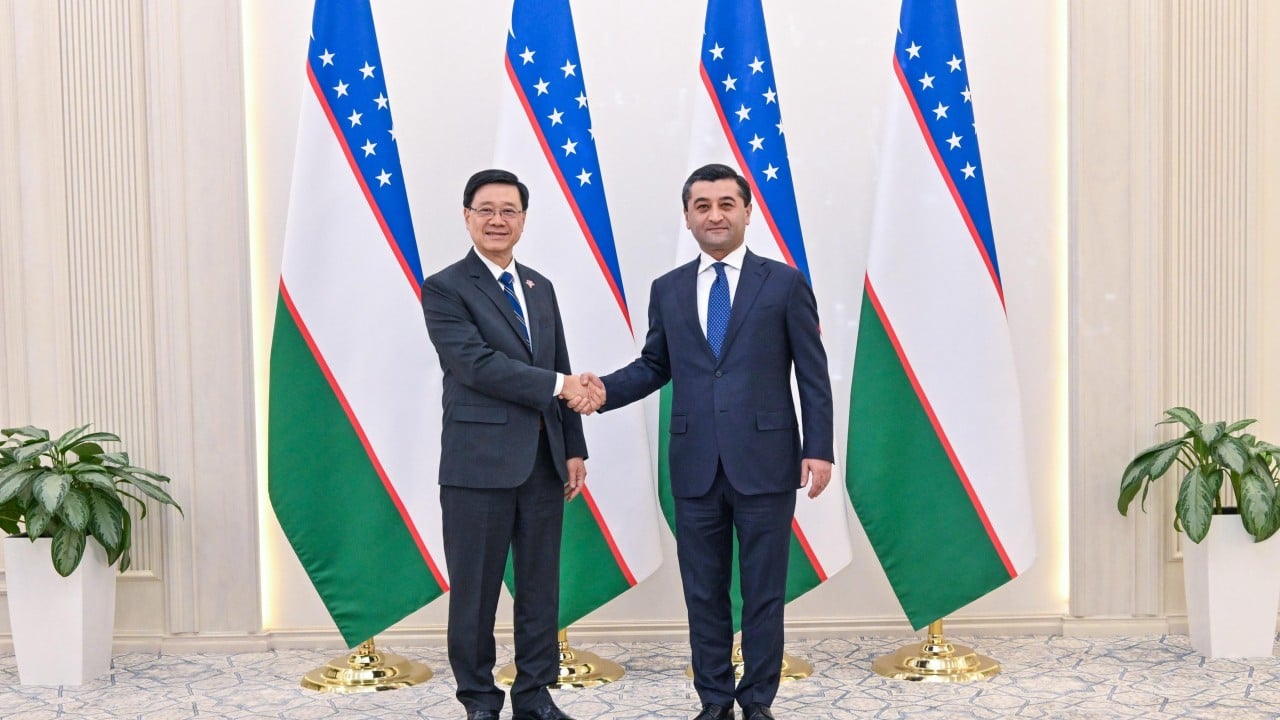
Chief Executive John Lee is celebrating in Tashkent, but the euphoria is misplaced.
The Hong Kong government just announced a reciprocal 30-day visa-free agreement with Uzbekistan. On paper, it sounds like a triumph of economic diplomacy. The mainstream press is running the predictable commentary: a historic opening of the Belt and Road, a boost for tourism, and a gateway to emerging Central Asian markets. If you found value in this piece, you might want to look at: this related article.
It is classic bureaucratic theater.
The reality? This visa agreement is an administrative band-aid on a structural wound. It mistake a lack of paperwork for a presence of economic gravity. For years, I have watched trade delegations fly into frontier markets, sign memos, shake hands, and return home to realize that a passport stamp does not create a supply chain. For another look on this development, see the recent update from Reuters Business.
Removing a visa requirement changes nothing if the infrastructure to move capital, goods, and people remains fundamentally broken.
The Illusion of the 30-Day Solution
Let us look at the mechanics. Currently, Hong Kong passport holders get 10 days in Uzbekistan. Uzbek ordinary passport holders get zero days in Hong Kong without a tedious visa process. Equalizing this to 30 days is framed as an economic equalizer.
It is not.
No serious corporate entity in Hong Kong was holding back on investing in Tashkent or Samarkand because they could only stay for 10 days at a time. If an executive needs more than 10 days to scout an investment, they apply for a business visa. It is a minor business expense. Assuming that extending a tourist window to 30 days will magically activate capital flows is a fundamental misunderstanding of how institutional money works.
Consider the baseline. For an Uzbek entrepreneur, entering Hong Kong visa-free for 30 days sounds appealing. But what happens when they land? They enter one of the most restrictive corporate banking environments in the developed world.
Try opening a corporate bank account in Hong Kong as a Central Asian entity without a massive multi-national footprint. It is an exercise in bureaucratic futility. Compliance departments at institutions like HSBC or Standard Chartered view the region through a hyper-conservative risk lens. A 30-day tourist passport entry does not solve the compliance bottlenecks of Know Your Customer (KYC) and Anti-Money Laundering (AML) protocols.
The Logistics Deficit
Trade requires transit. You cannot have a flourishing economic relationship built entirely on long-haul flights that do not exist.
While the Hong Kong administration touts agreements in Kazakhstan and promises direct flights to Almaty by next year, the actual connectivity to Uzbekistan remains an afterthought. Cargo does not travel on tourist passports. It travels via rail, sea, and air freight.
[Hong Kong Capital] ───( Banking Bottlenecks )───> [Uzbekistan Projects]
                                 │
                   (No Direct Freight Infrastructure)
                                 │
                                 ▼
                     [Dead-End Memorandums]
Uzbekistan is one of only two doubly landlocked countries in the world. To get goods from Hong Kong to Tashkent, you must cross at least two sovereign borders. The logistical friction here is measured in weeks of customs delays and thousands of dollars in overland freight costs per container.
A visa exemption does not pave roads. It does not lower tariffs. It does not standardize rail gauges.
Dismantling the Tourism Fantasy
The cultural exchange narrative is equally flawed. Local travel agencies like Wing On Travel are already boasting about fully booked nine-day tour groups to Uzbekistan.
This is a niche trend, not a structural economic pillar.
A few hundred adventurous retirees visiting the Registan does not move the needle for Hong Kong’s broader economy. Conversely, the idea that a wave of Uzbek tourists will descend upon retail shops in Causeway Bay to rescue the city's slumping retail sector is delusional. The purchasing power parity simply does not align.
According to data from the World Bank, Uzbekistan’s GDP per capita sits significantly below the global average. The segment of the Uzbek population wealthy enough to vacation in Hong Kong—one of the most expensive cities on Earth—already possessed the means and connections to secure visas under the old system.
Where the Real Capital Flows
If you want to understand where Central Asian money actually wants to go, look at Dubai or Singapore.
Dubai did not win Central Asian wealth by just offering visa-free entry. They won it by creating a frictionless asset-holding environment, tax neutrality, and physical proximity with daily, high-frequency flight connections. Singapore won institutional asset management by providing ironclad legal clarity and predictable regulatory frameworks.
Hong Kong is pitching itself as a "super-connector." But a connector must bridge two points of high compatibility. Right now, Hong Kong’s financial system is optimized for high-volume, institutional flows moving into and out of mainland China. Uzbekistan’s economy, while growing, is driven by primary commodities, agriculture, and a privatizing state-owned sector.
The financial plumbing of the two regions does not match.
The Actionable Pivot for Business Leaders
If you are an investor or business owner looking at this announcement, ignore the political spin. Do not rush to book a 30-day trip just because you can. Instead, look at the structural reality:
- Focus on Special Purpose Vehicles (SPVs): Do not try to move capital directly between Tashkent and Hong Kong entities. Use intermediary jurisdictions with established banking corridors to handle the transactional volume.
- Target Logistics and Storage, Not Retail: The real money in Central Asia isn't in consumer goods arbitrage; it is in building the cold-chain storage and logistics infrastructure that allows their agriculture to reach international markets.
- Solve the Currency Risk: The Uzbek som carries inherent volatility. Any long-term contract signed under the euphoria of this visa deal needs robust hedging strategies anchored in hard currencies.
Stop asking when the visa policy takes effect. Start asking why the banking system remains closed to the very markets the city claims it wants to court. Until the financial and physical infrastructure matches the diplomatic rhetoric, this agreement is nothing more than a headline.


