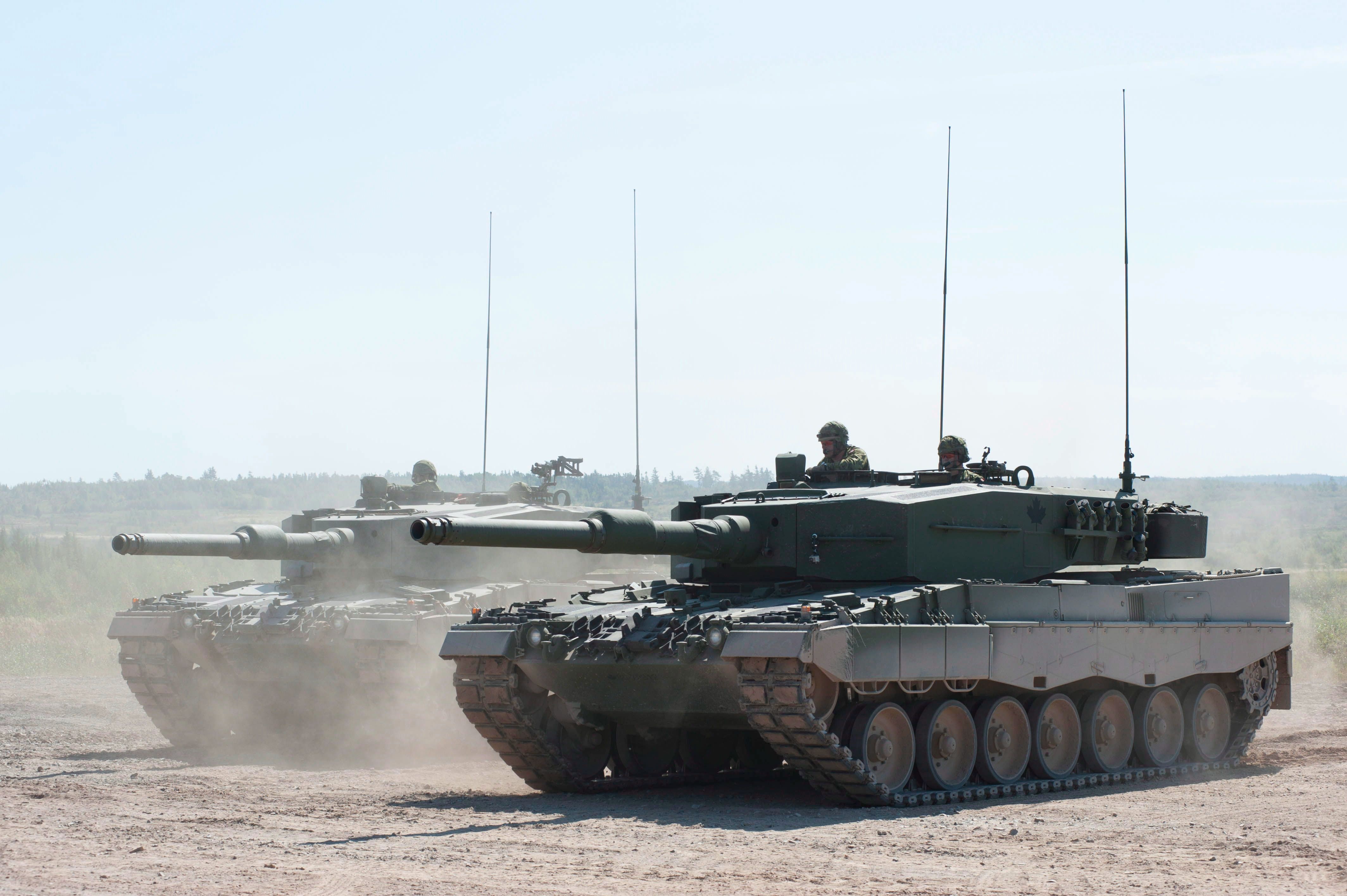
The Canadian Army is currently operating on borrowed time and cannibalized parts. After decades of neglect, the federal government finally issued a formal request for information on May 13, 2026, asking the global defense industry how it might replace or modernize the military’s crumbling fleet of Leopard 2 tanks. While the official announcement frames this as a forward-looking step toward "Heavy Direct Fire Modernization," the reality on the ground is far more desperate. Canada’s armored capability has effectively collapsed to a single functional squadron, leaving the nation’s NATO commitments in Latvia and its domestic defense posture resting on hardware that is rapidly becoming obsolete.
Ottawa is not just looking for a new tank. It is looking for a way to reverse a thirty-year slide into strategic irrelevance. The current fleet, primarily comprised of Leopard 2A4 models purchased used from the Netherlands in 2007, is plagued by a chronic lack of spare parts and the physical toll of high-tempo deployments. The move to engage potential suppliers signals a belated admission that the "Inflection Point" warned of in internal military documents has arrived. Modern warfare is no longer about counter-insurgency or peace support; it is about high-intensity conflict where the absence of heavy armor is a death sentence. Don't forget to check out our earlier coverage on this related article.
The Hollow Square in the Armored Corps
To understand why this procurement effort is so urgent, one must look at the math of the current inventory. On paper, Canada possesses roughly 82 Leopard 2 variants. In practice, the number of "mission-ready" platforms is a fraction of that. The shortage of components has become so severe that technicians are often forced to strip parts from one tank just to keep another idling. This practice, known in the motor pools as "robbing Peter to pay Paul," has reached its mathematical limit.
The crisis was accelerated by Canada’s contribution to Ukraine. By sending eight Leopard 2A4s to help the Ukrainian effort against Russian aggression, the Department of National Defence (DND) essentially amputated 10 percent of its operational fleet without a concrete plan for immediate backfill. This was a noble political gesture that created a tactical vacuum. The troops remaining in Canada and those deployed to the NATO brigade in Latvia are now working with a fleet that is more of a museum exhibit than a modern fighting force. If you want more about the history here, BBC News offers an in-depth summary.
Military planners are now forced to choose between two paths. They can attempt a deep modernization of the existing hulls, adding modern electronics and active protection systems, or they can scrap the Leopards entirely in favor of a new platform. The DND is floating a timeline that sees new or upgraded vehicles operational by 2035, with a target of 2030 for a final decision. In the world of modern procurement, a decade is an eternity.
The Drone Shadow and the Death of Old Armor
The war in Ukraine has rewritten the manual on tank survival. It is no longer enough to have thick steel and a powerful gun. The proliferation of first-person view (FPV) drones and loitering munitions means that any tank without an integrated electronic warfare suite and an active protection system (APS) is a multi-million-dollar coffin.
Canada’s current Leopards lack these defenses. They were designed for a world where the primary threat came from other tanks or wire-guided missiles fired from the ground. Today, the threat comes from $500 plastic drones carrying shaped charges that strike the thin top armor.
This technological shift is the primary reason why the "Heavy Direct Fire Modernization" project is so complex. The Army isn't just buying a vehicle; it is buying into a digital ecosystem. Any replacement must be able to jam incoming signals, intercept projectiles mid-flight, and integrate with uncrewed systems. If Ottawa buys another "analog" tank, they are simply spending billions to buy a target.
Procurement Options on the Global Market
The Request for Information (RFI) will likely bring several heavyweights to the table. Each offers a different vision for the future of Canadian armor, and each carries significant political and industrial baggage.
- The German Connection (KNDS Leopard 2A8): This is the logical successor. Many NATO allies are already moving toward the 2A8, which features integrated Trophy active protection and improved situational awareness. Sticking with the Leopard family would simplify training and logistics, but the production lines in Germany are backed up for years.
- The South Korean Disruptor (Hanwha K2 Black Panther): Poland’s massive purchase of K2 tanks has proven that Seoul can deliver high-quality hardware faster than almost anyone else. Hanwha is known for being aggressive on "industrial benefits," meaning they might be willing to set up assembly or maintenance hubs in Canada.
- The American Heavyweight (General Dynamics M1A2 SEPv3 Abrams): While the Abrams is a beast on the battlefield, its fuel-hungry turbine engine has always been a sticking point for the Canadian logistics chain, which is built around diesel. However, the proximity of the American supply chain is a powerful argument for continental defense.
The 2035 Problem
The most damning part of the current plan is the schedule. The DND is aiming for 2035 for full operational capability. For a soldier sitting in a 35-year-old tank in Gagetown or Valcartier, that date might as well be in the next century.
History shows that Canadian procurement rarely meets its initial deadlines. If the project slips by even three years, Canada will be trying to hold a NATO line with 50-year-old tanks against adversaries who have spent that time perfecting autonomous drone swarms. The military leadership knows this. Internal briefings from the Royal Canadian Armoured Corps have stressed the need to "move as quickly as we can," but "quick" in Ottawa is a relative term.
There is also the question of "Medium Cavalry Vehicles." The RFI suggests the military is looking at a lighter, wheeled platform to complement the heavy tanks. This is a ghost of the early 2000s, when the Army briefly considered getting rid of tanks entirely in favor of the Stryker Mobile Gun System. That experiment failed because wheels cannot go where tracks go, and thin skin cannot survive a real gunfight. The fact that this idea is resurfacing suggests a lingering internal debate about whether Canada even wants to be in the "heavy" business anymore.
Industrial Politics and the Bottom Line
No Canadian defense contract is purely about defense. It is about regional development and jobs. Any company that wants to win this contract—which could be worth upwards of $2 billion when including support vehicles—must promise to spend massive amounts of money in Canada.
This "Industrial and Technological Benefits" policy often slows down the process and inflates the price. General Dynamics Land Systems-Canada (GDLS-C) in London, Ontario, is the domestic titan in this space. While they don't build a main battle tank from scratch, they are the masters of the Light Armoured Vehicle (LAV). Any successful bid for a new tank will likely have to involve a partnership with a domestic firm like GDLS-C to handle the long-term maintenance and turret integration.
The government is also facing a massive personnel shortage. You can buy the best tank in the world, but if you don't have the technicians to fix the electronics or the crews to drive them, the fleet stays in the shed. The recently announced $250 million investment in skilled trades for the military is a recognition of this, but training a master tank technician takes years, not months.
A Choice Between Relevance and Ritual
The Canadian Army is at a crossroads where the path of least resistance leads to total obsolescence. For years, the tank has been treated as a luxury item—something to be brought out for ceremonies or small-scale training exercises while the real work was done by light infantry and LAVs.
Ukraine changed that. It proved that without heavy direct fire, you cannot take ground and you certainly cannot hold it. Ottawa’s RFI is a first step, but it is a small one. The real test will be whether the government has the stomach to write the check for a top-tier platform and the political will to bypass the usual decade of bureaucratic dithering.
The Leopards are dying. The replacement needs to be more than a press release; it needs to be a commitment to a military that can actually fight. If the decision takes until 2030 and the delivery takes until 2035, the Canadian Armoured Corps will have long since ceased to exist as a credible force.
Canada has spent thirty years pretending that the world was getting safer and that heavy armor was a relic of the Cold War. The current request for information is the sound of that illusion shattering. The only question left is whether the government will buy a weapon system that can survive the 2030s, or if they will simply buy another round of excuses.