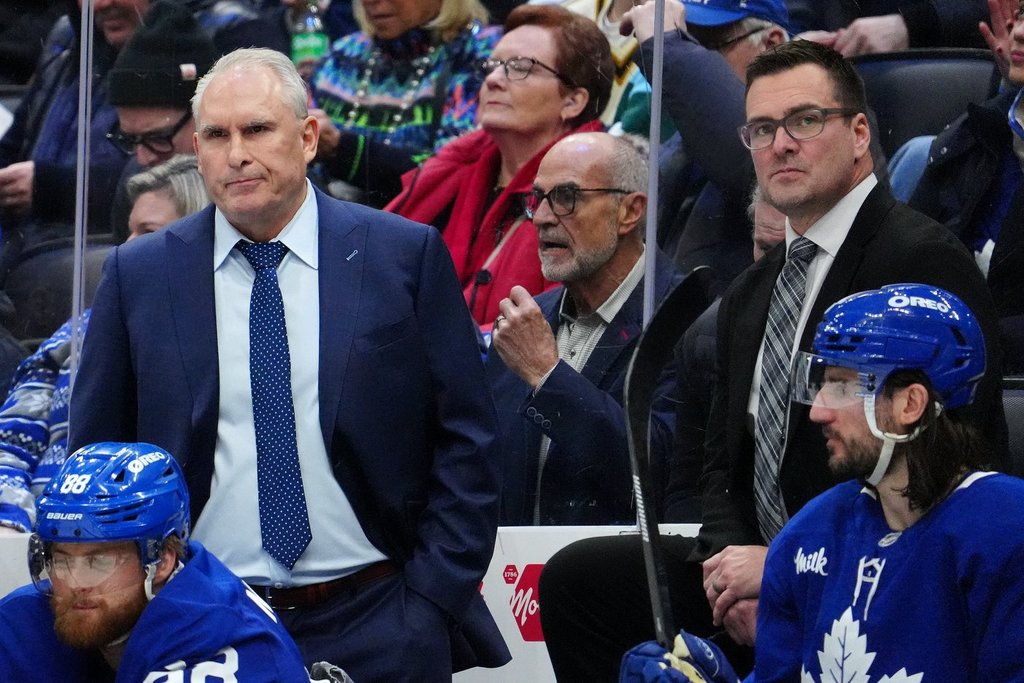
The Toronto Marlies have officially named Steve Sullivan as their new head coach, a move that signals a massive shift in how the Toronto Maple Leafs intend to bridge the gap between development and the NHL roster. This is not just a standard American Hockey League hiring to fill a vacancy. It is a deliberate, calculated play by a front office under immense pressure to extract maximum value from its pipeline. Sullivan steps into a pressure cooker where winning games is secondary to polishing prospects into cheap, effective NHL contributors.
The primary question surrounding this hiring is straightforward: Why Sullivan, a man who has spent more time in NHL front offices recently than behind a bench, and why now? The answer lies in the evolving economic reality of the modern NHL, where a team’s championship window is dictated entirely by how well it integrates entry-level contracts alongside max-salary superstars. Sullivan isn't here just to draw up power-play schemes. He was brought in to overhaul the psychological and tactical preparation of Toronto's next wave.
The Development Dilemma in the Cap Era
The Toronto Maple Leafs have a luxury tax problem that cannot be solved by trades or free agency. With a massive chunk of their salary cap tied up in a handful of elite forwards, the margins for error on the rest of the roster are razor-thin. They need young players who can step onto NHL ice and immediately play reliable, structured minutes without costing more than the league minimum.
For years, the Marlies operated as a powerhouse in terms of resources, but the translation from AHL stardom to NHL utility has been uneven.
- The Scoring Trap: Dynamic AHL point-producers frequently stall out when called up because they cannot adapt to a bottom-six checking role in the NHL.
- The Defensive Chasm: Young defensemen who look elite running an AHL power play are often exposed by the speed and heavy forechecking of NHL top lines.
- The Accountability Gap: The transition from being "the guy" in the minors to playing six minutes a night under the bright lights of the Scotiabank Arena ruins prospects mentally if they aren't insulated correctly.
Sullivan spent over a thousand games in the NHL as a player, frequently defying the odds as a smaller, highly skilled forward during an era that favored brute force. Later, his time as an assistant general manager in Arizona gave him a view of the macroeconomic side of hockey operations. He understands exactly what a general manager needs to see from a call-up, and he knows how easily a prospect can ruin their reputation in a single, undisciplined shift.
Why a Front Office Background Matters Behind the Bench
Traditional hockey hiring cycles usually involve recycling the same assistant coaches or promoting lifetime minor-league bench bosses. By choosing Sullivan, Toronto is breaking that cycle.
When a coach has only ever known the locker room, they tend to view personnel decisions through a very narrow lens. They want to win tonight’s AHL game to protect their own record. They will lean on 28-year-old minor-league veterans who know the system rather than letting a 19-year-old draft pick make mistakes and learn from them.
Sullivan’s executive background changes that dynamic completely. He knows that an AHL win in November means nothing if the organization's top defensive prospect spent the third period sitting on the bench. He has sat in the meetings where trades are made and budgets are set. He can look at a player and see not just a winger for Tuesday night against Rochester, but an asset that needs to be ready for an NHL playoff series in two years.
This appointment bridges an institutional divide that plagues many organizations. The communication between the NHL front office and the AHL coaching staff must be seamless, and putting a former executive behind the Marlies bench ensures that both entities are speaking the exact same language.
Shifting from Tactical Systems to Individual Hardening
The tactical footprint of the modern AHL is largely dictated by the parent club. Sullivan won't be inventing a radically new system out of thin air; he will be executing the overarching structural philosophy demanded by the Maple Leafs. The real work happens in the micro-adjustments and the daily habits of the players.
Consider the reality of a modern professional hockey player. They have been the best player on every team they have ever skated for since they were five years old. Then they arrive in the AHL, and suddenly everyone is just as fast, just as strong, and just as smart. The mental adjustment is often more grueling than the physical one.
The Audition Reality
Sullivan’s job is to run a perpetual audition. He must recreate the exact stressors of the NHL environment within the walls of Coca-Cola Coliseum.
| AHL Requirement | NHL Reality | The Sullivan Focus |
|---|---|---|
| Top-line minutes and power-play time | Fourth-line grinding, limited shifts | Teaching offensive stars how to track back and kill penalties without losing their identity. |
| Forgiving environment for turnovers | One mistake leads to a goal and a seat in the press box | Enforcing a zero-tolerance policy on high-risk plays at the blue lines. |
| Slower pace of physical forechecking | Relentless physical pressure from heavy NHL line combinations | Improving wall play, puck protection, and quick-release passing under duress. |
This isn't about crushing a player’s creativity. It is about teaching them that creativity without structure is useless at the highest level. Sullivan succeeded in the NHL because he adjusted his game to survive the changing landscapes of the sport. That is the exact piece of wisdom he needs to impart to a locker room full of teenagers and early-twenties players who still think talent alone will carry them.
The Risk of the Unproven Bench Boss
Every hiring carries a downside, and it would be foolish to ignore the blank spaces on Sullivan’s resume. He has not been a head coach at this level. Managing a game in real-time is a specific skill that requires instinct, timing, and a deep understanding of match-ups.
Line changes during a stoppage, knowing when to pull the goaltender, managing the egos of players who feel they are being unfairly held back—these are things you cannot learn while sitting in a management suite. There will be a learning curve. There will be games where an experienced AHL coach on the opposing bench out-maneuvers him visually.
Furthermore, the Toronto media market offers no shelter. The Marlies are covered with the intensity of an NHL team in most other cities. Every line combination will be analyzed, every benching scrutinized, and every losing streak magnified. If a top prospect stalls in their development, the blame will fall squarely on Sullivan’s shoulders. The front office is gambling that his poise as a player and executive will insulate him from that noise, but until the puck drops and the pressure mounts, it remains a gamble.
Re-engineering the Pipeline
The success of Sullivan’s tenure will not be measured by the Calder Cup standings. It will be measured by the number of players who graduate from his locker room and become regular, indispensable fixtures for the Toronto Maple Leafs.
If two years from now, Toronto is still forced to spend valuable draft capital at the trade deadline to acquire depth pieces because their own prospects aren't ready, then this experiment will have failed. If, however, Sullivan can transform raw, high-end talent into disciplined, versatile pros who can step into the NHL and immediately contribute, he will have solved the most pressing structural issue facing the entire organization. The work begins immediately on the ice, away from the headlines, where the real foundation of a franchise is quietly built.