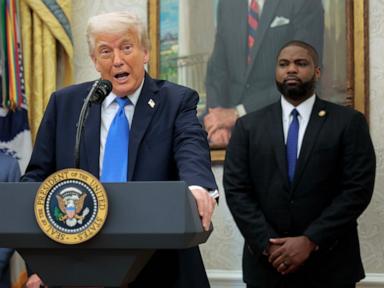
Political pundits love a simple story. When Rep. Byron Donalds quietly removed prominent banners, photos, and "Trump-Endorsed" badges from his gubernatorial campaign website in late September 2026, the cable news and political press machine immediately spun up the predictable narrative: Panic in the MAGA ranks. According to reports from outlets like CNN and WTSP, the edits happened roughly six weeks before the November general election, right as national polling—including a September Reuters/Ipsos survey showing President Donald Trump's approval rating at 32% amid an ongoing conflict with Iran and rising gas prices—suggested national headwinds for Republicans.
The lazy consensus across media commentary was straightforward: Donalds was running scared from his biggest political patron, trying to pull a fast one on swing voters while risking the wrath of the MAGA base.
That reading completely misunderstands how modern statewide campaigns actually work. Looking at the mechanics of Florida's 2026 gubernatorial race—and the fact that Donalds ultimately won the election on November 3 to become Florida's governor-elect—treating a September website redesign as an act of political disloyalty misses the real story. What commentators framed as a desperate retreat was actually textbook general-election funnel optimization.
The Myth of the "Website Scrub"
To understand why the media misread the moment, you have to look at what actually changed on Donalds' site and why campaigns alter digital real estate between August and October.
During a Republican primary—or the pre-primary positioning phase after Trump endorsed Donalds in February 2025, before Donalds even formally entered the race—a campaign homepage serves one primary audience: high-propensity Republican primary voters and small-dollar grassroots donors. For that audience, a giant banner featuring Trump's endorsement, a photo of Donalds and his wife Erika alongside the president, and prominent references to serving as a 2024 Trump surrogate are high-converting assets. They establish ideological credibility instantly and clear the primary field.
Once the primary concludes and the calendar flips to late September, the audience landing on byrondonalds.com changes overnight. The voters visiting a candidate's homepage six weeks before Election Day are no longer MAGA activists looking for loyalty tests; they are low-information general election voters, ticket-splitters, and undecided independents trying to figure out what a candidate plans to do about property insurance, healthcare costs, and local schools.
In campaign strategy, keeping primary-focused messaging at the top of a general election landing page isn't "staying loyal"—it is terrible conversion design. Every pixel above the fold on a campaign website is prime real estate. When Donalds' team shifted the homepage hierarchy to emphasize state-level kitchen-table planks—affordability, healthcare price transparency ("Your Doctor, Your Price"), law and order, and bringing aerospace jobs back to Florida's coast—they were doing what every disciplined statewide campaign does after Labor Day. They were localizing a federalized race.
Even more importantly, Donalds' campaign explicitly rejected the framing that the edits signaled a break with the president, calling that interpretation a "misconception". And the records backed them up: Donalds never renounced Trump's endorsement, never walked back his support for Trump's legislative agenda—including voting for the Secure America Act in June 2026—and kept endorsement quotes from Trump, alongside figures like Elon Musk, Speaker Mike Johnson, and Sen. Rick Scott, accessible on his platform.
Why Commentators Keep Asking the Wrong Question
Whenever a Republican candidate adjusts their messaging in the fall, political coverage tends to obsess over a binary question: Is this candidate loyal to Trump, or are they breaking away?
That question is fundamentally flawed because it assumes voters consume campaign websites the way political reporters do.
Reporters use tools like the Wayback Machine to track line-by-line edits on candidate homepages, treating a deleted header as breaking news. Voters do not. A Florida Republican who loves Donald Trump already knew Donalds was Trump's handpicked candidate—Trump had endorsed him more than a year and a half earlier, and Donalds spent years as one of Trump's most visible surrogates on national television. Removing a homepage badge in September was never going to make a single MAGA voter in Polk or Lee County suddenly forget who Donald Trump endorsed.
Conversely, Democratic critics and commentators argued that Donalds couldn't simply erase six years of pro-MAGA congressional votes by tweaking his web layout, with Florida Democrats accusing him of trying to mask his record. Both critiques miss the actual purpose of a general election pivot. The goal of a late-campaign messaging shift is rarely to convince voters that a candidate has undergone a sudden ideological conversion. Rather, it is to change the frame of reference of the election itself.
In 2026, national Democrats—and Donalds' general election opponent, former congressman David Jolly, a converted Democrat targeting independent voters—wanted the Florida governor's race to be a referendum on Washington, national economic anxiety, and the White House. Donalds' campaign needed the race to be a choice between two visions for Tallahassee. By decluttering his homepage of national political branding and leading with state-specific policy plans on affordability and infrastructure, Donalds denied his opponents free ammunition while keeping the focus on local governance.
The Anatomy of a Disciplined Pivot
If you look closely at how successful statewide candidates manage the tension between a polarizing national party brand and a broader general electorate, a clear playbook emerges. It relies on three distinct mechanics that political observers frequently confuse with flip-flopping:
Audience Segmentation Over Ideological Retreat
Amateur campaigns treat all voters as a single monolith and broadcast the exact same message from day one until Election Day. Sophisticated campaigns segment their channels. In 2026, Donalds continued to appeal to core conservative constituencies through targeted coalitions—Faith Leaders, Veterans, Law Enforcement—and conservative media appearances, while letting his general-facing digital storefront speak the language of cost-of-living pragmatism. You don't abandon your base; you simply stop using base-rally rhetoric on the front door meant for undecided suburbanites.Asymmetric Information Retention
Political messaging operates asymmetrically. Core partisans have high political recall; they remember endorsements, primary battles, and cable news appearances from months or years prior. Swing voters have low political recall; they form impressions based on whatever issue is sitting directly in front of them during the final six weeks of the cycle. Toning down national branding in October leverages this asymmetry. The base retains the memory of the endorsement, while the undecided voter encounters a candidate talking about kitchen-table bills.Controlling the Salience of National Issues
Political scientists have long observed that voters decide elections based on which issues are most "salient"—or top-of-mind—when they fill out their ballot. When national approval numbers for an incumbent president dip into the low 30s due to foreign conflicts and fuel prices, every mention of Washington on a state candidate's homepage increases the salience of national dissatisfaction. Scrubbing unnecessary federal references lowers the temperature and forces the conversation back onto state turf, where Republicans in Florida held structural registration and incumbency advantages.
The Real Risk Nobody Talked About
Acknowledging that Donalds' website strategy made tactical sense does not mean it was without real danger. Every strategic pivot carries a downside, and in modern politics, walking the tightrope between a dominant party leader and an independent electorate has destroyed plenty of promising campaigns.
The genuine risk of downplaying a Trump endorsement isn't that swing voters will call you a hypocrite—it's that the leader himself might view the move as a personal slight. Throughout the Trump era, candidates who appeared too eager to distance themselves from the president often triggered public backlash from Trump or his allies, depressing Republican turnout among low-propensity MAGA voters who only show up when they feel their movement is being championed.
Furthermore, over-sanitizing a campaign's public message can sometimes alienate the exact grassroots volunteers and small-dollar donors needed to power late-stage ground operations. As observers noted during the fall campaign, Donalds had to walk a razor-thin line: maximizing the structural benefits of Trump's backing without letting national headwinds sink his statewide coalition.
Why the Results Settled the Argument
In the end, campaigns aren't graded by media pundits tracking homepage screenshots; they are graded on the first Tuesday in November.
When Florida voters went to the polls on November 3, 2026, Byron Donalds won the gubernatorial election, making history as the first Black person elected to statewide office in Florida and the first Black Republican elected governor in the United States. Even as national headwinds buffeted Republicans in other states, Donalds held his coalition together and closed the deal.
The lesson for anyone analyzing political strategy—or running a campaign—is simple. Stop confusing website architecture with ideological surrender. In a polarized electorate, winning statewide doesn't require abandoning your allies; it requires knowing exactly when to take their poster off the front window so the rest of the neighborhood will actually walk inside.
For a breakdown of the specific website changes and polling context surrounding the race, watch Top Trump ally scrubs Trump references from his campaign website, which examines how Donalds' digital adjustments fit into broader 2026 midterm dynamics.