The hallways of the Indira Bhavan in Thiruvananthapuram usually smell of floor wax and old paper, but today, the air was thick with the scent of unspoken anxiety and strong black tea. It was May 14, 2026. For days, the state had been holding its breath. The silence from the high command in Delhi had been so heavy it felt like a physical weight on the chests of every party worker from Kasaragod to Thiruvananthapuram. They were waiting for a name.
Politics is rarely about the grand speeches delivered from plywood stages. It is found in the quiet, desperate negotiations in dimly lit rooms and the way a man adjusts his glasses when he knows his life is about to change forever. V. D. Satheesan sat amidst this quiet storm, a man who has spent decades perfecting the art of the measured response. He is a scholar of the law and a veteran of the legislative assembly, but as the clock ticked toward the announcement, he was simply a man standing at the threshold of history.
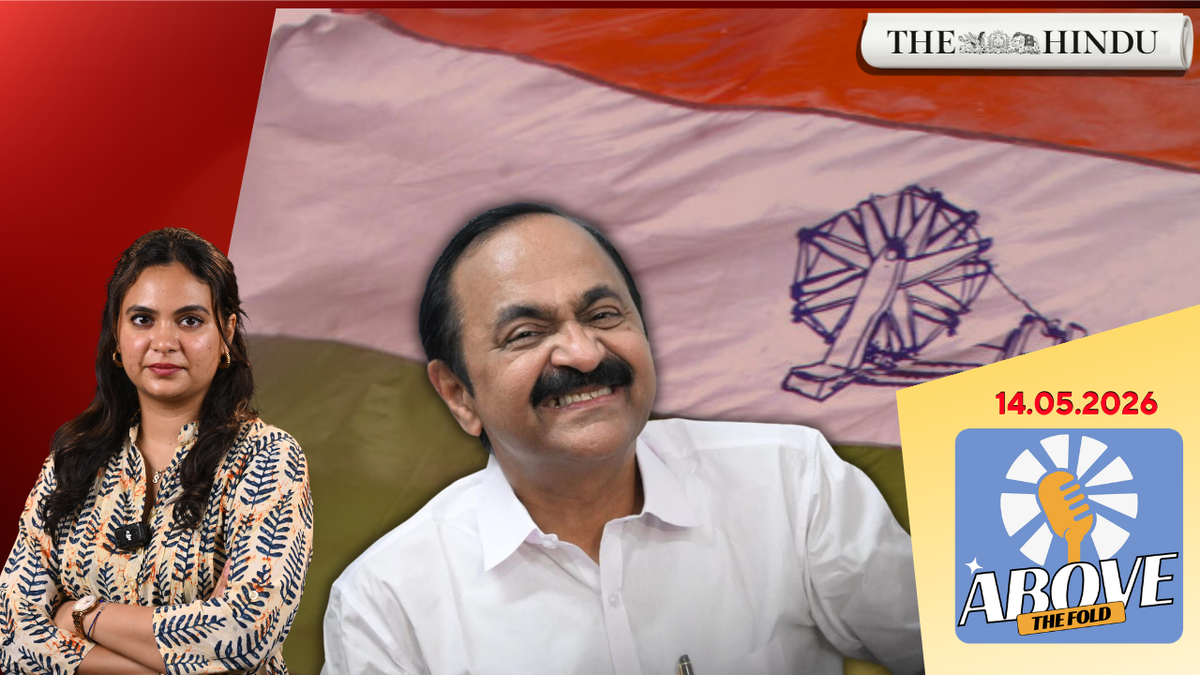
The decision is final. V. D. Satheesan will be the next Chief Minister of Kerala.
The Weight of the Crown
To understand why this choice matters, you have to look past the official press release. You have to look at the cracks in the old foundation. For years, the leadership transition in the Congress party has been described as a "suspense thriller," but that is a polite euphemism for a power struggle that threatened to tear the fabric of the state unit apart.
Satheesan represents a shift in the tectonic plates of Kerala politics. He is not the product of a traditional political dynasty, nor is he a firebrand who relies on rhetoric to mask a lack of substance. He is a technician of governance. Imagine a master clockmaker tasked with fixing a timepiece that hasn't kept accurate time in a generation. That is the task ahead of him.
The "suspense" the headlines shouted about wasn't just about who would get the big office on the third floor of the Secretariat. It was about whether the party could survive its own internal gravity. There were factions—invisible lines drawn across the map of the state—that had to be bridged. The High Command didn't just pick a winner; they picked a diplomat.
A Desk Full of Shadows
When Satheesan finally sits behind the heavy teak desk of the Chief Minister, he won't find a clean slate. He will find a mountain of expectations and a fiscal reality that would make a banker weep. Kerala is a state of contradictions. It boasts the highest literacy rates and the most robust social safety nets in the country, yet it grapples with a debt-to-GDP ratio that leaves very little room for error.
Consider the hypothetical case of a young nurse in Kottayam named Anjali. To Anjali, the news of a new Chief Minister isn't about political theory. It is about whether the government can continue to fund the public health centers where she works. It is about whether the state can create enough high-tech jobs so her brother doesn't have to migrate to the Gulf to find a decent paycheck.
Satheesan knows Anjali exists. He has built his reputation on being the "Opposition Leader who did his homework." During his time on the other side of the aisle, he was known for dismantling government policies not with shouts, but with data. He was the man who stayed up until 3:00 AM reading the fine print of budget proposals while others were sleeping or plotting. Now, he has to turn that scrutiny inward. He has to be his own toughest critic.
The Architecture of a Leader
What makes a man like Satheesan tick? Those who have worked with him describe a personality that is almost surgically precise. He is a product of the Kerala Students Union, the crucible where most of the state’s political legends were forged. But unlike the legends of the 70s and 80s, Satheesan’s brand of leadership is quieter. It is the difference between a lightning strike and a steady, rising tide.
There is a specific kind of pressure that comes with being the "consensus candidate." It means you owe everyone something, but you belong to no one. The internal rivals who have now publicly pledged their support are the same people who, only forty-eight hours ago, were lobbying frantically for their own interests. Satheesan has to lead a team of rivals while the public watches for any sign of a stumble.
His appointment signals the end of the "Oommen Chandy-Chennithala" era that defined the party for nearly two decades. This isn't just a change in personnel; it is a change in DNA. The party is betting that the people of Kerala are tired of the old theater and are ready for a leader who treats governance like a professional discipline rather than a hereditary right.
The Invisible Stakes
The stakes are higher than a simple change in the guard. Kerala is currently at a crossroads of environmental and economic crises. The monsoon seasons are becoming increasingly unpredictable, turning the state’s lush beauty into a source of recurring tragedy. The "Kerala Model" of development, once the envy of the world, is under immense strain.
Satheesan’s true test won't be in the assembly. It will be in the flooded streets of Wayanad or the struggling coastal villages where the sea is literally eating the land. Can a man of the law become a man of the people? Can the intellectual bridge the gap between the seminar hall and the paddy field?
The suspense that ended today was the easy part. The real tension begins tomorrow morning.
Success in this role requires more than just intelligence; it requires a certain kind of stubbornness. You have to be willing to be the most unpopular person in the room if it means the math works out in the end. Satheesan has shown flashes of this steel before. As the architect of the party’s recent ideological shifts, he hasn't been afraid to challenge the status quo, even when it came from within his own ranks.
A New Rhythm
Walking through the streets of Palayam this evening, the change is palpable. The posters are already going up. The local tea shops are buzzing with the kind of intense political debate that is the national sport of Kerala. But beneath the excitement is a sense of "show us." The voters of Kerala are famously fickle and intellectually demanding. They don't give out grace periods.
Satheesan enters the frame at a moment when the very idea of the "political center" is being squeezed. He has to balance the secular traditions of his party with the rising tides of identity politics that are washing up on Kerala's shores. He has to prove that a progressive, democratic framework can still deliver results in an era of populism.
It is a lonely job. The Chief Minister’s office is often described as a bubble, where the truth is filtered through layers of secretaries and sycophants. Satheesan’s greatest challenge will be to keep his ears open to the voices that aren't invited to the meetings. He must remain the man who reads the fine print, even when the print is blurred by the tears of a citizen who has lost everything to a landslide or a lost pension.
The sun went down over the Arabian Sea today on a state that finally knew its leader’s name. The "suspense" is over, replaced by the cold, hard reality of responsibility.
V. D. Satheesan stood before the cameras, his white khadi shirt crisp and uncreased despite the heat of the day. He looked like a man ready to work, or perhaps a man who understands that the honeymoon ended before it even began. He didn't offer grand promises or poetic flourishes. He spoke of the task at hand.
The heavy doors of the Indira Bhavan swung shut, the crowds began to thin, and the reporters hurried away to file their stories. Behind the glass and the security detail, the new Chief Minister began the long process of turning a party's victory into a state's future.
The white khadi he wears is light, but the history it carries is heavy enough to break a lesser man. He started his car, the engine hummed to life, and he drove toward a morning that will demand everything he has to give.