Washington wants to insulate American innovation from Beijing, but the strategy is fundamentally flawed. If you think cutting off scientific ties will magically secure the Western technological edge, you're missing the bigger picture.
The National Science Foundation (NSF) dropped a bombshell policy directive that fundamentally rewrites how American researchers interact with global peers. Starting next fiscal year, the NSF is outright banning any agency-funded projects from collaborating with entities on the U.S. government’s restricted parties lists—which, let's be honest, covers almost every major Chinese research university. If you found value in this article, you should read: this related article.
This isn't a minor regulatory tweak. It's a hard pivot from managing national security risks to enforcing total academic decoupling. The old approach, like the Trusted Research Using Safeguards and Transparency (TRUST) framework, tried to evaluate threat levels case by case. That era is dead. U.S. lawmakers are explicitly building a legislative and regulatory wall around American taxpayer-funded science.
But here’s what the decoupling crowd gets wrong: you can't seal off a laboratory in 2026 without locking out the very brainpower that keeps you competitive. For another perspective on this story, check out the latest coverage from The Washington Post.
The Illusion of Zero Risk in Global Science
House Republicans and security hardliners like John Moolenaar call this policy "common sense security reform". They argue that China uses the open nature of Western academia to absorb dual-use technologies and fuel its military-civil fusion strategy. They point to hundreds of joint papers published in recent years involving U.S. researchers and blacklisted Chinese institutions.
Nobody disputes that IP theft and espionage happen. But trying to achieve zero risk in research security is a fool's errand.
When you blanket-ban cooperation with entire institutions, you don't just stop the bad actors; you choke off the pipeline of discovery. Science doesn't happen in a nationalist vacuum. Breakthroughs in quantum computing, green energy, and biotechnology rely on global peer review and massive dataset sharing. If American scientists can't co-author papers or share data with top-tier global labs, they don't automatically win the race—they just run it blindfolded.
The Talent Wall is Already Rising
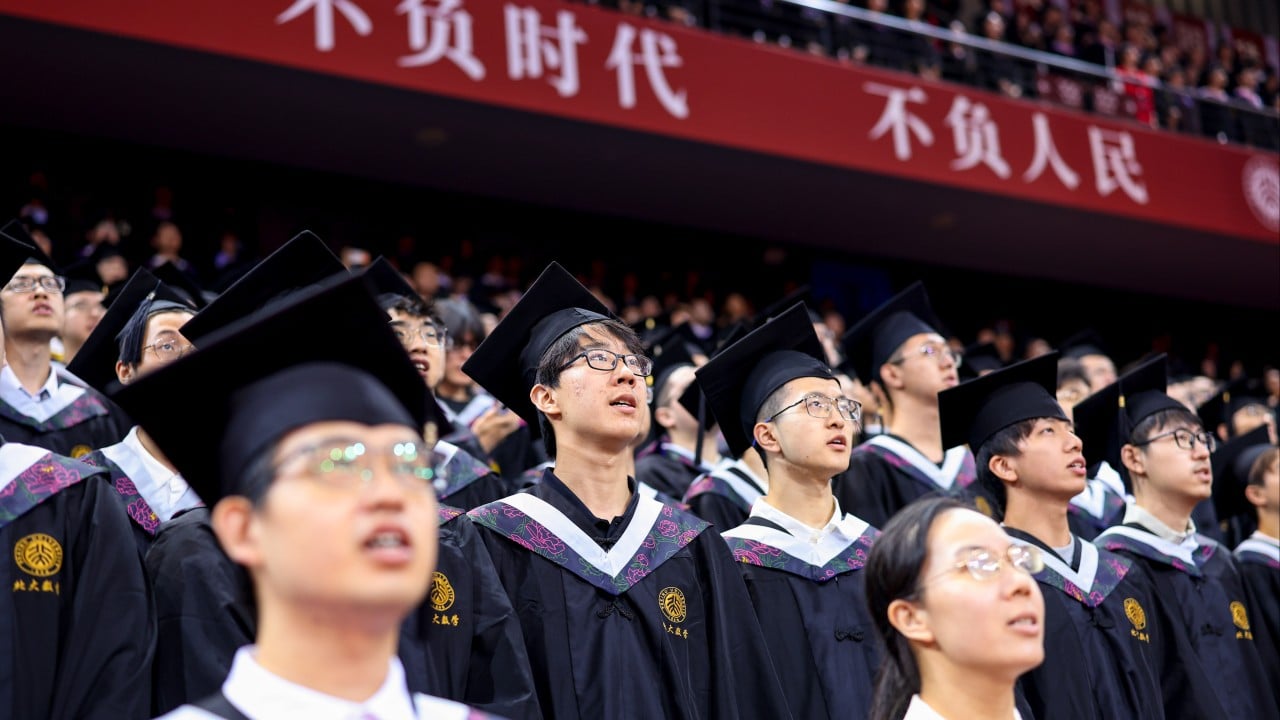
The most immediate casualty of this policy isn't intellectual property. It’s human capital. Chinese academics warning about a "talent wall" aren't just blowing smoke.
Consider the raw metrics. According to data presented to the U.S. Senate, China had roughly 3 million full-time equivalent researchers compared to America's 1.7 million. Between early 2025 and 2026, Chinese institutions published over 58,000 articles in high-quality natural and health-science journals, while U.S. output sat at roughly 36,000. In the 2026 Nature Index tracking the top 25 global research universities, a staggering 21 are Chinese, while only three are American.
What happens when the talent pool shrinks
- Graduate Program Shortages: U.S. university labs heavily rely on international PhD students to run experiments and write code.
- The Chilling Effect: Top-tier Chinese-American scientists are fleeing U.S. institutions out of fear of overzealous federal investigations, a brain drain that actively benefits Beijing.
- Decoupled Standards: By forcing China to innovate entirely within its own ecosystem, the West loses visibility into their technical capabilities, particularly in frontier AI models.
If U.S. labs can't recruit the world's sharpest minds, innovation slows down. The impact won't hit tomorrow, but in three to five years, the talent deficit will be impossible to ignore.
New Rules Cannot Fix Toxic Geopolitics
Some optimistic researchers at institutions like Fudan University think we can fix this by drawing clearer boundaries between national security and economic development. They want new rules of engagement—structured frameworks that allow joint work on global threats like climate change while locking down sensitive code or hardware designs.
It sounds nice over coffee, but it's completely detached from the political reality in Washington.
The White House Office of Management and Budget is already pushing to expand these bans across all federal grants, targeting entire "countries of concern". When the political climate views every line of code as a potential weapon, nuanced rules don't stand a chance. The trust gap isn't a technical problem that can be patched with a better compliance checklist. It's a structural conflict, and science is just the latest battleground.
How Researchers Can Navigate the Decoupling
If you run a lab or manage corporate R&D, waiting for Washington and Beijing to patch things up is a losing strategy. The decoupling is happening whether you like it or not. You need to adapt your operations immediately to survive this regulatory shift.
First, audit your international partnerships now. Check every co-author, data supplier, and remote researcher against the updated federal restricted parties lists. The NSF policy will hit hard, and other federal agencies will follow the Pentagon's lead. Don't wait for an active grant to be frozen because a collaborator's home institution was quietly added to a blacklist.
Second, diversify your global talent pipeline. If recruiting from top Chinese universities is off the table, actively build deeper institutional ties with research hubs in India, Southeast Asia, and Europe.
Finally, structure your projects around the assumption of zero data-sharing across borders. Build firewall protocols into your software development and data storage pipelines from day one. Assume that any cross-border collaboration will eventually face federal scrutiny, and build the infrastructure to prove your compliance without dismantling your entire project.
The U.S. built its scientific supremacy on openness, meritocracy, and the free flow of information. Trading that blueprint for a defensive crouch won't stop China's rise; it will only isolate American labs from the global frontier. You can't win a tech war by locking yourself out of the global talent pool.