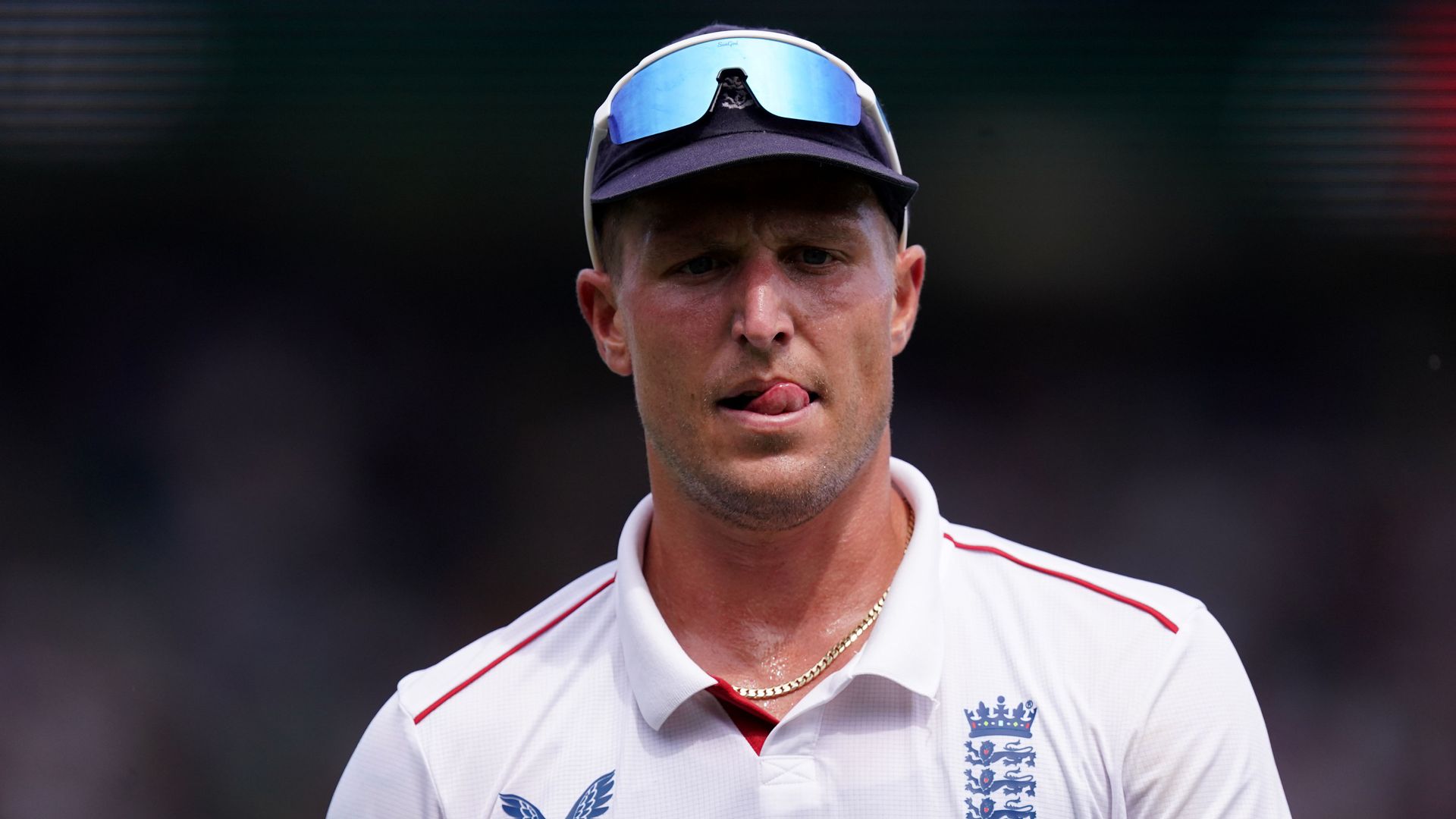
Professional sports administration loves a clean narrative. When a fast bowler hits the turf with venom, swinging a ball at ninety miles per hour, governing bodies prefer their heroes contained within white flannel, polite handshakes, and predictable off-field media scripts.
Then reality intervenes.
The formal charging of England bowler Brydon Carse by the independent Cricket Regulator, following a chaotic late-night incident in Derby, is more than a routine disciplinary footnote. It is a revealing stress test for an oversight framework that continually struggles to balance human volatility with corporate image protection. Carse, already forced to navigate the wreckage of a previous suspension for historical betting infractions, now finds his international career hanging in the balance over Regulation 3.2—the catch-all code covering conduct that brings the game into disrepute.
Look past the tabloid snapshots of handcuffs and the immediate PR scrambling from headquarters. The core issue is not merely whether a professional athlete had too much to drink on a night out or exchanged heated words outside a venue. The deeper failure lies in how modern cricket manages the pressure valve for players thrust from obscurity into high-stakes international scrutiny.
The Anatomy of a Breakdown
To understand how Carse arrived at this juncture, one must look at the brutal demands placed on contemporary fast bowlers. Fast bowling is an act of orchestrated violence against one's own anatomy. The physical toll is relentless, accompanied by months spent in hotel bubbles, living out of suitcases, and carrying the weight of a nation's sporting expectations every time a red ball hits the seam.
When young athletes are handed lucrative central contracts and instant public fame, the transition is rarely smooth. Governing bodies invest heavily in technical coaching, strength conditioning, and tactical analysis. Yet, the investment in emotional regulation and off-field behavioral infrastructure often remains remarkably thin.
Derbyshire Police ultimately concluded their investigation without laying criminal charges after detaining and subsequently de-arresting Carse on a night out. For the legal system, the matter was closed. But for sports regulators, the threshold is entirely different. Under professional conduct guidelines, the absence of a criminal conviction does not equate to an acquittal. Bringing the game into disrepute is a subjective standard, one shaped as much by public perception and media outrage as by the actual facts of an incident.
The Recidivism Trap
Carse is not a stranger to disciplinary scrutiny. His previous 16-month ban—with 13 months suspended—stemmed from 303 historical bets placed between 2017 and 2019. While those wagers did not involve matches in which he played, they exposed a systemic ignorance of basic anti-corruption regulations during his developmental years in the sport.
When a player accumulates multiple disciplinary strikes, a dangerous narrative takes root within administrative circles. The individual is easily labeled as a liability. This perspective allows management to isolate the problem as a flaw in personal character rather than a symptom of a wider institutional disconnect.
If an organization simply waits for players to stumble and then applies punitive sanctions through the Cricket Discipline Panel, it is managing symptoms rather than causes. A robust framework would interrogate why a centrally contracted international athlete is repeatedly left isolated in environments where late-night volatility can derail a career in a matter of hours.
The Cost of Clinical Detachment
The England and Wales Cricket Board routinely emphasizes its zero-tolerance stances and commitment to educational outreach. Yet, the gap between corporate messaging and the lived reality of young men navigating fame remains wide. When mistakes happen, the immediate reaction is defensive distancing. Players are stood down, statements are drafted by legal teams, and the individual is left to weather the storm in virtual isolation until a hearing date is fixed.
This detachment breeds a culture of fear rather than accountability. Athletes learn to conceal vulnerabilities, avoid seeking help for personal or behavioral struggles, and treat the governing body as an adversary rather than a support system.
Carse will face his adjudication, and the independent panel will weigh mitigating factors, expressions of remorse, and the broader impact on the game's reputation. Whatever verdict is handed down, the underlying rot remains untouched. Until cricket administrators stop treating behavioral lapses as isolated anomalies and start treating them as predictable failures of a high-pressure sporting ecosystem, the next rising star will inevitably find himself standing in the exact same spot.


