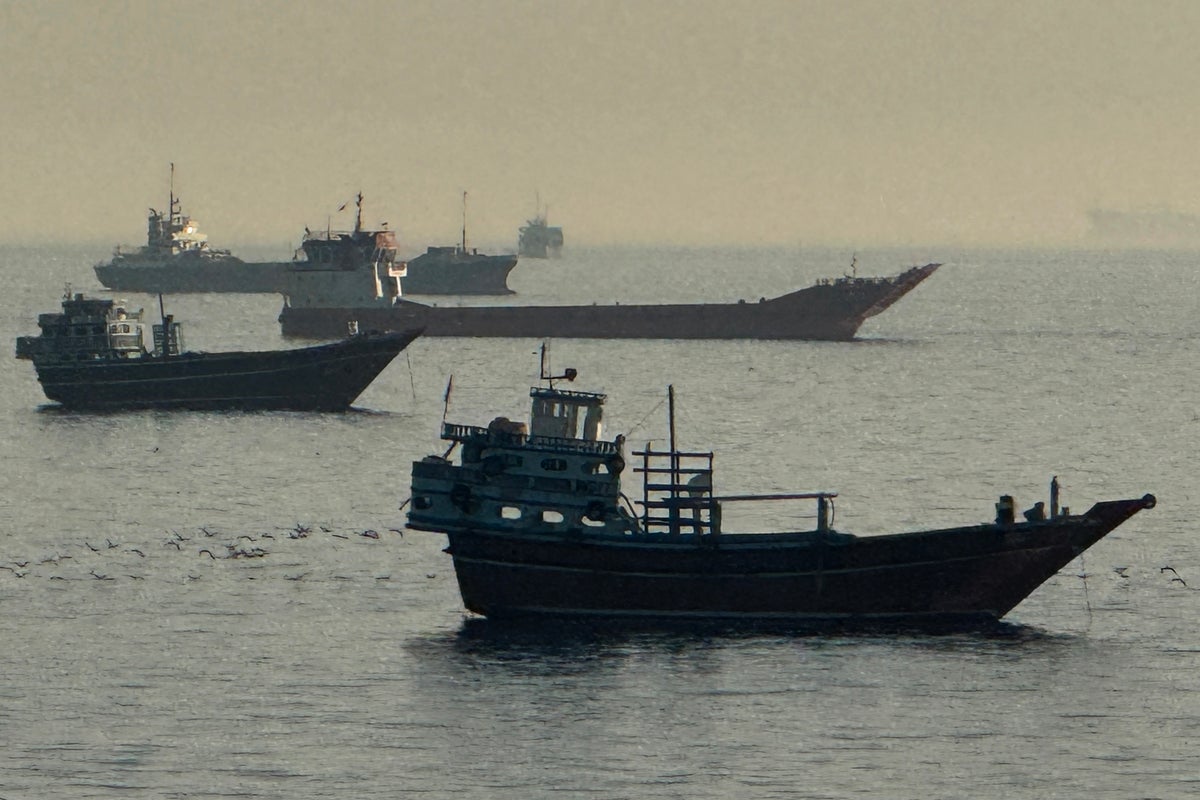
US Central Command forces shot down four Iranian one-way attack drones launched toward the Strait of Hormuz and subsequently executed retaliatory strikes against Iranian coastal surveillance radar sites in Goruk and on Qeshm Island. While military spokesmen framed the exchange as a routine, successful defensive intervention to protect maritime traffic, the clash exposes a deeper, more volatile reality. The exchange of fire directly threatens a shaky, April-brokered ceasefire that has barely held the region together since a broader conflict erupted earlier this year.
The sanitized language of military press releases masks an escalating tactical evolution. This is no longer a low-stakes game of intercepting cheap proxies. It is a direct, state-on-state kinetic friction where both Washington and Tehran are testing the limits of deterrence under a high-pressure diplomatic gamble.
The Mirage of De-escalation
Publicly, the narrative focuses on containment. Privately, the region is a tinderbox. The June 5 engagement followed a devastating drone strike earlier in the week that heavily damaged a passenger terminal at Kuwait’s main airport, killing one person and wounding dozens. That strike shattered any illusion that the current ceasefire amounted to genuine stability.
When Iran launched its four attack drones toward the Strait of Hormuz, CENTCOM responded with immediate force. Navy assets intercepted the threats before they could endanger commercial shipping lanes. But the response did not stop at interception. US fighter aircraft swarmed the Persian Gulf, turning their munitions toward fixed Iranian military installations on the coast.
The targets were chosen deliberately. By hitting surveillance radar sites in Goruk and the strategic outpost of Qeshm Island, the US military systematically blinded Iran’s surface-search capabilities across the narrowest chink in the world’s most critical energy chokepoint.
Flipping the Cost Curve
For years, the asymmetric calculus favored Tehran. The Iranian military and its regional proxies relied on cheap, mass-produced uncrewed aerial vehicles to force Western militaries into burning millions of dollars per engagement. A $35,000 delta-wing drone could draw a multi-million-dollar rolling airframe missile or an SM-2 interceptor from a US Navy destroyer.
That paradigm has broken down. The Pentagon is deploying its own low-cost alternative systems, including the Low-Cost Uncrewed Combat Attack System, to pressure Iranian defenses. By forcing the Islamic Revolutionary Guard Corps to expend its remaining high-end air defense munitions to protect its own territory, the US military is intentionally flipping the economic logic of drone warfare.
Yet, as the financial cost of defense drops, the technological sophistication of the threat increases. The drones intercepted over the Gulf are no longer the crude lawnmower-engined systems of the early 2020s. Today's Iranian arsenal features jet-powered platforms equipped with electronic warfare suites and advanced signals intelligence sensors designed to actively spoof or jam Western Aegis defense systems.
| System Type | Historical Era | Present Operational Capabilities |
|---|---|---|
| Iranian Attack UAVs | Piston-engine, predictable flight paths, commercial GPS | Jet-propulsion, electronic counter-countermeasures, internal guidance |
| US Response Mechanisms | High-value surface-to-air missiles ($1M+ per shot) | Mixed layers: Directed energy, automated cannon fire, and low-cost attritable drones |
| Targeting Strategy | Proxy launch sites in western Yemen or Iraq | Direct kinetic strikes on sovereign Iranian state military infrastructure |
The Intelligence Rift in Washington
The tactical success claimed by CENTCOM commanders hides a fierce debate occurring behind closed doors in Washington. Testifying before the Senate Armed Services Committee, senior military leaders have insisted that months of sustained coalition strikes have shattered Iran’s command-and-control architecture, knocking out over 80 percent of its fixed air defense radars and neutralizing its ability to manufacture long-range ballistic missiles at scale.
Classified intelligence assessments tell a far more cautious story.
Internal briefings circulating among policymakers reveal that despite heavy losses, Iran has successfully restored operational access to 30 of its 33 major missile and drone storage sites lining the Strait of Hormuz. These underground facilities, dug deep into the volcanic rock of the southern coastline, remain largely immune to standard carrier-based airstrikes. The infrastructure is resilient. It can be repaired faster than Western political capital can be spent to destroy it.
The Diplomatic Brinkmanship
This military friction is happening alongside a high-stakes diplomatic standoff. The Trump administration has maintained a public posture of strategic patience, with the White House openly stating it is in no hurry to formalize a permanent deal with Tehran while emphasizing that comprehensive military options remain active.
The strikes on Goruk and Qeshm Island serve as a violent form of punctuation in these negotiations. Every downed drone and shattered radar array is used as leverage to pressure Iran into deep concessions regarding its regional influence and remaining nuclear enrichment capabilities.
The strategy is fraught with miscalculation risks. Iran has previously demonstrated that when backed into an economic or operational corner, its default response is horizontal escalation. The closure of the Strait of Hormuz—which facilitates the transit of roughly 20 percent of global petroleum—remains Tehran’s ultimate economic deterrent. By striking sovereign radar sites, the US is betting that Iran’s internal economic strain will force cooperation rather than a desperate, asymmetric retaliation that could spike global energy markets overnight.
The current ceasefire is a fiction. It is merely an intermission between salvos. As long as Washington seeks total diplomatic capitulation and Tehran retains its subterranean arsenal along the Gulf, the tactical victories celebrated by CENTCOM will remain temporary band-aids on a bleeding wound.
.jpg)