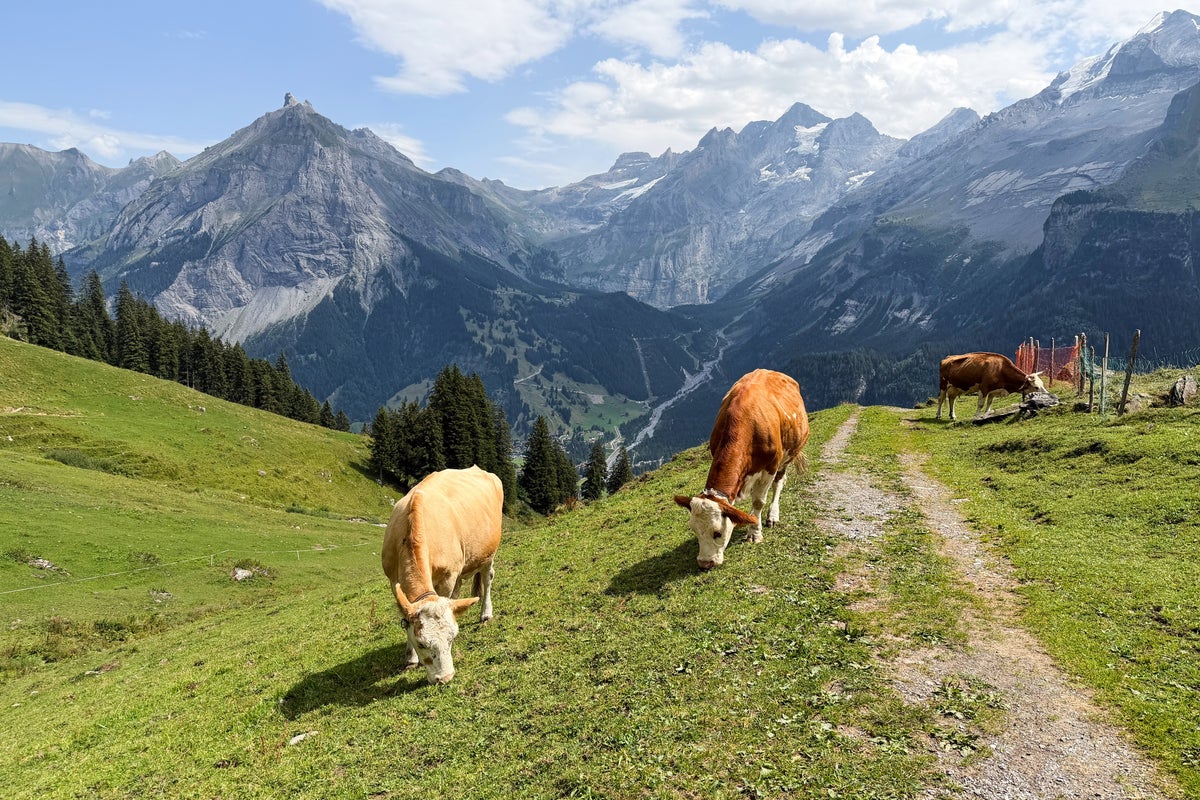
The ground beneath the Swiss Alps is losing its grip. For decades, the picturesque hamlets of the Bernese Oberland and the Valais region stood as symbols of permanence, anchored by ice that had remained frozen since the last glacial epoch. Today, that structural integrity is evaporating. As permafrost—the frozen geological mortar holding these mountains together—thaws, the very peaks supporting iconic tourist destinations are transforming into ticking time bombs. Kandersteg, a town known for its idyllic meadows and crystalline lakes, now sits beneath the Spitze Stei, an unstable cliffside that threatens to unleash a landslide of catastrophic proportions.
This is not a freak occurrence of bad luck. It is a fundamental shift in Alpine physics.
The danger stems from the transition of mountain slopes from frozen, solid formations into unconsolidated, lubricated debris. High-altitude permafrost acts as a cryogenic adhesive. When ambient temperatures climb, this ice-cement melts, causing water to infiltrate rock fractures. The resulting hydrostatic pressure, coupled with the loss of sheer strength, turns once-stable cliffs into precarious piles of sediment. The May 2025 destruction of Blatten, where a glacier collapse obliterated nearly the entire village in under sixty seconds, served as a grim demonstration of this process. The energy released in such events is akin to a seismic shock, often registering on sensors as a moderate earthquake.
Monitoring these sites requires an impossible level of precision. While geologists utilize interferometric radar and satellite imagery to track movement in millimeters, nature rarely telegraphs its final move. A cliff face may creep for years, signaling stability, only to experience a sudden, brittle failure when the internal stress exceeds the threshold of its remaining bonds. Scientists cannot identify the exact second of collapse. They can only provide probabilities.
For the residents of Kandersteg, this ambiguity creates a state of perpetual, measured anxiety. The town has already implemented severe restrictions on new development, rerouted water to mitigate flood risks from potential lake displacement, and established evacuation protocols that are drilled with the frequency of a military operation. They operate on the assumption that the mountain will eventually give way, though the scale of that failure remains a variable.
The economic and cultural implications are profound. If these sites are deemed too hazardous for habitation, the viability of entire valleys comes into question. Abandonment is an extreme outcome, but it is one being discussed in government offices. The cost of building defenses—massive concrete dams, drainage systems, and reinforced barriers—often exceeds the tax revenue generated by the local communities they protect. At what point does a region become uninsurable?
We are witnessing the end of an era where mountain life was defined by the defiance of gravity. For centuries, the alpine lifestyle was built on a foundation of respect for the land. That respect has morphed into a frantic struggle to manage the inevitable. The thaw is accelerating, and the engineering feats intended to stave off disaster are ultimately stopgaps against a changing climate that ignores human borders.
The Alpine landscape is returning to a more volatile state, reclaiming the spaces that humans mistakenly assumed were permanent. The risk is not merely an inconvenience for the tourist industry; it is a fundamental reconfiguration of where and how we can live in the shadow of giants. As the glaciers retreat and the permafrost voids grow, the question is not whether the mountains will move, but how many villages will be forced to move with them.
The haunting reality of the Kandersteg cliffside
This documentary details the science of glacier instability and the direct threats facing Alpine communities today.
http://googleusercontent.com/youtube_content/1