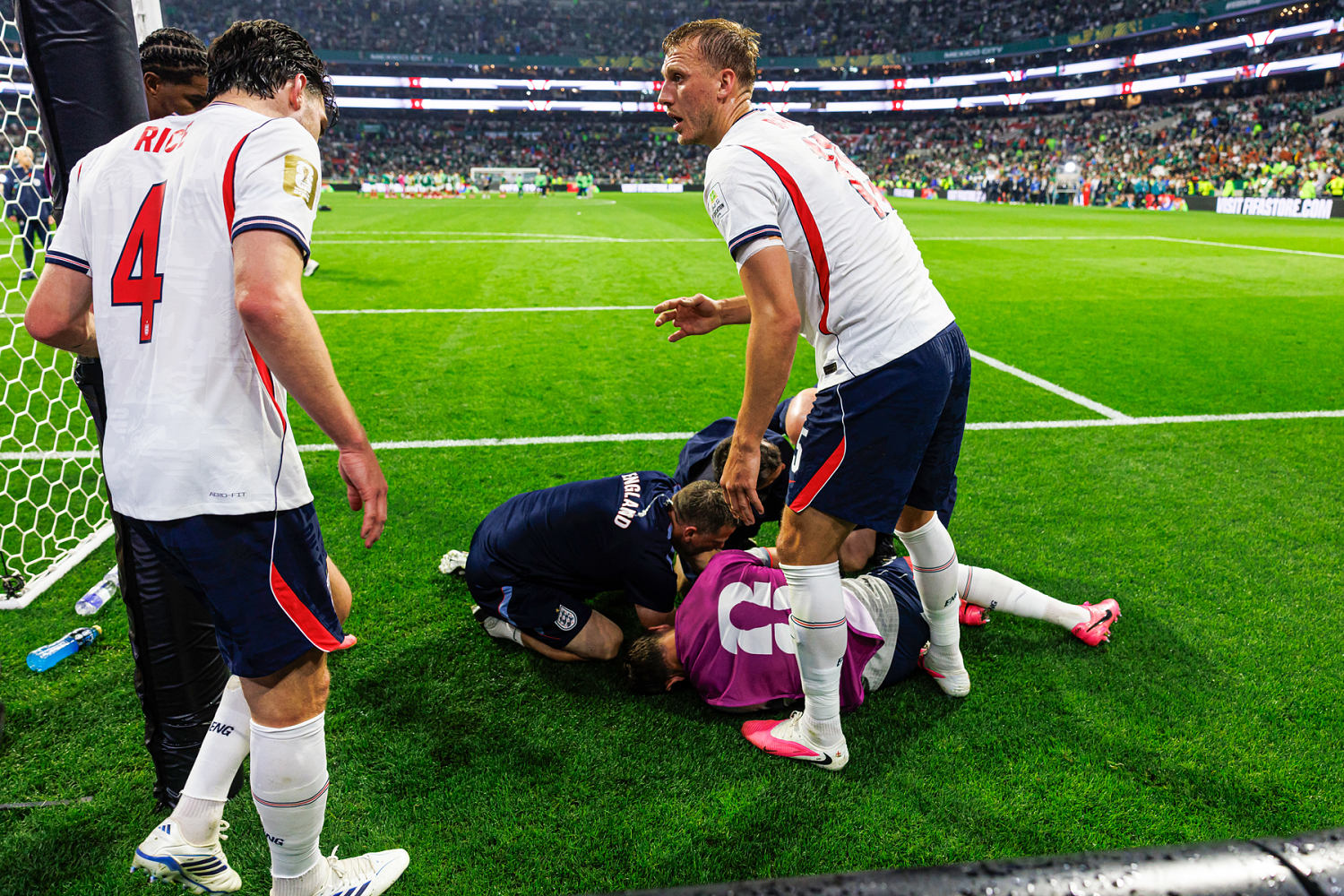
The physical toll of international football tournaments does not end when the final whistle blows. For elite athletes like England’s Jordan Henderson, the moments immediately following a major victory can be just as hazardous as a high-speed tackle on the pitch. When adrenaline masks exhaustion, ordinary movements turn into significant medical liabilities. The sudden transition from intense, structured physical exertion to chaotic, unmonitored celebration creates a high-risk window for severe soft-tissue injuries. This vulnerability stems from acute muscle fatigue, sudden drops in joint-stabilizing muscle tension, and the mechanical stress of erratic, explosive movements during post-match euphoria.
The Mechanics of Adrenaline and Acute Fatigue
Elite footballers subject their bodies to extreme physiological stress over a 90-minute match, frequently extending into extra time during knockout stages. By the time a tournament concludes, players have depleted their glycogen stores and pushed their muscle fibers to the absolute brink of micro-tearing. Under normal circumstances, a player enters a immediate cooling-down phase designed to flush metabolic waste and begin the repair process.
Victory disrupts this vital physiological protocol.
When a historic win occurs, a massive surge of adrenaline floods the nervous system. This hormonal spike temporarily overrides the brain's perception of pain and exhaustion. The central nervous system, which should be signaling the body to rest and protect damaged tissues, remains in a heightened state of arousal. Consequently, a player may engage in sudden, violent movements—jumping onto teammates, sprinting across the pitch, or engaging in repetitive, high-impact movements during locker room celebrations—without the necessary muscular control.
Without active stabilization from fatigued primary movers, the burden of these sudden forces shifts entirely to ligaments, tendons, and joint capsules. A sudden twist or a landing on an uneven surface, which a fresh player would easily absorb, becomes a mechanism for a severe tear.
The Hidden Risk of Post-Match Dehydration
Dehydration plays a massive, often overlooked role in these post-game medical emergencies. During a high-stakes match, a player can lose up to three liters of fluid through sweat. This loss severely compromises the fluid dynamics of the body, particularly the intervertebral discs and the viscoelastic properties of tendons.
Physiological State at Match End:
[Extreme Glycogen Depletion] + [Severe Dehydration] = Compromised Tissue Elasticity
                                   │
                                   ▼
[Adrenaline Surge] ──► Overrides Pain / Inhibits Motor Control
                                   │
                                   ▼
[Erratic Celebration] ──► Mechanical Failure of Stabilizing Structures
When a player is severely dehydrated, their muscles lose elasticity and become highly susceptible to cramping and acute strains. If that player immediately transitions into vigorous celebration rather than rehydration, the risk of a structural failure escalates. Tendons that require optimal hydration to glide smoothly through their sheaths instead catch and tear under sudden, uncoordinated loads.
Cultural Expectations Versus Athlete Safety
The modern football ecosystem demands that players be performers both during the match and after the result is secured. Fans expect to see raw, unfiltered joy, and media broadcasters linger on the post-match scenes to capture marketable moments of celebration. This creates an environment where players feel compelled to match the energy of the crowd, regardless of their physical state.
Medical staffs face a distinct challenge in these scenarios. Standard operating procedures dictate immediate assessment and recovery protocols, yet enforcing these measures during a historic celebration is practically impossible. A physiotherapist cannot easily pull a captain away from a trophy presentation or a team circle to apply ice or administer a compression garment. This gap in care, lasting anywhere from 30 minutes to two hours, allows inflammation to set in rapidly around any minor tweaks sustained during the match, turning manageable strains into severe, debilitating injuries.
The Long-Term Consequences on Club Career Longevity
An injury sustained during a post-match celebration carries a psychological burden that differs significantly from an in-game casualty. When a player suffers a torn ligament or a ruptured tendon while actively competing, the incident is viewed as an occupational hazard. An injury sustained during a celebration, however, often invites intense scrutiny from club owners, managers, and supporters who view the mishap as entirely preventable.
For a veteran player, the timing of such an injury is catastrophic. The summer break, which should be utilized for systemic rest and rebuilding baseline fitness, is instead consumed by surgery and grueling rehabilitation. This disrupts the entire pre-season preparation phase, meaning the player enters the domestic campaign lacking the physical foundation required to endure a grueling club calendar. The lack of a proper pre-season increases the likelihood of secondary, compensatory injuries later in the year, as the athlete rushes back to fitness to prove their worth to the club.
The modern game requires a reassessment of how victory is managed from a sports science perspective. Euphoria cannot blind coaching and medical staffs to the harsh realities of human physiology. Until clubs and national associations implement strict, non-negotiable boundaries around post-match physical exertion, elite athletes will continue to risk their careers during the moments that should define their greatest achievements.


