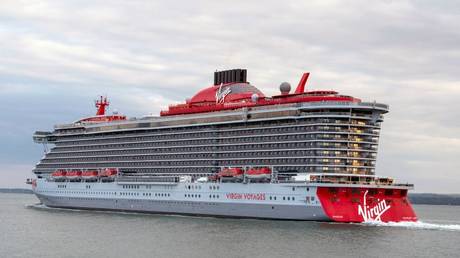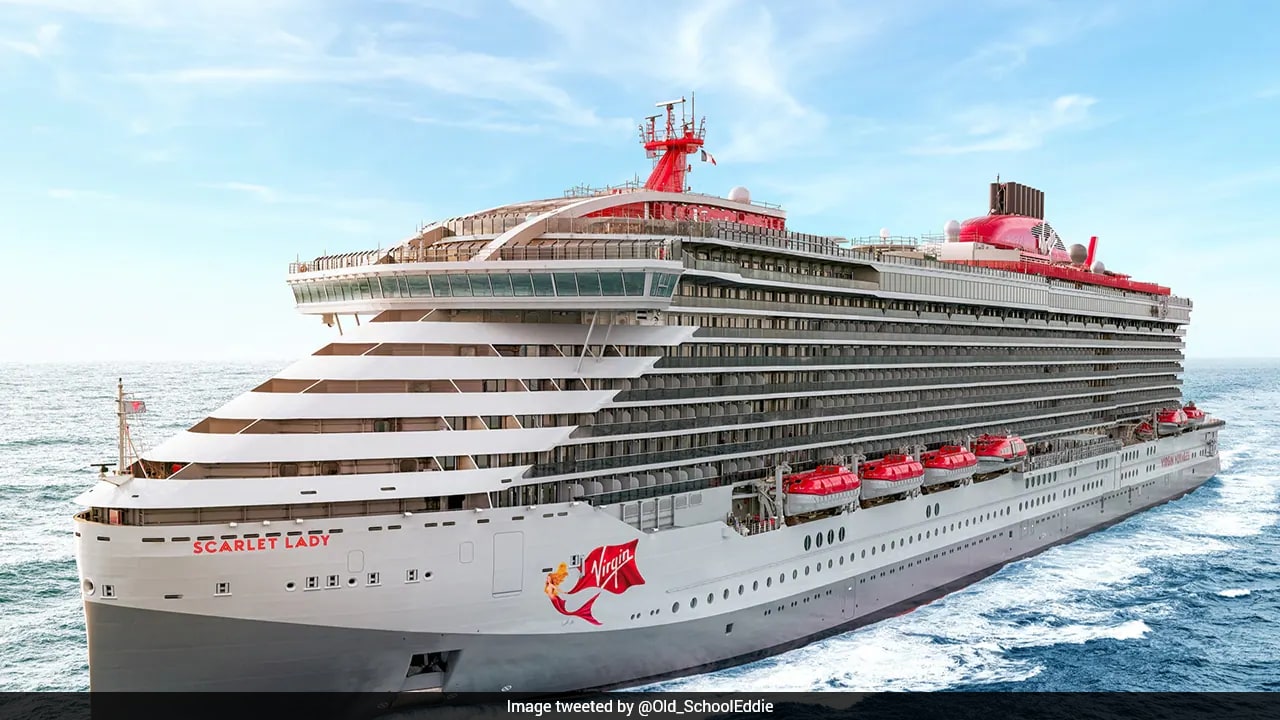
In the early hours of July 9, 2026, the captain of the Scarlet Lady received a directive that shattered the foundational assumptions of the modern cruise industry. The vessel, a luxury liner owned by Virgin Voyages and chartered by the LGBTQ+ travel firm Atlantis Events, was steaming toward Alexandria, Egypt. Nearly 2,000 international passengers, primarily from the United States, Britain, and Australia, were asleep in their cabins, anticipating a day of excursions to Cairo and the Sphinx. Instead, Egyptian authorities abruptly rescinded the ship’s clearance to enter territorial waters.
This was the second time in less than a week that the vessel had been turned away by a major Mediterranean nation.
Days earlier, Turkish officials had barred the same ship from docking in Istanbul and Kuşadası. They publicly claimed that the passenger makeup was incompatible with their society’s family values. When Egypt enacted its sudden, late-night reversal, it solidified a terrifying shift in global tourism. Dictatorial and conservative governments are no longer content with regulating their own citizens; they are now actively enforcing moral blockades against western commercial vessels.
The immediate fallout is clear. Millions of dollars in tourism revenue evaporated overnight, and thousands of travelers found themselves stranded at sea, victims of a coordinated geopolitical culture war. The deeper crisis, however, involves the vulnerability of international maritime contracts and the changing rules of corporate travel in an increasingly polarized world.
The Domino Effect of State-Sponsored Homophobia
The cancellation in Alexandria was not an isolated bureaucratic mix-up. It was a direct consequence of Turkey’s public posture. When the provincial government of Aydın in Turkey issued its official statement, it explicitly weaponized the identity of the passengers, labeling the cruise an event that threatened the local moral fabric. By broadcasting this rejection so loudly, Turkish authorities created a precedent.
Egypt faced a sudden, high-stakes public relations calculus. Had Cairo allowed the Scarlet Lady to dock after Turkey’s highly publicized ban, the Egyptian government risked looking permissive to its own domestic conservative base. The regime of Abdel Fattah el-Sisi has spent years conducting brutal internal crackdowns on its local LGBTQ+ population using debauchery laws to demonstrate its conservative credentials. Accepting a ship that Turkey had branded as a moral threat would have been politically untenable for a government that relies heavily on nationalistic image-making.
The timing of the denial reveals the panic within the Egyptian bureaucracy.
Permission was pulled at roughly 3:30 a.m. local time, while the ship was already on its final approach. Local tour operators had already sold over 1,200 excursions, buses were chartered, and tour guides were scheduled to meet the passengers at dawn. This was not a pre-planned policy decision. It was a reactionary, panic-driven move designed to avoid any media coverage of a gay cruise ship arriving in Alexandria.
The political domino effect is the real danger here. When one nation successfully bans a commercial vessel based entirely on the demographics of its passengers without facing international trade or diplomatic repercussions, it provides a blueprint for other authoritarian regimes. Tourism experts now worry that destinations across the Middle East, North Africa, and Southeast Asia will feel emboldened to enact similar last-minute bans to score cheap domestic political points.
The Broken Illusion of the Autonomous Cruise Ship
For decades, the mega-cruise industry has marketed itself as a floating sanctuary. Companies like Atlantis Events have spent 36 years operating large-scale charters, taking thousands of travelers to historically conservative regions without serious incident. The underlying premise was simple: the ship is an extension of Western corporate space, and local governments will gladly overlook social differences in exchange for a massive influx of foreign currency.
That illusion is officially dead.
The Scarlet Lady crisis proves that sovereign pride and political posturing now override raw economic incentive. Atlantis Events CEO Rich Campbell noted that the company had visited Turkey and Egypt more than a dozen times over nearly four decades, always maintaining a culturally respectful presence. The sudden hostility indicates that the historical boundary between international commerce and local cultural policing has been dissolved.
Financial Impact of the Two-Port Shutdown (Estimated)
+------------------------+-----------------------+
| Revenue Category       | Estimated Loss (USD)  |
+------------------------+-----------------------+
| Pre-booked Excursions  | $450,000              |
| Port Fees & Docking    | $200,000              |
| Local Retail & Dining  | $550,000              |
| Vessel Fuel & Routing  | $300,000              |
+------------------------+-----------------------+
| Total Economic Damage  | $1,500,000+           |
+------------------------+-----------------------+
From a corporate operations perspective, this creates an unprecedented nightmare for cruise lines. When a charter company rents an entire ship, it pays millions of dollars upfront to the parent cruise line, in this case, Virgin Voyages. The cruise line handles the maritime logistics, insurance, and port clearances. When a sovereign nation revokes docking privileges on short notice, the cruise line must scramble to find alternative ports, burn massive amounts of extra fuel to reroute, and compensate passengers for missed experiences.
The Friction Between Maritime Law and Sovereign Rights
The legal grey area surrounding port access makes it incredibly difficult for cruise lines to fight back. Under international maritime law, specifically the United Nations Convention on the Law of the Sea, a coastal state enjoys complete sovereignty over its internal waters and ports. While foreign vessels have a right of innocent passage through a nation’s territorial sea, they do not possess an absolute right to enter a foreign port.
A port state can deny entry to any foreign vessel if it deems the entry to be a threat to its security, public health, or, as vaguely defined in many national legal frameworks, public order and morality.
"They denied our arrival on approach and refused to allow the ship into the harbor. We are now at sea trying to figure out what to do."
— Rich Campbell, CEO of Atlantis Events
This leaves major cruise lines with virtually no immediate legal recourse when a government pulls a permit. The contract between a cruise line and a port authority usually contains broad force majeure clauses or national security exemptions that shield the local government from liability. The cruise line absorbs the financial hit, the charter company loses its credibility, and the passengers are left stranded in international waters.
The long-term danger for the travel industry is the unpredictability of these decisions. Cruise itineraries are planned 12 to 24 months in advance. If a cruise line cannot guarantee that a multi-million dollar asset like the Scarlet Lady will be allowed to dock, the risk profile of operating in certain parts of the world becomes unmanageable. Insurance premiums for voyages to the eastern Mediterranean and North Africa could skyrocket, forcing companies to abandon these destinations altogether.
The High Cost of the New Tourism Protectionism
The financial loss to local economies in Turkey and Egypt is severe. By turning away 2,000 affluent travelers, local merchants, bus drivers, and historical site operators lost a massive payday. In Kuşadası alone, the cancellations cost the local economy an estimated million dollars in direct spending. In Egypt, where the economy is chronically strapped for foreign currency, throwing away hundreds of thousands of dollars in pre-sold tours is an act of fiscal self-harm.
However, authoritarian governments view this as a necessary price to pay for maintaining absolute social control. They are engaging in a new form of tourism protectionism, where ideological purity is prioritized over economic development.
This strategy relies on the belief that Western cruise lines will eventually fall in line, sanitize their passenger lists, or simply stop marketing specialized charters to these regions while continuing to send standard, generalized tour ships. It is a calculated bet that the global travel industry will acquiesce to their terms rather than walk away from lucrative historical routes like Istanbul or the Pyramids.
The response from major cruise lines will dictate whether this trend spreads. If Virgin Voyages and other industry giants continue to schedule high-revenue sailings to countries that enforce discriminatory blockades, they signal that these insults are just another cost of doing business. Alternatively, if the industry blacklists these ports in retaliation, the economic pain might force local tourism boards to pressure their central governments into reversing these hardline stances.
A Crucial Turning Point for Global Travel Routes
The Scarlet Lady was forced to alter its course drastically, seeking refuge in Chania, Crete, and Kotor, Montenegro. These European ports welcomed the ship with open arms, gladly absorbing the economic windfall that Turkey and Egypt rejected. The stark contrast highlights a growing divide in the global travel market between open societies that view tourism as a neutral commercial exchange and authoritarian states that use it as a tool for ideological posturing.
For the passengers on board, including high-profile performers like Broadway star Patti LuPone, the cruise became an unexpected civics lesson on the limits of Western corporate protection. No matter how expensive the ticket, a cruise ship is ultimately subject to the whims of the flag state and the countries along its path.
The industry cannot afford to ignore this incident. If global travel brands do not establish a unified front against arbitrary, identity-based port rejections, the map of international cruising will permanently shrink. The Mediterranean port wars have begun, and the freedom of international passage is the first casualty.