The single gunshot that tore through the stomach of a 38-year-old restaurant worker on a warm June night in Dalston did more than leave a father with permanent, life-changing injuries. It tore away the glossy veneer of London's vibrant ethnic dining scene, exposing a ruthless, multi-million-pound extortion economy operating right under the noses of the Metropolitan Police.
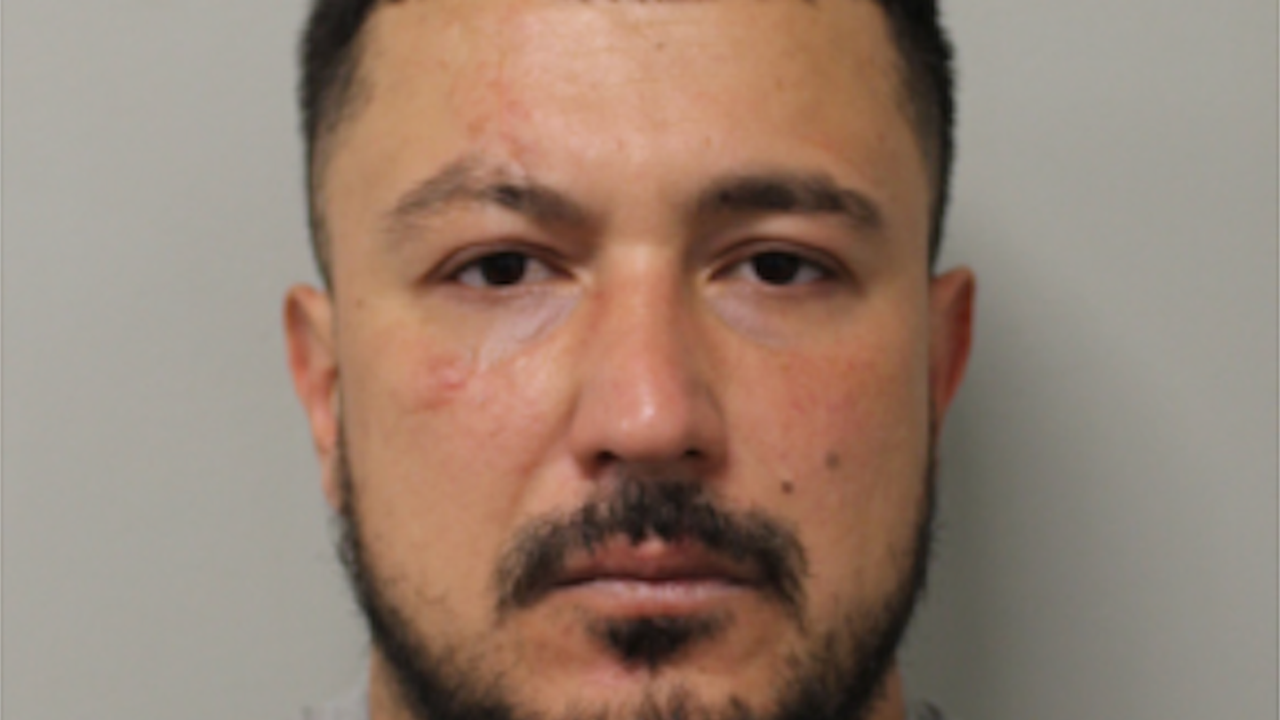
When Beytullah Gunduz was convicted at the Old Bailey of conspiracy to commit murder, the headlines framed it as a discrete, albeit dramatic, case of street violence. A Turkish gang member demands £100,000 from a local business, gets rejected, and orders a hit.
The reality is far more insidious. For over two decades, a brutal turf war between two heavily armed factions—the Hackney Turks (known locally as the Bombacilar) and the Tottenham Turks—has held small business owners across north and east London hostage. This conviction does not mark the end of an era; it merely shines a brief, harsh light on a parallel legal system run by warlords, where tax is paid in blood and the state appears powerless to intervene.
The Mirage of Protection
Street-level extortion rarely begins with a smoking gun. It begins with a polite conversation.
According to evidence presented in court, Gunduz and an unnamed associate initially approached the Guzel family after their family restaurant, Umut 2000, and their private residence had been peppered with bullet holes during early-morning drive-by shootings. Gunduz didn't break down the doors demanding cash. He offered assistance. He presented himself as an arbiter, a powerful local figure who could navigate the treacherous criminal waters of the borough.
This is the classic, textbook manifestation of the protection racket.
When the Guzel family refused to play along, the mask slipped. Gunduz accused the family of paying a £100,000 tribute to their bitter rivals, the Tottenham gang. He demanded parity. His logic was simple: if you pay them for peace, you must pay us for the same privilege.
- The Lever: Extortionists exploit the fundamental vulnerability of brick-and-mortar retail. A restaurant cannot hide; its address is public, its hours are fixed, and its staff are exposed.
- The Illusion: Gangs create the very insecurity they charge to solve, establishing a closed-loop system of dependency and terror.
- The Trap: Paying once guarantees a lifetime of escalation. Refusing, as the Guzel family courageously did, invites catastrophic violence.
When the family asked why they should hand over hard-earned revenue for absolutely no reason, the machinery of the Bombacilar went to work. A white Kia Niro began circling the restaurant, tracking the movements of the staff. The first attempt failed because the target wasn't visible. The second, executed the following night, left a man screaming on the pavement while the hitman, Dogan Over, fled the country to Istanbul on a pre-booked flight.
The Phantom Enforcement Gap
Why do successful, high-turnover independent businesses in global capitals tolerate this? The answer lies in a profound, systemic trust deficit between immigrant business communities and mainstream British law enforcement.
To a restaurant owner on Kingsland Road, the state feels abstract. The local gang leader is concrete. He sits in the cafes, he knows your relatives back in the home province, and he can orchestrate a shooting within 48 hours of a missed payment.
[Gang Feud Infiltration]
       │
       ├─► Initial Intimidation (Drive-by shootings at property)
       │
       ├─► "The Approach" (Gangs offer mediation/protection)
       │
       └─► The Demand (£100,000 tribute or violent retaliation)
The Met Police praised their own "meticulous investigation" using burner phone data, CCTV tracking, and forensic analysis of a burnt petrol can to secure Gunduz's conviction. Yet, this post-incident competence highlights a gaping preemptive vacuum. The Guzel family’s property had been targeted multiple times before the near-fatal shooting. The warning signs were flashing red for months.
British policing is largely reactive, organized around emergency response and forensic clean-up rather than the continuous, intelligence-led disruption required to dismantle deep-seated organized crime networks. When detectives treat an extortion shooting as an isolated incident of attempted murder, they miss the systemic infrastructure supporting it. The hitman escaped to Turkey because the networks that facilitate document fraud, safe houses, and rapid international transit remain largely intact.
The Economics of Silent Compliance
The £100,000 figure demanded from the owners of Umut 2000 is not an outlier. It is standard pricing. Across London, hundreds of independent operators—ranging from supermarkets and shisha lounges to community social clubs—silently absorb these demands as an unavoidable cost of doing business.
They write it off as an informal, illicit corporate tax.
This silent compliance distorts the local economy in ways that traditional economic metrics fail to capture. Cash-heavy businesses are uniquely prized by syndicates like the Hackney Turks. It allows for seamless money laundering, where extorted funds can be layered back into legitimate commercial real estate or high-value vehicle leases.
When a community chooses silence over cooperation with the police, it isn't out of sympathy for the criminals. It is a rational, cold-blooded calculation of survival. Gunduz himself had survived multiple assassination attempts, including being shot in the neck by a rival hitman on a motorcycle in 2020. If a man hardened by decades of gang warfare cannot protect himself from the cycle of violence, what chance does a family running a kitchen have?
The conviction of one gang lieutenant changes nothing on the ground. A sub-commander steps up, the ledger is updated, and the collection cycles resume. True disruption requires a permanent, visible, culturally competent law enforcement presence that breaks the monopoly of fear. Until the state can guarantee the safety of a business owner before they are forced to make a choice between their savings and their life, the shadow economy will continue to thrive in the dark.