When an industrial town wakes up to the screech of emergency sirens and a mandatory order forcing 40,000 citizens to flee their homes, the immediate narrative is always about the acute crisis—the leaking chemical tank, the threat of an imminent explosion, and the heroic scramble of first responders. Local officials hold frantic press conferences, television screens flash red zones, and the public is left wondering if a single spark will level their neighborhood. But the real crisis is never just the leaking valve or the compromised hull. The true disaster is the systemic failure of regulatory oversight, deferred corporate maintenance, and an aging chemical infrastructure that transforms routine industrial operations into ticking time bombs.
Emergency management agencies often treat these mass evacuations as isolated, unpredictable anomalies. They are not. They are the predictable consequences of a broken system where corporate risk assessment prioritizes short-term profit margins over community safety. When a chemical storage facility threatens a metropolitan area, forcing tens of thousands of families into makeshift shelters, it exposes a deep-seated vulnerability in how we manage hazardous materials near population centers. Read more on a similar topic: this related article.
The Chemistry of Compromise
To understand why a chemical tank threatens to blow, you have to look past the fire trucks and examine the thermodynamics of industrial storage. Most catastrophic tank failures do not start with an external flame. They begin from within.
When highly volatile organic compounds or pressurized gasses escape their primary containment, a cascade of physical and chemical reactions occurs. A small leak reduces pressure inside a pressurized vessel, which can cause the remaining liquid to boil rapidly. This phenomenon can trigger a Boiling Liquid Expanding Vapor Explosion, or BLEVE. If the structural integrity of the steel is compromised by years of micro-corrosion—often missed during superficial corporate inspections—the tank cannot withstand the internal pressure shifts. Further analysis by Reuters highlights similar views on this issue.
Consider a hypothetical scenario where a facility stores a highly reactive monomer like styrene or vinyl chloride. If the tank's cooling systems fail or if a contaminant enters the vessel due to a faulty gasket, an uncontrolled exothermic polymerization reaction begins. The temperature spikes. The pressure doubles every few minutes. At that point, first responders cannot simply walk up and turn a valve; they are dealing with a runaway chemical reactor that could rupture at any second, throwing lethal shrapnel for miles and releasing toxic plumes into the atmosphere.
Facilities often rely on passive mitigation systems like dikes and deluge systems. Yet, these systems are only as good as the maintenance budgets allocated to them. Over the last two decades, industrial operators have systematically trimmed their on-site engineering staff, replacing veteran safety managers with third-party contractors who lack deep familiarity with the specific facility's quirks. When a gauge starts drifting, it is often dismissed as a telemetry glitch until the smell of chemicals fills the air.
The Myth of the Fifty Year Lifespan
Much of the heavy industrial infrastructure handling hazardous materials across the country was built during the mid-20th century. These tanks and piping networks were engineered to last, but they were never meant to operate indefinitely without total overhauls.
- Micro-fracturing: Constant thermal cycling causes metal expansion and contraction, weakening welds over decades.
- Chemical Embrittlement: Continuous exposure to caustic substances alters the molecular structure of high-grade steel, making it brittle.
- Inadequate Monitoring: Many older tanks lack modern acoustic emission testing sensors that detect internal cracking before a leak manifests.
Regulatory frameworks like the Environmental Protection Agency’s Risk Management Program require facilities to submit accident prevention plans. However, these regulations frequently rely on self-reporting and paperwork audits rather than rigorous, unannounced physical inspections by state or federal engineers. The result is a false sense of security built on compliance checklists that look perfect on paper but fail under physical pressure.
When a company delays upgrading a tank farm because the capital expenditure would hurt quarterly earnings reports, they are effectively gambling with the lives of the surrounding community. They externalize the risk. If nothing happens, the executives collect their bonuses. If the tank leaks and forces a city-wide evacuation, the taxpayer foots the bill for the emergency response, while the corporate entity hides behind limited liability protections and insurance payouts.
The Human Toll of Zoning Failures
The panic of an abrupt evacuation introduces its own set of dangers, often ignored by the planners who map out industrial zones. Moving 40,000 people out of a concentrated area within hours is a logistical nightmare that frequently results in gridlocked highways, vehicle accidents, and medical emergencies for vulnerable populations.
The Vulnerability Gap
Industrial facilities are rarely situated next to affluent neighborhoods. Decades of discriminatory zoning laws and economic realities mean that heavy chemical plants are almost exclusively located adjacent to working-class communities, low-income housing developments, and minority enclaves. These populations face the highest risk of chemical exposure and have the fewest resources to handle sudden displacement.
An evacuation order assumes that every resident has a reliable vehicle, a full tank of gas, and the financial means to book a hotel room indefinitely. That assumption is fundamentally flawed. Hundreds of families are left stranded on front porches waiting for public transit buses that never arrive, or walking away from the hazard zone on foot with children and elderly relatives in tow.
The Long Term Environmental Hangover
Even if a leaking tank is successfully stabilized without a massive explosion, the damage to the community does not end when the evacuation order is lifted.
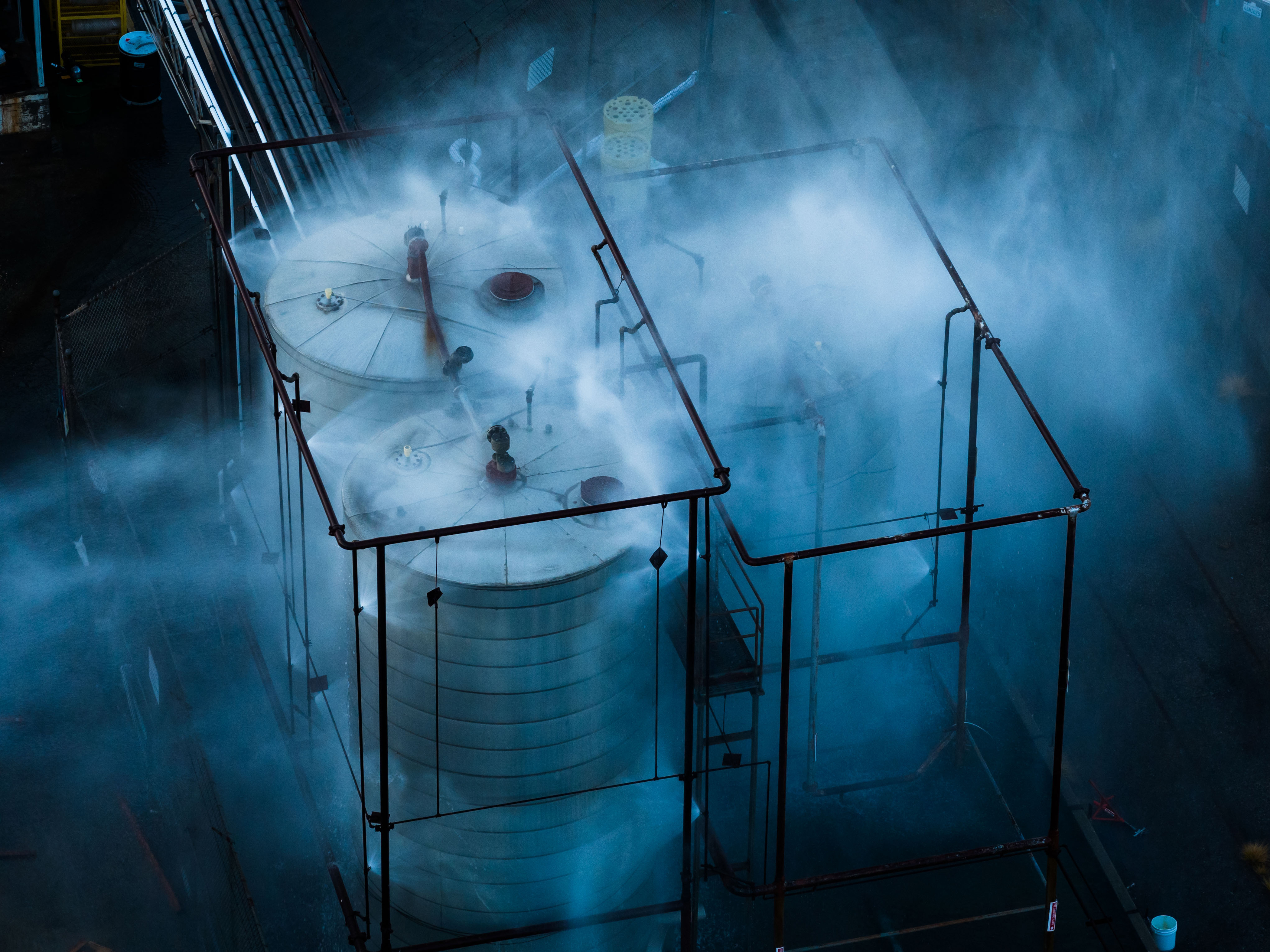
During a chemical crisis, emergency crews often spray millions of gallons of water and specialized firefighting foams to suppress vapors or cool the tank walls. This runoff does not magically vanish. It picks up hazardous chemical residues and flows directly into local storm drains, local creeks, and shallow groundwater tables. Weeks after the residents return to their homes, they are often unknowingly drinking contaminated water or breathing volatile organic compounds that have seeped into the soil beneath their foundations.
Reforming the High Risk Industrial Landscape
Fixing this crisis requires a complete overhaul of how we regulate industrial storage. The current model of allowing corporations to manage their own risk thresholds has failed repeatedly, leaving communities to bear the consequences.
First, insurance companies must stop subsidizing corporate negligence. If a facility cannot prove it uses the highest tier of real-time monitoring technology, its liability premiums should be cost-prohibitive. Financial pressure often forces corporate boards to act far faster than any government mandate.
Second, federal regulators must establish strict, non-negotiable buffer zones between high-hazard chemical facilities and residential areas. If a facility stores materials that require a two-mile evacuation radius during a worst-case scenario, no housing, schools, or hospitals should be permitted within that zone. For existing plants surrounded by dense populations, the storage volumes allowed on-site must be drastically scaled down to reduce the potential blast and vapor radius.
We must also eliminate the loophole of grandfathering in ancient equipment. If a chemical storage tank has been in continuous service for more than thirty years, it should face mandatory decommissioning or an exhaustive, independent structural recertification that goes beyond visual inspections.
The sight of 40,000 people fleeing a plume of toxic chemicals should not be treated as an unfortunate cost of doing business in a modern industrial society. It is an indictment of a regulatory apparatus that watches passively as corporate entities cut corners on safety, waiting until the steel cracks and the sirens start to wail before acknowledging the danger hidden in plain sight.