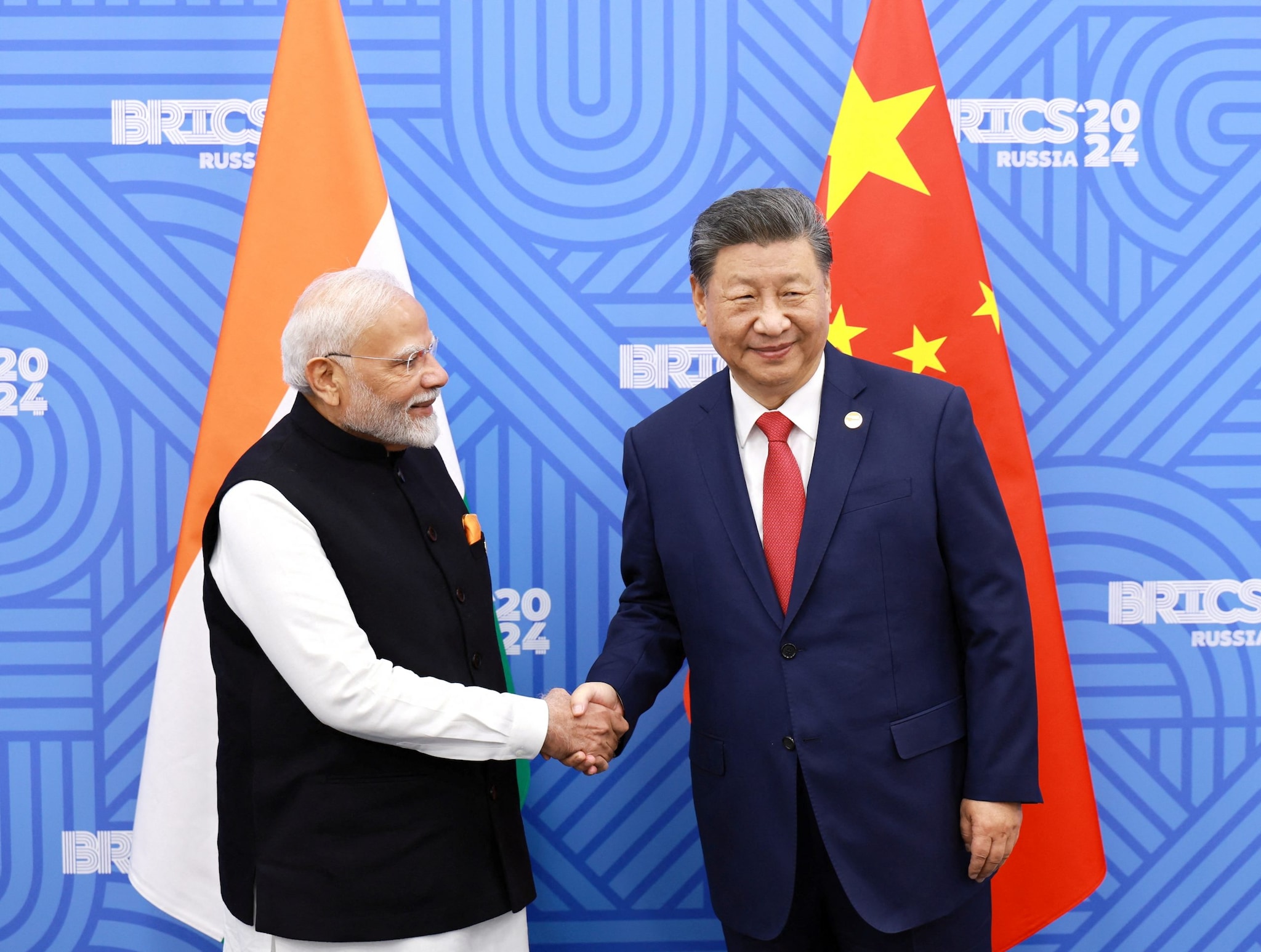
India is currently locked in a trade cycle that defies its own geopolitical ambitions. Despite the aggressive rhetoric of "Atmanirbhar Bharat" (Self-Reliant India) and the implementation of strict production-linked incentive schemes, the trade deficit with China has ballooned to record levels, recently crossing the $85 billion mark. This isn't just a matter of buying more smartphones or cheap plastic toys. The reality is far more uncomfortable. India’s industrial engine is now more dependent on Chinese intermediate goods, components, and raw materials than it was a decade ago. Every time an Indian factory ramps up production to replace a finished Chinese product, it often ends up importing the machinery and sub-components from China to do it.
The Illusion of Decoupling
The narrative of decoupling from Chinese supply chains makes for great politics but poor math. On paper, India has banned hundreds of Chinese apps and tightened scrutiny on Foreign Direct Investment (FDI) from neighbors sharing a land border. In the trenches of the manufacturing sector, however, the dependency has only deepened.
The surge in imports is driven primarily by essential industrial inputs. We are talking about active pharmaceutical ingredients (APIs), solar cells, and complex machinery. When you look at the electronics sector, the irony is thick. India has become a global powerhouse in smartphone assembly, yet the vast majority of the high-value parts inside those "Made in India" devices arrive in shipping containers from Shenzhen. We have traded the import of finished goods for the import of the pieces required to build them. This shift keeps the trade gap wide while creating a structural vulnerability that is difficult to shake.
The API Bottleneck
Take the pharmaceutical industry, often called the "pharmacy of the world." It is a point of national pride. Yet, for nearly 70% of its raw materials—the APIs that make medicines actually work—India relies on China. In certain life-saving antibiotics, that dependency hits 90%. If the taps in China turn off, the Indian pharma industry grinds to a halt within weeks. This is a strategic choke point that years of policy have failed to widen. The cost of production in China, backed by massive state subsidies and scale, makes it nearly impossible for Indian chemical manufacturers to compete on price without massive, long-term government intervention.
Why Quality and Scale Still Favor Beijing
Indian policymakers often point to rising labor costs in China as a reason for optimism. They argue that work will naturally migrate to India. This ignores the infrastructure of expertise.
China’s dominance isn't just about cheap labor; it’s about a massive, integrated ecosystem where a factory can source every screw, spring, and circuit board within a ten-mile radius. India’s logistics costs remain stubbornly high, hovering around 13-14% of GDP compared to China’s 8%. When an Indian manufacturer imports a component from China, it is often cheaper and faster than sourcing it from a different Indian state. The friction of moving goods across internal borders, combined with inconsistent power supply and bureaucratic red tape, acts as a hidden tax on domestic production.
The Solar Paradox
India's ambitious green energy goals provide the clearest example of this trade trap. The country wants to install 500GW of non-fossil fuel capacity by 2030. To reach this, it needs solar panels at an unprecedented scale. Currently, China controls over 80% of the global solar supply chain. Even as India hits record highs in solar installations, the trade deficit climbs alongside them. Every megawatt of "clean" Indian energy is, for now, a win for the Chinese export economy.
The Capital Flow Friction
The government’s decision to restrict Chinese FDI under Press Note 3 was intended to protect Indian firms from opportunistic takeovers. Instead, it has created a massive bottleneck for technology transfer.
Modern manufacturing requires technical experts to set up machines, troubleshoot lines, and train staff. Since the border tensions in 2020, obtaining visas for Chinese engineers has become a Herculean task. Indian companies frequently report that multi-million dollar production lines are sitting idle because the specialists required to calibrate them cannot get into the country. By making it harder for Chinese capital and expertise to enter, India is inadvertently slowing down its own ability to build the very factories that would eventually reduce the trade gap.
The Counter Argument That Actually Matters
Some economists argue that a trade deficit with China isn't inherently bad. They suggest that as long as India is importing "capital goods"—machines that produce other goods—it is building future capacity. If we import a $1 million specialized loom to make textiles for export to Europe, that import eventually pays for itself.
However, the data shows a worrying trend. We aren't just importing high-tech machinery. We are importing low-value intermediate goods that India used to produce itself. Small and medium enterprises (SMEs) in India are being hollowed out. A local foundry that used to make valve parts can no longer compete with mass-produced Chinese equivalents. When these small players die, the domestic supply chain breaks, forcing even larger Indian firms to look toward imports. This is the "hollowing out" of the middle of India’s industrial base.
Strategic Distrust vs Economic Necessity
The tension between the Ministry of External Affairs and the Ministry of Commerce is palpable. One wants to isolate China; the other realizes that India’s 8% GDP growth target is impossible without Chinese inputs. This policy schizophrenia leaves businesses in a state of perpetual uncertainty. Do you invest in a new factory when the raw materials might be hit with a sudden anti-dumping duty tomorrow? Most choose to wait, or they diversify their sourcing to Vietnam or Thailand—only to find that those countries are often just re-routing Chinese goods to avoid Indian tariffs.
The Logistics Gap
India's maritime infrastructure is improving, but it still lags. The turnaround time at Indian ports has dropped, yet it remains significantly higher than at the Port of Shanghai or Singapore. Efficiency is a form of currency. When a ship sits idle at a port in Mumbai or Chennai, the cost of every item on that ship goes up. This makes domestic manufacturing less competitive and imports more attractive.
The "Gati Shakti" initiative aims to fix this by integrating rail, road, and port networks. It is a massive undertaking, but infrastructure takes decades, not years. In the meantime, China continues to upgrade its already world-class logistics, maintaining its lead in the "delivered cost" of goods.
The Role of the Indian Consumer
Ultimately, the trade gap is fueled by the wallet of the Indian consumer. Inflation is a constant pressure. When a family goes to a market to buy festive lights, kitchenware, or a new television, they rarely check the "Country of Origin" label first. They check the price tag.
As long as there is a 20-30% price difference between a domestic product and a Chinese import, the import will win. Patriotism rarely trumps personal economics at the retail level. To close the trade gap, India doesn't just need to make things; it needs to make them better and cheaper than the most efficient manufacturing machine in human history.
The Reality of the "China Plus One" Strategy
Global corporations are looking for alternatives to China, a trend known as "China Plus One." India is a natural candidate, but it is competing with Vietnam, Mexico, and Poland. These competitors often have more flexible labor laws and better trade agreements with the West.
Vietnam, in particular, has been a major beneficiary. It has signed numerous Free Trade Agreements (FTAs) that allow it to act as a bridge. For India to truly capture this shift, it must move beyond protectionist tariffs. High tariffs on Chinese components often make Indian finished exports too expensive for the global market. We are effectively taxing our own exporters to punish Chinese importers. This strategy is self-defeating.
The Necessary Pivot
India’s path to reducing the trade gap isn't through bans or emotional appeals. It requires a cold, calculated focus on micro-reforms. This means fixing the power grid so factories don't need expensive diesel generators. It means simplifying land acquisition so a factory can be built in six months rather than three years. It means drastically increasing the R&D budget for chemicals and electronics to create domestic alternatives that actually perform.
The trade gap is a symptom of a deeper structural mismatch. India is trying to run a 21st-century economy on a 20th-century regulatory framework. Until the cost of doing business in Noida or Pune is lower than the cost of shipping a container from Guangzhou, the deficit will continue to hit record highs.
Stop looking at the record trade gap as a temporary spike. It is a permanent feature of the current Indian economic model. Without a radical shift in how the country handles its own industrial supply chains, the "Self-Reliant India" slogan will remain just that—a slogan. The hard work of building a competitive manufacturing base cannot be bypassed with tariffs or app bans. It requires an environment where it is simply more profitable to build here than to buy there.
Focus on the assembly line, not the border fence.