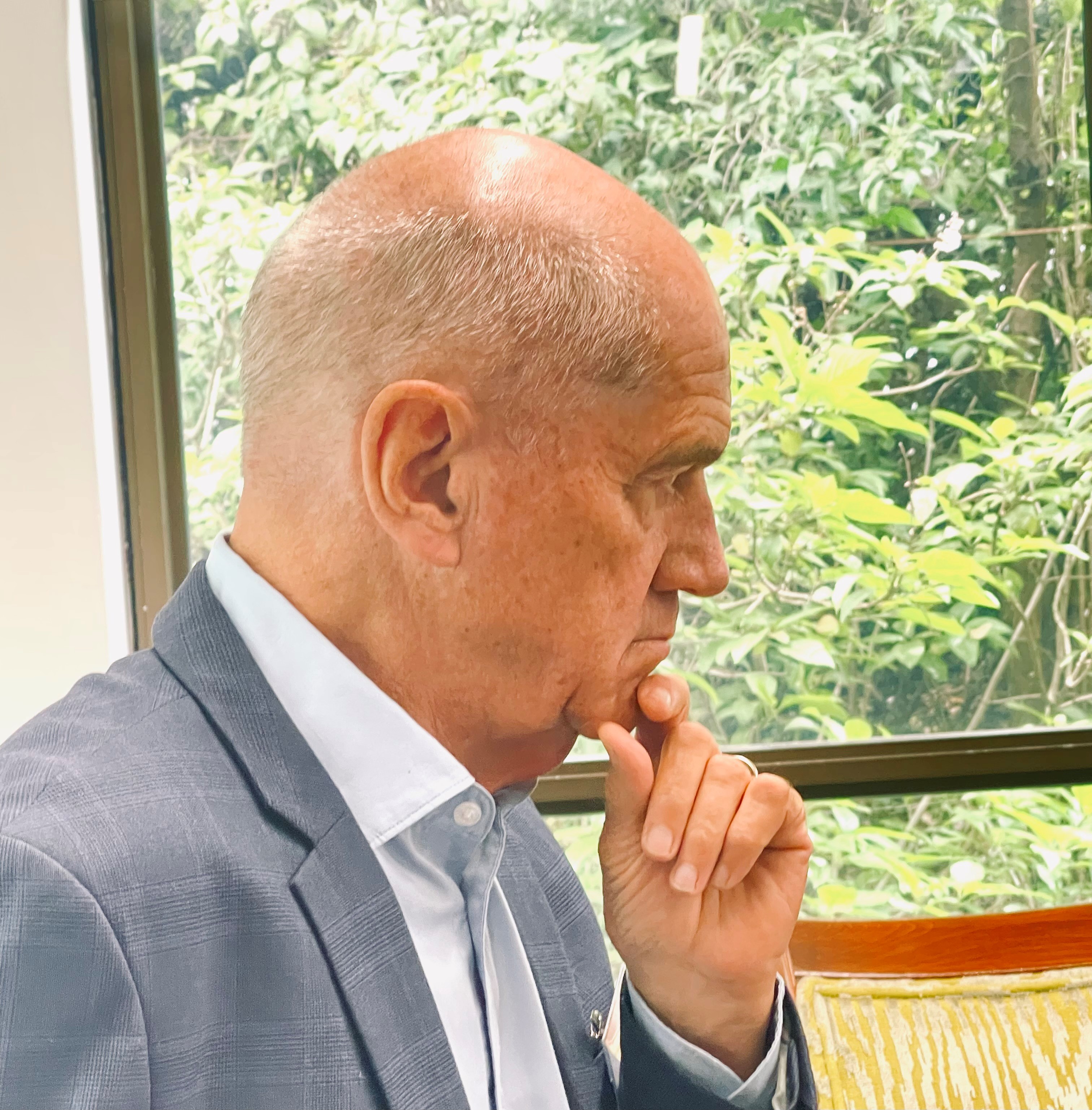
Péter Magyar has spent the last several months upending the political order in Budapest. He has pulled tens of thousands of people into the streets, defected from the inner circle of Viktor Orbán’s Fidesz party, and built a political movement, Tisza, that represents the first legitimate threat to the "illiberal democracy" established over the last fourteen years. Yet, for the Hungarian L.G.B.T.Q. community, this shift doesn't feel like a liberation. It feels like a calculated erasure. While the international press focuses on Magyar’s potential to topple a strongman, the reality on the ground is far more cynical. Magyar isn't offering a progressive alternative; he is offering a "Fidesz-lite" that maintains the status quo on social issues to avoid alienating the conservative rural base he needs to win.
The Strategy of Silence
The hesitancy among queer Hungarians isn't a matter of simple skepticism. It is a reaction to a deliberate political strategy. Magyar has been notably cagey about the anti-L.G.B.T.Q. laws passed by the Orbán government, including the 2021 "child protection" law that conflates homosexuality with pedophilia and bans the "promotion" of non-heterosexual identities to minors.
When pressed, Magyar’s rhetoric often mirrors the very party he claims to oppose. He emphasizes "traditional values" and the importance of the nuclear family. By doing so, he sends a clear message to the marginalized. Their rights are a secondary concern, a bargaining chip to be traded for the support of disillusioned Fidesz voters.
This isn't just about personal conviction. It is about the cold math of Hungarian demographics. To win a national election in Hungary, a candidate cannot simply rely on the liberal enclaves of Budapest. They must win the countryside, where the state-controlled media apparatus has spent a decade painting L.G.B.T.Q. rights as a "Western contagion" designed to destroy Hungarian culture. Magyar knows that if he comes out strongly in favor of repealing these laws, he provides Orbán with the exact ammunition needed to destroy him in the provinces.
A Legacy of Institutionalized Hostility
To understand why this silence is so deafening, one has to look at the wreckage of the last decade. Under Orbán, Hungary has systematically dismantled the legal protections of its queer citizens. It started with a constitutional amendment defining marriage strictly as the union between a man and a woman. It escalated to the banning of legal gender recognition for transgender people, effectively making it impossible for them to live with dignity in the eyes of the state.
The 2021 law was the final blow. It didn't just target activists; it targeted bookstores, media outlets, and schools. Bookstores have been fined for failing to wrap books with L.G.B.T.Q. themes in opaque plastic. Television shows featuring same-sex couples are relegated to late-night slots with warning labels usually reserved for horror films. This isn't just a "culture war." It is a state-sponsored campaign of psychological attrition.
Magyar’s refusal to commit to a full repeal of these measures suggests that he views the current legal framework not as an atrocity, but as a manageable reality. For those whose lives are directly impacted by these laws, "manageable" is an insult.
The Illusion of the Big Tent
The Tisza party is currently functioning as a "big tent" movement, absorbing everyone from former far-right voters to disappointed centrists. In this environment, the specific needs of minorities are often sacrificed for the sake of "unity." The argument usually goes like this: "First, we must restore the rule of law and fix the economy. Then, we can talk about social issues."
But history suggests that "later" never comes. When the rule of law is restored by a leader who has gained power by courting the conservative right, that leader is rarely inclined to spend their political capital on unpopular minorities.
Furthermore, Magyar’s own background creates a massive trust deficit. As a former high-ranking official within the Fidesz system, he sat at the table while many of these policies were being conceptualized. While he now claims to have had a change of heart regarding the corruption and cronyism of the Orbán era, he has not expressed a similar epiphany regarding the human rights of the L.G.B.T.Q. community.
The Fear of the Third Way
There is a growing fear in Budapest that Magyar represents a "third way" that is merely a more polite version of authoritarianism. In this scenario, the corruption is reduced, the relationship with Brussels is smoothed over, and the economy is stabilized, but the social engineering remains.
Many activists point to the fact that Magyar has not actively sought out meetings with advocacy groups like Háttér Society or the Hungarian LGBT Alliance. Instead, his outreach has been focused on the "ordinary Hungarian," a term that is increasingly used as a dog whistle for the heterosexual, Christian majority.
The danger for the L.G.B.T.Q. community is that a Magyar victory could actually solidify their marginalization. If a "pro-European" leader maintains the discriminatory laws of his predecessor, it becomes much harder for the European Union to justify sanctions or legal challenges. The narrative shifts from "Hungary is violating human rights" to "Hungary has reached a domestic consensus on its social values."
Why the European Union Won't Save Them
There is a naive hope among some observers that the European Union will force any successor to Orbán to adopt modern human rights standards. This ignores the reality of how Brussels operates. The EU is a political body, not a moral police force. Their primary concerns regarding Hungary have always been the independence of the judiciary, the transparency of public tenders, and the protection of the EU budget from embezzlement.
If Magyar wins and restores judicial independence, the EU is likely to declare victory and move on. The "social issues" will be treated as matters of national sovereignty. We have seen this before in Poland. While the change in government there has brought a more pro-EU stance, the path to restoring reproductive rights and L.G.B.T.Q. protections has been slow, fraught, and met with significant internal resistance.
In Hungary, where the social fabric has been more deeply transformed by the state, the resistance will be even stronger. Magyar knows this. He is playing a long game where the rights of a few thousand people are considered an acceptable loss in exchange for national power.
The Problem with "Fidesz Without Orbán"
The most cynical interpretation of Magyar’s rise is that he represents "Fidesz without Orbán." This would mean a government that is more efficient, less overtly hostile to the West, but still fundamentally committed to a nationalist, socially conservative agenda.
For the queer community, this is a nightmare scenario. Under Orbán, the enemy is clear. The rhetoric is so extreme that it invites international condemnation and local resistance. Under a leader like Magyar, the hostility becomes more subtle, more bureaucratic, and therefore more difficult to fight.
It is the difference between being punched in the face and being slowly suffocated. One gets you a headline in the New York Times; the other just makes you move to Berlin.
The Grassroots Response
Faced with a choice between an active oppressor and a silent skeptic, the Hungarian L.G.B.T.Q. community is turning inward. There is a growing movement of underground support networks, independent cultural spaces, and localized activism that operates entirely outside the realm of formal party politics.
These groups are not waiting for a savior in a suit. They are building the infrastructure of survival. This includes everything from clandestine gender-affirming care networks to private "rainbow" libraries that circulate banned books.
The hesitancy about Magyar isn't just a lack of enthusiasm; it is a strategic withdrawal. If the political class refuses to acknowledge your existence, you stop looking to the political class for validation.
The Cost of Neutrality
Magyar’s supporters argue that he is being pragmatic. They say that he cannot fight every battle at once. But neutrality in the face of institutionalized discrimination isn't pragmatism; it's complicity. By refusing to condemn the 2021 law, Magyar is signaling that the dehumanization of a segment of the population is a valid political choice.
This has a chilling effect on the entire democratic movement. If the "new" Hungary is built on the foundation of the "old" Hungary’s prejudices, it will never be a true democracy. It will just be a different version of the same exclusionary project.
The focus on Magyar’s poll numbers and his ability to draw a crowd masks a deeper rot in the Hungarian body politic. The fact that the only viable alternative to a radical right-wing populist is a slightly less radical right-wing populist says everything you need to know about the current state of the country.
The Demographic Trap
The math remains the ultimate obstacle. Hungary's population is aging, and the youth who would typically support progressive social changes are leaving in droves. Brain drain isn't just an economic problem; it is a political one. Every young, liberal-minded Hungarian who moves to London or Vienna is one less vote for equality at home.
Magyar’s campaign is designed to appeal to those who stayed—those who are frustrated by the inflation and the crumbling healthcare system, but who still hold onto the social conservatism that Fidesz has spent fourteen years cultivating.
He is betting that he can win by being "better" than Orbán on the economy while being "same enough" on the culture. It is a bet that seems to be paying off in the polls, but it is a bet that leaves the L.G.B.T.Q. community in the cold.
A New Generation of Activism
Despite the bleak outlook, a new generation of activists is emerging that is less interested in party endorsements and more interested in direct action. They are the ones who organized the record-breaking Budapest Pride marches of recent years, which have become massive protests against the government rather than just celebrations of identity.
These activists understand that Magyar is not their friend. At best, he is a temporary reprieve from the most aggressive forms of state harassment. At worst, he is the man who will institutionalize their status as second-class citizens by making it part of the "new" national consensus.
The reality of the situation is that the political center in Hungary has shifted so far to the right that "moderate" now includes supporting the censorship of books and the denial of basic legal rights to minorities.
The False Promise of Reform
We have to stop looking at the Hungarian opposition through the lens of Western liberal expectations. Magyar is a product of the system he is trying to replace. His language, his tactics, and his worldview were forged in the fires of Fidesz. To expect him to suddenly champion L.G.B.T.Q. rights is to fundamentally misunderstand who he is and what he is trying to achieve.
His goal is power. And in the current Hungarian climate, power is not won by defending the vulnerable. It is won by convincing the majority that you can provide the same "security" and "values" as the incumbent, but without the theft and the international isolation.
The hesitancy expressed by the community isn't a sign of indecision. It is a sign of clarity. They see exactly what is happening. They see a man who is using the language of freedom to build a platform that still excludes them. They see a future where they are once again asked to wait for a "better time" that will never arrive.
The struggle for rights in Hungary has moved beyond the ballot box. It is now a battle for existence in a country that is being offered a choice between two versions of the same narrow-minded vision. If Magyar is the answer to Hungary's problems, it's time to admit that we are asking the wrong questions.
The most dangerous thing about the current political moment is the belief that removing Orbán is the same as restoring democracy. It isn't. Democracy requires the protection of the minority against the tyranny of the majority. Until a leader emerges who is willing to say that clearly—and risk the rural vote to do it—the L.G.B.T.Q. community will remain exactly where they are: on the outside looking in, waiting for a revolution that wasn't meant for them.