The global economy is currently holding its breath as the world’s most vital maritime artery, the Strait of Hormuz, has once again been clamped shut by Tehran. After a fleeting 24-hour window where passage seemed possible, the Iranian Revolutionary Guard Corps (IRGC) snapped the door shut on Saturday, April 18, 2026. The immediate cause? A refusal by the United States to lift its own crushing naval blockade of Iranian ports.
"It is impossible for others to pass through the Strait of Hormuz while we cannot," declared Mohammad Bagher Ghalibaf, Iran’s chief negotiator and parliamentary speaker. His words are not just rhetoric; they are the logic of a cornered power using the only leverage it has left to crash the global party.
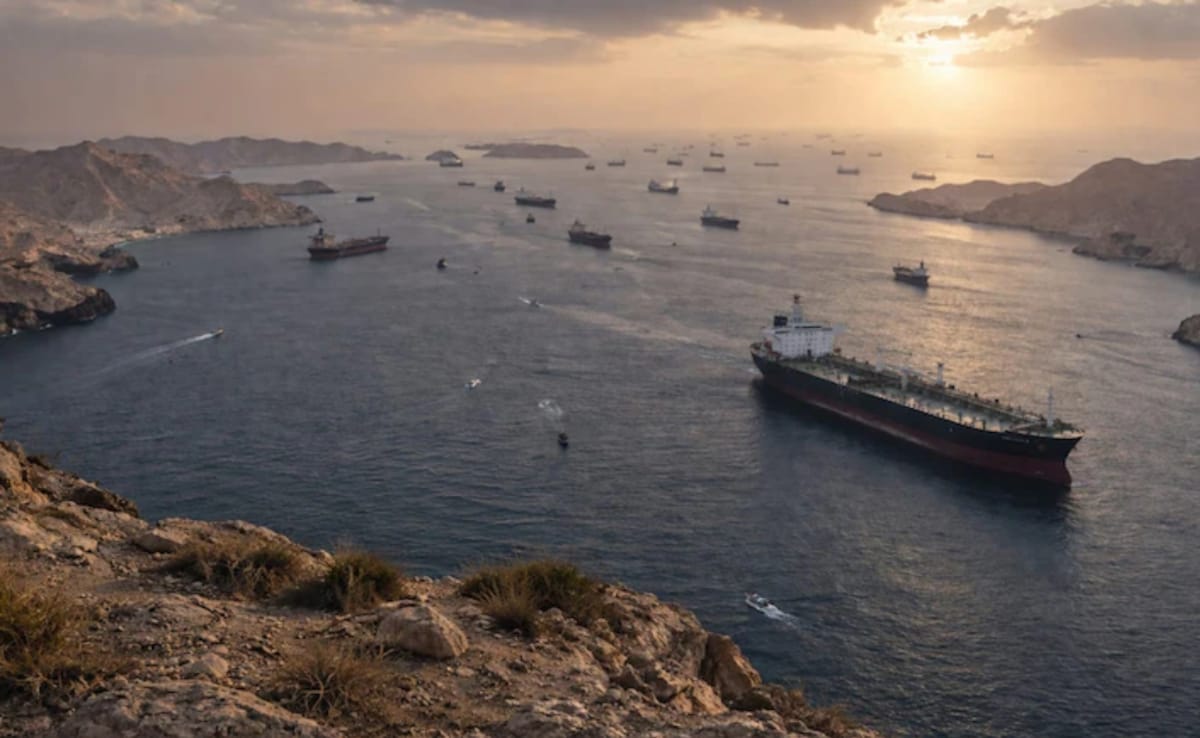
By Sunday morning, ship-tracking data showed a haunting sight: massive tankers, once the lifeblood of global energy, making U-turns in the Gulf of Oman. The brief uptick in transit on Saturday ended abruptly after two India-flagged vessels were fired upon mid-transit. The message from the IRGC is clear: if Iranian oil doesn't flow, nobody’s oil flows.
The Calculus of a Choke Point
The Strait of Hormuz is a geographic fluke that has become a geopolitical nightmare. Only 21 miles wide at its narrowest point, it carries roughly 20% of the world’s petroleum and a quarter of its liquefied natural gas (LNG). For decades, the "Hormuz Option" was a theoretical doomsday scenario. In 2026, it is a daily reality.
The current crisis traces back to February 28, 2026, when Operation Epic Fury—a massive joint U.S.-Israeli air campaign—decapitated the Iranian leadership and targeted nuclear facilities. Since then, the IRGC has shifted from conventional naval warfare to a strategy of "persistent disruption." They aren't trying to win a sea battle against the U.S. Fifth Fleet; they are trying to make the cost of navigation so high that the insurance markets do the work for them.
Why Reopening the Strait Isn't a Simple Military Task
There is a common misconception that the U.S. Navy can simply "sweep" the strait clear. In reality, the IRGC has spent years perfecting a "mosaic defense" that is remarkably difficult to dismantle.
- Smart Mines: Unlike the crude contact mines of the 1980s, modern Iranian mines are programmable, can be planted by tiny, non-military dhows, and can lie dormant for weeks before activating.
- Swarm Tactics: The IRGC employs hundreds of fast-attack craft. They don't need to sink a destroyer; they only need to hit a single unarmored commercial tanker to send global insurance premiums into the stratosphere.
- Shore-Based Missiles: Mobile Silkworm-style batteries are tucked into the jagged cliffs of the Musandam Peninsula. They are "pop-up" threats that are notoriously hard to track and destroy from the air.
The U.S. Navy is currently operating with a significantly smaller surface fleet than it had during the "Tanker Wars" of the 1980s. With only a handful of Littoral Combat Ships equipped for mine countermeasures in the region, a full clearing operation could take months. Time is a luxury the global energy market does not have.
The Collateral Damage to the Silicon Frontier
While the world focuses on the price at the pump, a more subtle and perhaps more dangerous crisis is brewing in the technology sector. The 2026 Hormuz crisis has revealed a terrifying vulnerability in the physical infrastructure of Artificial Intelligence.
AI does not live in a cloud; it lives in data centers that require staggering amounts of electricity. Much of that electricity, particularly in Europe and parts of Asia, is generated by natural gas. Before this conflict, 20% of the world’s LNG moved through this single waterway.
The disruption has caused a "re-ranking" of global compute power. Nations with domestic energy security—specifically the United States—are seeing their AI development accelerate, while Europe faces a potential "deindustrialization" event. If German factories can’t get the gas to stay powered, they certainly can’t spare the electrons to train the next generation of Large Language Models.
The future of AI is no longer just about who has the best chips; it is about who can still deliver reliable molecules to the power plants that feed the servers.
The Shadow Fleet and the Selective Blockade
Tehran has introduced a "new regime" of maritime control that borders on extortion. Before the most recent total closure, the IRGC was implementing a selective policy: vessels from "friendly" or "neutral" nations were allowed passage—for a price. Reports indicate some tankers were being charged "tolls" exceeding $1 million per transit.
Simultaneously, Iran continues to move its own oil through a "shadow fleet" of aging, uninsured tankers that frequently turn off their AIS (Automatic Identification System) transponders. These ghost ships are the only thing keeping the Iranian economy on life support.
The U.S. response has been to treat these shadow tankers as pirates, diverting them between the Strait of Hormuz and the Strait of Malacca to impound their cargo. It is a high-stakes game of maritime chicken. If the U.S. successfully chokes off the shadow fleet, Iran has signaled it will have nothing left to lose—a scenario that likely leads to the mining of the entire Persian Gulf.
A Standoff With No Clean Exit
President Trump has maintained that the U.S. blockade of Iranian ports will remain in "full force" until a permanent peace deal is reached. This "Maximum Pressure 2.0" assumes that the Iranian regime will buckle before the global economy breaks.
However, the IRGC’s "Khatam al-Anbiya" joint military command seems to have calculated that they can endure a siege longer than the West can endure $200-a-barrel oil.
The diplomatic track, currently mediated by Pakistan in Islamabad, has largely stalled. The gaps aren't just wide; they are fundamental. Iran wants a return to the status quo where they can export oil freely; Washington wants a total dismantling of Iran’s regional proxy network and what remains of its nuclear program.
As long as these two positions remain irreconcilable, the Strait of Hormuz will remain a graveyard for global trade. The reality of 2026 is that a few dozen miles of water have become the ultimate veto over global prosperity.
The tankers sitting idle in the Gulf of Oman are not just waiting for a ceasefire; they are waiting to see if the age of free navigation is officially over.