Mexico City is not just sinking. It is collapsing into the earth at a rate that defies modern engineering logic. While headlines often focus on the visual spectacle of tilted cathedrals and buckled sidewalks, the reality is a geological and bureaucratic nightmare. Parts of the city are dropping by as much as 20 inches per year. This isn't a slow-motion problem for the next century. It is an immediate infrastructure failure that threatens the survival of one of the world's largest urban centers. The cause is simple yet devastating: the city is built on a high-altitude lakebed and is literally drinking itself to death by draining the aquifers beneath its feet.
The Engineering Suicide of the Basin of Mexico
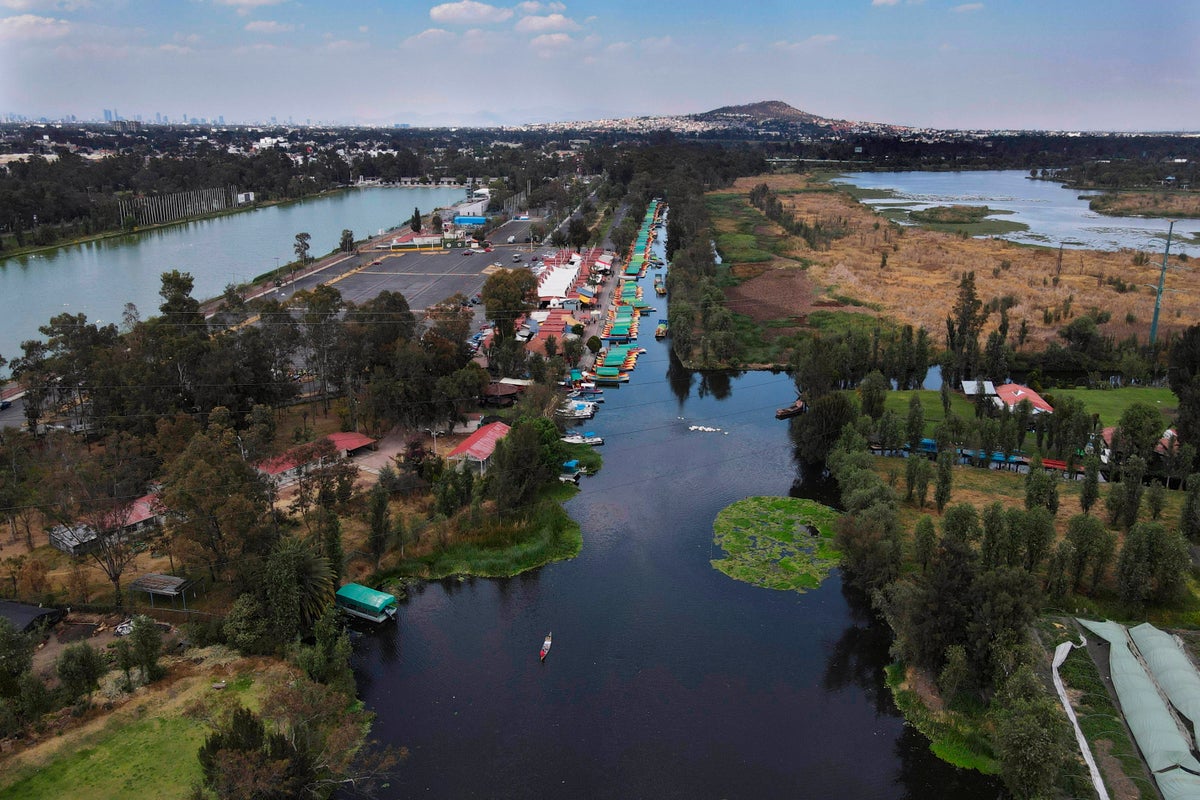
To understand why the ground is vanishing, you have to look at the history of the water. Long before the Spanish arrived, the Aztecs built Tenochtitlan on an island in Lake Texcoco. They lived in harmony with the water. The conquistadors, however, chose a different path. They drained the lakes, viewed the water as an enemy to be conquered, and paved over the soft, clay-rich soil.
That soil is the culprit. The valley floor is composed of lacustrine clays—essentially a giant, water-soaked sponge. As the city’s population exploded to over 21 million people, the demand for water outstripped the capacity of any surface-level supply. The solution was to drill. Thousands of wells now puncture the earth, sucking water out of the deep aquifers. When that water is removed, the clay particles lose their buoyancy and compress under the weight of the massive concrete jungle above.
This process is known as subsidence. Unlike a localized sinkhole, this is a regional deflation. What makes Mexico City unique—and tragic—is that this compression is largely irreversible. Once the clay pores collapse, they can never be reinflated. The storage capacity of the aquifer is destroyed forever. Even if the city stopped pumping tomorrow, the ground would continue to settle for decades.
A City Torn Apart by Differential Settlement
The sinking isn't uniform. That is the real killer. If the entire city sank at the exact same rate, the problems would be manageable. Instead, the valley is a patchwork of hard volcanic rock and soft lake sediments. When a building or a pipe straddles the line between these two types of ground, the result is differential settlement.
Imagine a bridge where one end stays put on solid rock while the other drops six feet. The structure simply snaps. This is happening across the city’s vital organs.
- The Metro System: Lines that were perfectly level 50 years ago now resemble rollercoasters. The STC (Sistema de Transporte Colectivo) spends millions annually just to shim tracks and adjust stations to keep trains from derailing.
- The Sewerage Crisis: This is perhaps the most dangerous consequence. Mexico City’s main drainage pipes used to rely on gravity to carry wastewater out of the basin. Because the city center has sunk so much lower than its surroundings, the sewage now flows backward. The city has been forced to build massive, multi-billion dollar pumping stations and deep drainage tunnels just to keep its own waste from flooding the streets during the rainy season.
- Historical Preservation: The Metropolitan Cathedral is a victim of its own weight. Decades of "underexcavation" projects—where engineers intentionally remove soil from the high side of the building to make it sink evenly—have kept it standing, but it is a constant battle against gravity.
The Space-Based Reality Check
For years, we relied on ground-level sensors and manual leveling to track the descent. Now, we have InSAR (Interferometric Synthetic Aperture Radar). Satellite data has stripped away any remaining optimism. By bouncing radar signals off the city’s surface, scientists can map the subsidence with millimeter precision.
The data confirms a terrifying trend. The rate of sinking is accelerating in some of the most densely populated areas. The satellites show that even the suburbs, once thought to be on more stable ground, are starting to slip. This orbital view provides a "heat map" of a disaster, showing exactly where the next major water main break or building collapse is likely to occur. It turns the city into a living laboratory for geological failure.
The Wealth Gap in the Deep End
Like most urban crises, the burden of the sinking city falls hardest on the poor. In neighborhoods like Iztapalapa, the ground is literally cracking open. Giant fissures, some hundreds of yards long, rip through homes and schools. These residents often have the least reliable water service, forcing them to rely on expensive water trucks (pipas) while the ground beneath them continues to crumble because of the very pumping that fails to serve them.
In contrast, wealthier districts can afford the constant "repairs" that mask the problem. New asphalt hides the cracks. Leveling jacks stabilize the mansions. But the underlying physics remain the same. You cannot build your way out of a collapsing foundation.
The Failed Promise of Rainwater Harvesting
Politicians love to talk about rainwater harvesting as the silver bullet. On paper, it makes sense. Mexico City gets plenty of rain. If that water could be captured and used to recharge the aquifers, the sinking might slow.
The reality is a logistical nightmare. The city is paved over. There is nowhere for the water to go but into the sewer system, where it mixes with industrial waste and human excrement. Creating a system to capture, treat, and re-inject water into the ground at the scale required would be the largest civil engineering project in human history.
Furthermore, the "re-injection" theory is flawed. You cannot easily force water back into a compressed clay layer. It’s like trying to push water back into a squeezed-out sponge that has been glued shut. The geology has changed.
The Economic Time Bomb
The fiscal cost of subsidence is a ghost on the city’s balance sheet. It doesn't appear as a single line item, but it is everywhere. It’s in the constant repaving of the Circuito Interior. It’s in the emergency repairs to the Cutzamala water system, which must pump water over a mountain range to reach a city that is too low to receive it naturally.
Experts estimate that the city loses nearly 40% of its treated water to leaks caused by the ground shifting. The pipes are being pulled apart by the earth. We are effectively pumping money into a sieve. Investors are beginning to notice. Insurance companies are recalculating the risk of long-term property investments in the most volatile zones. A building that won't be level in 20 years is a liability, not an asset.
Beyond the Point of No Return
We have passed the stage of "mitigation." We are now in the stage of triage. The city must decide which neighborhoods are worth saving and which will be surrendered to the fissures. This sounds cold, but the engineering limits are being reached.
The focus must shift from "stopping" the sinking to radical adaptation. This means moving away from a centralized, heavy-infrastructure model of water management. The city needs decentralized, modular water systems that can survive the shifting earth. It needs building codes that mandate flexible foundations. Most importantly, it needs to stop the expansion. Every new skyscraper added to the skyline is another hammer blow to the fragile clay beneath.
Mexico City is a warning to every other megalopolis built on unstable ground, from Jakarta to New Orleans. Nature eventually reclaims its territory. The lakes want their space back, and they are taking it, inch by agonizing inch. The only question left is whether the city will be evacuated by choice or by catastrophe. Stop looking for a way to save the ground; start looking for a way to live without it.