The Fire of the Escalation
The Middle East is on the brink of a massive regional war. Early on Thursday, the United States expanded its air campaign to the gates of Tehran and disabled a commercial oil tanker bound for Iran's Kharg Island, triggering immediate retaliatory drone and missile strikes by Iran against US military installations in Bahrain, Jordan, and Kuwait. This violent exchange has shattered the fragile interim ceasefire known as the Islamabad understanding, which was meant to temporarily pause the war that began on February 28. The collapse of this truce proves that a limited naval blockade cannot force Tehran into submission without risking an all-out global economic disaster.
The crisis is escalating because both Washington and Tehran believe they can pressure the other into a favorable settlement through calculated violence. It is a dangerous miscalculation.
The Fall of the Islamabad Accord
Ceasefires are fragile structures built on mutual distrust. The Islamabad understanding, which managed to pause the conflict for a brief period, was doomed from its inception because it left the fundamental issue of maritime sovereignty unresolved. Under the temporary agreement, the United States and Iran had agreed to allow merchant vessels to traverse the Strait of Hormuz without paying transit fees for 60 days. However, the agreement did not settle who actually controlled the shipping lanes.
Tehran insisted on its right to dictate the exact routes of commercial vessels and eventually collect transit fees, a position that the US and its Gulf Arab allies flatly rejected. To bypass Iranian control, the US military began guiding merchant ships along an alternative route close to the coast of Oman.
This bypass directly challenged Iran's claim of maritime authority.
Iran responded by harassing and attacking ships using the Oman corridor, which in turn prompted Washington to completely revoke the license that had allowed Iran to openly sell its crude oil on the international market for US dollars. By Wednesday, the diplomatic track was dead, replaced by the blunt instrument of a naval blockade.
We have seen this cycle before. In the 1980s, the "Tanker War" dragged on for years because neither side could secure the shipping lanes without directly confronting the other on land. Today, the stakes are significantly higher. The Strait of Hormuz remains the choke point of the global economy, carrying a fifth of the world’s petroleum and liquefied natural gas. By attempting to shut down Iranian oil exports completely, the US is backed into a corner where it must either tolerate a permanently closed strait or prepare for a full-scale invasion to keep it open.
Hellfire on the High Seas
The tactical execution of the blockade turned violent on Wednesday when US forces targeted a commercial vessel. The Curacao-flagged tanker Belma was sailing toward Kharg Island, Iran’s primary terminal for crude exports.
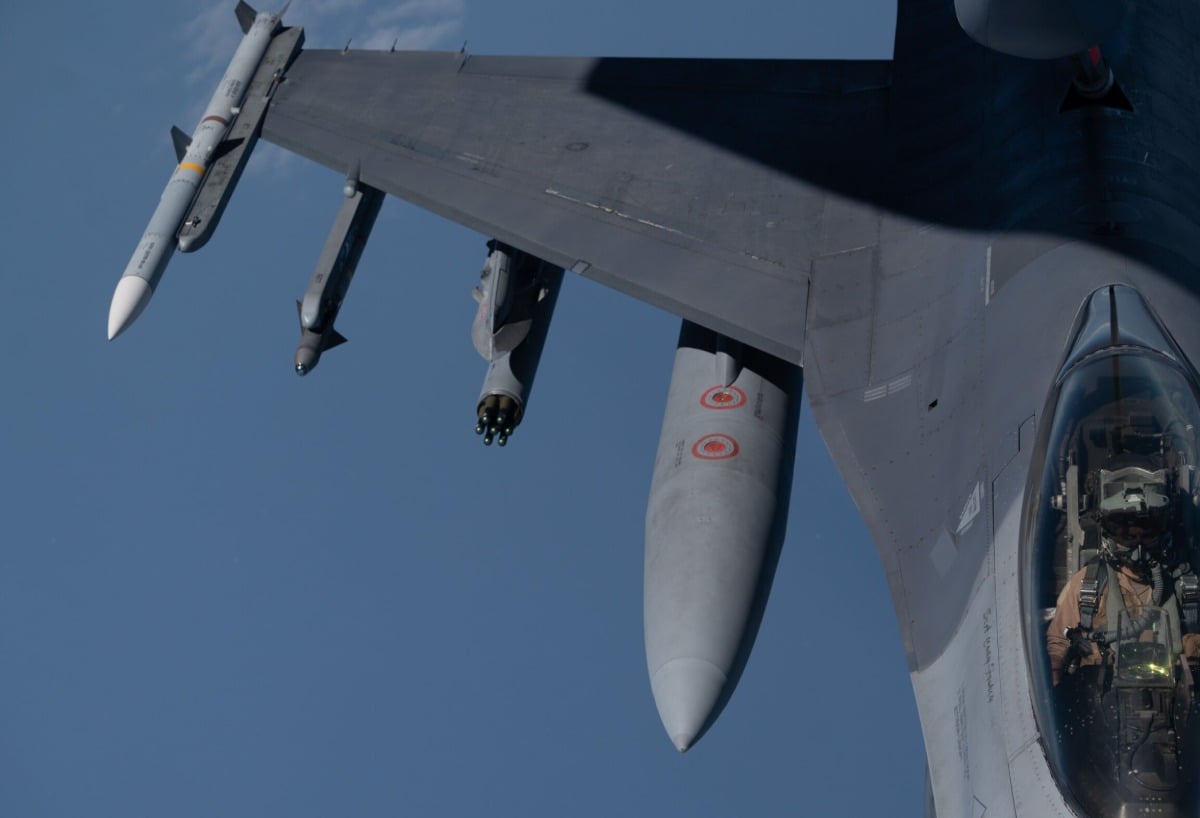
According to US Central Command, the unladen tanker repeatedly ignored warnings to turn back. A US military aircraft then fired Hellfire missiles directly into the vessel's smokestack, disabling its propulsion and stopping it in its tracks.
This strike was not an isolated incident. It represents a major policy shift.
Recent Escalation Timeline (July 2026)
+-------------------------------------------------------------------------+
| Wednesday Daylight: US strikes Greater Tunb Island and 388th Brigade    |
| Wednesday Afternoon: US aircraft disables tanker M/T Belma             |
| Thursday Dawn: US air strikes hit Tehran and Semnan missile sites       |
| Thursday Morning: Iranian retaliatory strikes on Bahrain, Kuwait, Jordan |
+-------------------------------------------------------------------------+
By striking a merchant vessel, Washington signaled that it is willing to use lethal force against any commercial entity defying its sanctions. In tandem with the attack on the Belma, US forces launched daytime airstrikes against Iranian defensive positions on Greater Tunb Island, a highly strategic landmass in the Strait of Hormuz.
The violence expanded north. Over the course of Wednesday night and early Thursday morning, American missiles hit military infrastructure across several Iranian provinces, including Sistan and Baluchestan, Hormozgan, and the capital province of Tehran. Local reports indicate that at least 35 people have been killed in these strikes, including conscripts and professional soldiers stationed at a barracks for the 388th Mechanized Infantry Brigade.
By taking the fight to the capital, the US is attempting to shock the Iranian leadership into capitulation. Instead, it has only solidified their resolve to retaliate.
The Fallacy of the Blockade Strategy
There is a fundamental flaw in the Pentagon’s assumption that a naval blockade can contain this conflict. A blockade is technically an act of war under international law, and it is impossible to enforce one cleanly in a waterway as narrow and congested as the Strait of Hormuz.
Experts have repeatedly warned that reopening the strait by force is not a simple naval exercise. It would require a massive naval armada, heavy minesweeping operations, and potentially tens of thousands of ground troops to secure the coastlines from which Iran launches its anti-ship missiles.
Iran’s military doctrine is designed specifically for asymmetric warfare in these narrow waters. The Islamic Revolutionary Guard Corps relies on hundreds of fast-attack craft, sea-skimming cruise missiles, and mobile air defense batteries hidden along the rugged coastline. Even if the US Navy successfully intercepts larger ships like the Belma, it cannot completely stop the swarms of suicide drones and naval mines that can make transit through the strait mathematically impossible for commercial insurers to underwrite.
The economic fallout is already visible. Brent crude has risen past $85 a barrel, a 15 percent jump since the latest breakdown in talks. While this is lower than the $120 peaks seen during the opening days of the war in March, the steady climb reflects a growing realization among energy traders that this conflict is not going to end quickly. A prolonged closure of the strait will inevitably drag down global manufacturing and trigger a severe spike in agricultural costs due to fertilizer shortages.
The Retaliatory Arc
Iran’s response to the strikes on its soil was swift and calculated to expose the vulnerability of America’s regional partners. Before dawn on Thursday, Tehran launched a wave of missiles and drones targeting military bases in Bahrain, Kuwait, and Jordan.
These three nations host critical US military infrastructure. Bahrain is home to the US Navy’s Fifth Fleet, Kuwait hosts major army staging grounds, and Jordan serves as a primary hub for regional air operations.
By targeting these specific locations, Iran is sending a clear warning to its neighbors. The message is simple: if you allow the United States to use your territory to launch strikes against Iran, your own infrastructure will be put on the line.
This puts Gulf capitals in an incredibly difficult position.
Governments in Kuwait and Manama cannot easily expel US forces without sacrificing their own security guarantees, but they also cannot afford to become active battlegrounds in a war they did not choose. For now, officials in Bahrain, Jordan, and Kuwait have confirmed the attacks but have refrained from releasing detailed accounts of casualties or structural damage, likely in an attempt to prevent public panic and limit further escalation.
Meanwhile, secondary fronts are opening up. In Iraq, a drone targeted a tanker off the coast of Basra, and another strike hit Irbil in the Kurdish region. Iraqi Prime Minister Ali al-Zaidi, who was visiting Washington when the attacks occurred, condemned the strikes and promised to disarm regional armed groups, but the reality on the ground is that Baghdad has very little control over these factions.
Trump's Dual Track Diplomacy and Threat of Total Destruction
The political strategy guiding Washington is highly volatile, characterized by a jarring mix of aggressive military posturing and public invitations to negotiate. Addressing the US Army War College on Wednesday, President Donald Trump insisted that Iran is ready to strike a peace deal, while simultaneously threatening to escalate the conflict to a devastating conclusion.
"They don't like what we're doing, and they do want to settle," Trump stated. "We'll find out whether or not we settle with them, or we just finish it off."
To back up this threat, Washington has pointed to the expansion of its target list. By hitting Semnan province—the heart of Iran’s ballistic missile production and space program—the US is targeting the crown jewels of Iran's domestic defense industry.
In response, Iranian military officials have made it clear that they will not be intimidated. Colonel Ebrahim Zolfaghari, speaking for the military's central headquarters, warned that any attack on Iran’s civilian infrastructure, such as power plants or bridges, would result in immediate, devastating attacks on the entire region's energy and transport networks.
"All the infrastructure in the region will be crushed under the steel blows of the powerful armed forces of the Islamic Republic of Iran," Zolfaghari warned.
This is the core danger of the current US policy. By combining extreme military pressure with vague promises of a deal, the administration is operating under the assumption that the Iranian regime will choose survival over sovereignty. But history shows that foreign military intervention, particularly direct strikes on a nation's capital, typically unites a population and pushes its leaders into a corner where surrender is politically impossible.
The release of Dena Karari, a US-Iranian citizen who had been detained on espionage charges since 2024, was praised by Washington as a sign of goodwill. However, such gestures are meaningless when the underlying military operations continue to expand. You cannot negotiate a lasting peace while firing Hellfire missiles into merchant ships and dropping bombs near the capital.
The current naval blockade is not a substitute for a coherent strategy. It is a slow-motion slide toward a larger land war that the United States is neither politically nor logistically prepared to fight.