The decision to withdraw thousands of American service members from German soil is not a mere logistical adjustment. It is a calculated rupture in the post-war architecture. By ordering the Pentagon to pull nearly a third of the U.S. contingent stationed in Germany, the Trump administration has effectively weaponized the physical presence of the American military to settle a personal and political score with Chancellor Friedrich Merz. This move bypasses the traditional channels of the State Department and the Pentagon, signaling that the era of the "unbreakable" trans-Atlantic bond is over, replaced by a transactional model where security is a commodity rather than a shared principle.
The friction between Washington and Berlin has reached a flashpoint over the North Atlantic Treaty Organization (NATO) spending targets and energy independence. While Germany has historically leaned on American protection to fuel its industrial machine, the current White House views this arrangement as a strategic drain. The clash with Merz—a leader who has attempted to assert a more muscular, independent German role in Europe—provided the necessary friction to justify a move that many in the U.S. military establishment view as a gift to Moscow.
Strategic Abandonment Under the Guise of Efficiency
Washington argues that the withdrawal is about modernizing the force and relocating troops to more strategic locations, such as Poland or the Indo-Pacific. The math suggests otherwise. Moving a brigade is an expensive, multi-year endeavor that often leaves a vacuum in the very regions that require a deterrent force. The logistics of this pullout involve dismantling decades of infrastructure in places like Ramstein Air Base and Stuttgart, which serve as the central nervous system for U.S. operations across Africa and the Middle East.
Critics within the defense community point out that Germany is not just a destination for troops; it is a platform. The Landstuhl Regional Medical Center, for instance, is the only Level I trauma center outside the United States capable of handling casualties from the front lines. Reducing the footprint in Germany complicates the entire medical and logistical chain for any future conflict in the European theater. The administration’s focus on the bill for these bases ignores the intangible value of regional stability and the intelligence-sharing networks that live within these joint commands.
The Merz Factor and the Death of Diplomacy
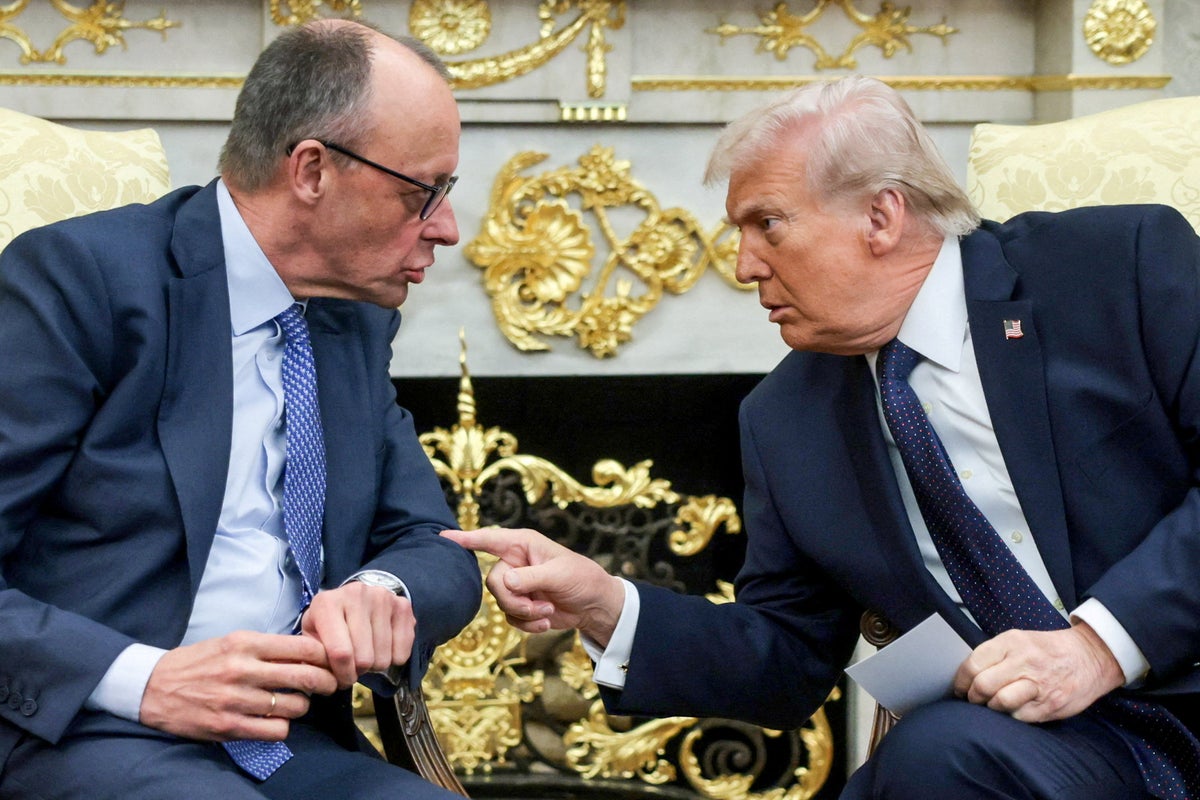
Friedrich Merz represents a shift in German politics that the White House finds particularly grating. Unlike his predecessor, Merz has been more vocal about European sovereignty, occasionally pushing back against American economic dictates. This friction escalated during recent summits where the two leaders clashed over trade imbalances and the continued German reliance on diversified energy sources.
The withdrawal order functions as a public reprimand. In the world of high-stakes geopolitics, optics are often as important as ordnance. By announcing the move via social media and press leaks before consulting the German government, the administration intentionally sidelined Merz, forcing him to choose between a humiliating concession or a risky pivot toward a more integrated European defense force. This isn't diplomacy; it is a shakedown.
Economic Fallout for the German Hinterland
Beyond the geopolitical shockwaves, the withdrawal carries a heavy price tag for the local German economy. Towns like Kaiserslautern and Grafenwöhr have built their entire economic identities around the presence of American families.
- Local Employment: Thousands of German civilians work on these bases as contractors, technicians, and administrative staff.
- Small Business Impact: Local restaurants, landlords, and service providers rely on the steady influx of American dollars.
- Infrastructure Investment: The German government has spent billions over the decades to maintain the roads and utilities that service these massive military installations.
A sudden exit creates an economic depression in these specialized hubs. While Berlin might be able to absorb the shock at a federal level, the rural districts that host these bases will see their tax bases evaporate overnight. This creates internal political pressure on Merz, which is precisely what the U.S. administration intended.
The Vacuum of Power
Nature and geopolitics both abhor a vacuum. As American troops pack their bags, the shadow of the Kremlin grows longer over Eastern Europe. The U.S. presence in Germany has served as the primary psychological barrier against Russian expansionism since 1945. Pulling these forces back signals to Moscow that the "tripwire" has been removed.
The argument that Poland will pick up the slack is flawed. While Warsaw is eager for a permanent U.S. base, the infrastructure in Poland cannot currently support the scale of operations that Germany hosts. Furthermore, moving troops closer to the Russian border is viewed by Moscow as an escalation, potentially triggering a buildup on the other side of the Suwalki Gap. The U.S. is essentially trading a stable, established deterrent for a fragmented and provocative posture.
A Transactional Defense Model
We are witnessing the death of the "values-based" alliance. For seventy years, the U.S. argued that defending Europe was in America's own best interest because a stable Europe prevented world wars. The current administration has flipped this logic. They view defense as a service for hire. If Germany doesn't pay enough—in the form of defense spending or trade concessions—the protection is revoked.
This mindset ignores the reality of the global economy. A destabilized Europe leads to a volatile Euro, which in turn wreaks havoc on American portfolios and export markets. The cost of maintaining a few thousand troops in Bavaria is a rounding error compared to the cost of a regional conflict that disrupts global shipping and energy markets.
The European Pivot
If Washington is no longer a reliable partner, Berlin and Paris are forced into an uncomfortable embrace. The "Strategic Autonomy" project, long championed by France, suddenly looks like a necessity rather than a luxury. However, building a unified European army is a Herculean task that faces significant hurdles:
- Fragmented Procurement: Each European nation wants to use its own defense contractors, leading to a mess of incompatible hardware.
- Command Authority: Who decides when to deploy? The lack of a central executive power in the EU makes rapid military response nearly impossible.
- Nuclear Deterrence: Without the American nuclear umbrella, Europe remains vulnerable to Russian intimidation.
Merz is now in a position where he must accelerate German rearmament, a move that is historically sensitive and domestically unpopular. The withdrawal forces Germany to become the very thing many in the U.S. claim to want: a dominant military power in the heart of Europe. History suggests that a heavily armed, independent Germany often leads to a shift in the continental balance of power that doesn't always align with American interests.
The Cost of the Move
The Pentagon’s own estimates for the cost of relocating these troops run into the billions. This is money that will not be spent on new technology, cyber defense, or naval expansion. It is "sunk cost" money, spent simply to move people from one point on a map to another to satisfy a political directive.
Military leaders often talk about "readiness." A troop withdrawal of this magnitude guts readiness for years. Units will be in transition, families will be in flux, and the institutional knowledge of the European theater will be lost as veteran officers and NCOs opt for retirement rather than another disruptive move. The readiness of the U.S. Army in Europe will hit its lowest point in decades during the very window that intelligence reports suggest is most critical for deterring aggression.
The Logic of Rupture
This is not a mistake or a blunder; it is an intentional strategy of disruption. By breaking the German-American relationship, the administration is attempting to force a total renegotiation of the global order. They are betting that the U.S. is strong enough to stand alone and that the alliances of the past are merely anchors holding back American potential.
It is a high-stakes gamble that assumes the rest of the world will still want to trade and cooperate with a nation that can tear up a security treaty over a budget dispute. Merz, for his part, is likely to double down on European integration, effectively pushing Germany further away from the American orbit. The withdrawal doesn't just move troops; it moves the center of gravity in the Western world.
The American presence in Germany was once the cornerstone of global stability. Now, it is a bargaining chip. As the convoys begin to move and the bases go quiet, the reality of this new world order is becoming clear. The U.S. is no longer the leader of the West; it is a freelancer, and the price of its services just went up.
Germany is now forced to lead a continent it is not entirely sure wants to be led, while the United States retreats into a fortress of its own making. The fallout from this decision will be felt not in months, but in decades, as the structures that prevented a major European conflict for three generations are systematically dismantled. This is the end of the Atlantic era.