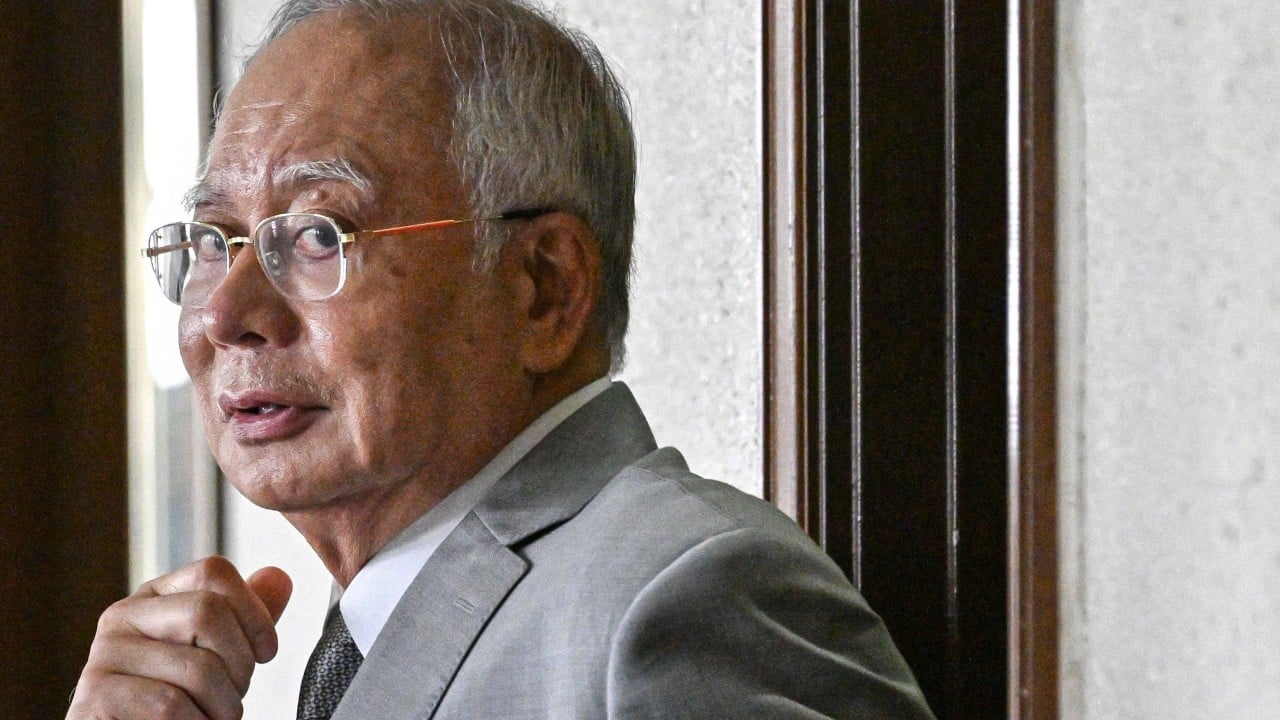
Malaysia's ruling Pakatan Harapan coalition has formally declared that high-profile corruption convicts must serve their full prison sentences, reacting sharply to reports that former Prime Minister Najib Razak is seeking another royal pardon following his additional 15-year sentence handed down in December 2025. This public posture masks a deeper institutional fracture. Prime Minister Anwar Ibrahim finds himself cornered between the reformist base that brought him to power and the survival instincts of the United Malays National Organisation (UMNO), his uneasy partner in government.
Politics rarely affords clean lines, but few situations are as jagged as the one currently gripping Putrajaya. The machinery of state is grinding against the realities of coalition survival. When the coalition issued its stark reminder that judicial processes must run without pre-emptive interference, it did not mention Najib by name. It did not need to. Everyone from the coffee shops in Bangsar to the party headquarters in World Trade Centre Kuala Lumpur understood exactly whose freedom hung in the balance.
The Arithmetic of Compromise
To understand why a potential royal clemency request creates an existential crisis for the current administration, one must look at the foundational math of the unity government. Anwar did not win an outright majority in the fractured 2022 general election. To form a government, his reformist alliance forged an unprecedented pact with UMNO, the very party he spent decades fighting over the multi-billion-dollar 1MDB financial collapse.
That marriage of convenience was built on an unspoken bargain. UMNO lent its parliamentary seats to stabilize the country, while Anwar promised a measure of administrative stability. But stability comes with a price tag, and that price tag is often measured in judicial leniency.
When the Federal Territories Pardons Board previously halved Najib's initial 12-year sentence and trimmed his massive financial penalties, the decision sent shockwaves through the reformist camp. It proved that political royalty operated under a different set of physical laws than ordinary citizens. Now, with reports swirling that the board chaired by King Sultan Ibrahim might weigh another clemency bid following a fresh 15-year conviction, the coalition is scrambling to draw a hard line in the sand.
They are trying to convince the public that the rule of law is non-negotiable, even as they govern alongside the political faction demanding absolute clemency for their former boss. It is a tightrope walk over an active volcano. Lean too far toward satisfying UMNO diehards, and Anwar alienates the urban, middle-class voters who demand structural accountability. Lean too far toward uncompromising justice, and the government risks losing its parliamentary backbone if UMNO MPs decide to pull their support.
Behind the Institutional Facade
The public statements emphasizing judicial independence are designed for international credit rating agencies and domestic skeptics alike. Malaysia spent years repairing its global reputation after the staggering revelations of the 1MDB looting. Foreign direct investment depends heavily on predictability, transparency, and the belief that contracts and laws apply uniformly.
Yet, the institutional reality is far messier. The separation of powers in Malaysia features a unique constitutional monarchy where the king holds the ultimate prerogative of mercy. This creates a structural loophole where judicial outcomes delivered after grueling years of trial can be altered overnight by executive or royal discretion.
When a court hands down a 15-year sentence for abuse of power and money laundering, it represents thousands of hours of prosecutorial work, forensic accounting, and judicial scrutiny. When that sentence is potentially bypassed through backroom political lobbying, it devalues the entire legal architecture. The civil servants and investigators who risked their careers to unearth financial malfeasance are left watching their work treated as a bargaining chip in a high-stakes game of musical chairs.
The Cost of Appeasement
Political expediency often demands short-term survival at the expense of long-term credibility. If Najib manages to secure another reduction or evades the remainder of his confinement, the message to future leaders is unmistakable. Steal enough, build a powerful enough political network, and the system will eventually find a way to forgive you.
Anwar understands this danger better than anyone. His entire political identity was forged under the banner of reformasi. For years, he rallied the masses against systemic corruption and elite impunity. Finding himself in the prime minister's office, compelled to defend a government that accommodates the architects of that very system, is the ultimate irony.
The upcoming deliberations of the Pardons Board will test whether Malaysia's democratic transition has truly taken root or if it remains tethered to old patronage networks. If the coalition's latest declaration is merely rhetorical armor to deflect public anger, the disillusionment will cut deep.
The machinery of the state moves forward, but the compass is spinning. How Putrajaya handles this latest test will determine whether the nation's anti-corruption pledge is a binding legal standard or a temporary slogan designed to weather the next political cycle.