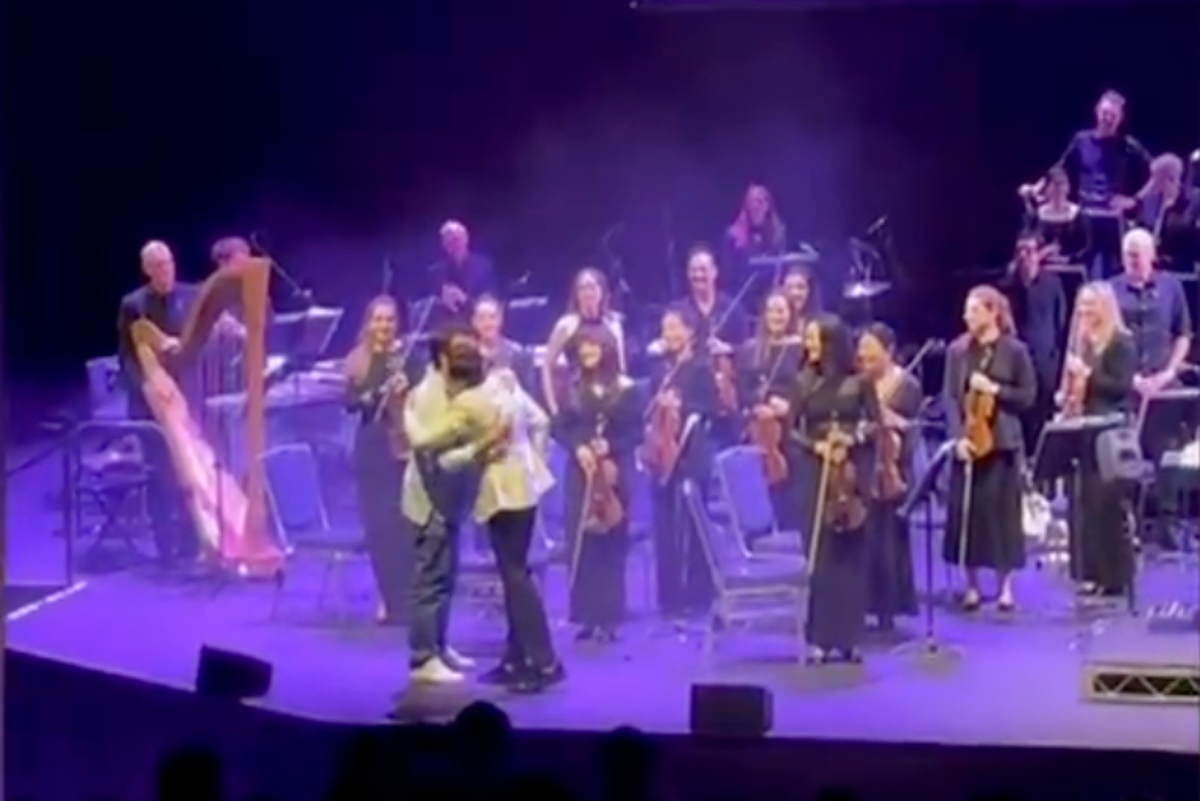
The theater press is currently swooning over Mark and Joaquin Consuelos making their Broadway debuts together. They are calling it a heartwarming milestone. They are calling it a beautiful family affair.
They are wrong. It is a symptom of a dying business model.
When a major production relies on the gimmick of a famous father and son stepping onto a stage together, it is not a celebration of theatrical art. It is a desperate marketing stunt designed to fleece tourists and aging daytime television fans.
The lazy consensus in entertainment journalism is that star casting "brings new audiences to the theater." For two decades, producer circles have repeated this myth like gospel. The logic appears simple on the surface: put a recognizable face on the marquee, sell out the balcony, and keep the lights on.
But as someone who has spent fifteen years analyzing the financial mechanics of commercial theater, I have watched this exact strategy erode the foundation of Broadway. Star casting does not build sustainable audiences. It creates a volatile, high-risk economy that prices out the middle class and starves new talent.
We need to stop pretending this is good for the industry.
The Mathematical Failure of Marquee Castings
Let’s dismantle the primary defense of the Consuelos-style casting choice: the balance sheet.
Producers love star casting because it provides an immediate spike in advance ticket sales. It mitigates the terrifying risk of launching a show in an economic climate where a standard Broadway musical costs upwards of $15 million to mount.
But look closer at the lifecycle of these productions.
[Famous Name Announced] ➔ [Massive Advance Ticket Spike] ➔ [Astronomical Weekly Operating Costs] ➔ [Star Leaves Production] ➔ [Box Office Collapse] ➔ [Show Closes Prematurely]
When you build a production around the novelty of a celebrity—or worse, a celebrity and their offspring—the show becomes entirely dependent on that specific human being. The brand is no longer the story, the music, or the theatrical experience. The brand is the actor.
This creates three structural disasters for the industry:
- The Scalper Economy: When a celebrity signs on for a limited run, ticket brokers use automated software to scoop up premium inventory. Prices skyrocket on the secondary market to $800 or $900 a seat. The average theatergoer is priced out, and the incremental profit goes to StubHub, not the production or the artists.
- The Post-Star Cliff: The moment the contract ends and the celebrity departs, the box office numbers plunge by 50% or more. Audiences have been conditioned to believe the show is worthless without the star. The production closes, wiping out the investments of everyone involved.
- The Recasting Paradox: Replacing a celebrity requires finding another celebrity of equal or greater fame who is willing to commit to an grueling eight-show-a-week schedule. The pool of available talent shrinks to a handful of Hollywood actors, most of whom cannot carry a live performance.
I have seen production companies blow millions trying to sustain a show after their primary star walked out the door. They pour money into frantic television ad campaigns and discounted ticket papering services, trying to convince the public that the show itself has value. It rarely works. The audience was never there for the theater; they were there for the living room familiarity of a television personality.
The Experience Gap: Screen vs. Stage
Acting on a television set is an exercise in minimalism. The camera sits three feet from your face. A microphone is hidden in your collar. If you fluff a line, the director yells "cut" and you reset for take fourteen.
Broadway is an athletic event.
To project emotion, nuance, and vocal power to the back row of the balcony at the Broadway Theatre requires a completely different physiological skill set. It requires breath control, vocal placement, and a deep understanding of spatial geometry.
When Hollywood names walk onto a Broadway stage without years of regional theater or conservatory training, the artistic compromise is immediate. The microphone is turned up to compensate for a lack of vocal projection. The blocking is simplified because they cannot hit their marks while maintaining a connection to the audience.
The result is a watered-down theatrical experience. Audiences pay premium prices for a subpar performance, leave the theater feeling underwhelmed, and decide that live theater isn't worth the hassle or the money.
The industry is sacrificing its long-term reputation for a short-term cash injection.
Dismantling the "People Also Ask" Mytheology
If you look at the public discourse surrounding high-profile debuts like the Consuelos family, the same defense mechanisms appear repeatedly. Let's address these arguments with cold reality.
"Doesn't celebrity casting keep theater workers employed?"
This is the ultimate shield used by defensive producers. They argue that without a star, the show wouldn't open, meaning musicians, stagehands, and dressers would be out of work.
This is short-term thinking at its finest. Yes, it creates jobs for twelve to sixteen weeks. But it prevents the development of sustainable, long-running hits like Wicked, The Phantom of the Opera, or The Lion King. Those shows did not rely on Hollywood stunt casting to survive; they relied on brilliant staging and exceptional material. A long-running hit provides stable, multi-year employment for hundreds of theater professionals. A star-driven limited run is a gig, not a career.
"How else are new plays supposed to survive on Broadway?"
By being exceptional, affordable, and properly marketed.
The assumption that an audience will only show up for a straight play if a movie star is in it is a self-fulfilling prophecy created by lazy marketing departments. When producers spend 80% of their advertising budget highlighting a specific actor's face rather than the premise of the play, they train the audience to ignore the writing. Look at the success of The Play That Goes Wrong or Vanya and Sonia and Masha and Spike. They succeeded because the material was electric and the ensembles were brilliant, not because someone from daytime television was on the poster.
The True Cost of Nepotism on Broadway
We cannot discuss the Consuelos debut without addressing the elephant in the room: nepotism.
The entertainment industry is currently grappling with the reality of the "nepo baby" phenomenon. While Hollywood has been thoroughly critiqued for its nepotistic hiring practices, Broadway has largely escaped scrutiny under the guise of being a "supportive family community."
It is time to end that pass.
Every time a celebrity child is handed a Broadway debut based on their last name, a trained, qualified theater actor who has spent a decade working in regional hell, paying dues, and honing their craft is pushed out of a job.
Consider the sheer volume of elite talent graduating every year from institutions like Carnegie Mellon, Juilliard, and NYU Tisch. These performers possess world-class vocal technique, impeccable dramatic training, and the stamina to sustain a grueling performance schedule. Yet, they are routinely passed over during casting calls because they don't have a blue checkmark on Instagram or a famous parent who can do the talk-show circuit to promote the production.
This creates an artistic brain drain. When elite young performers realize that talent and training are secondary to familial connections and social media metrics, they abandon live theater entirely. They move to Los Angeles to audition for commercials, or they leave the industry altogether.
Broadway is actively cannibalizing its own future talent pool to generate a week of superficial press coverage.
The Counter-Intuitive Path Forward
Am I suggesting we ban celebrities from Broadway? Absolutely not.
When an established star with legitimate stage roots—someone like Hugh Jackman, Audra McDonald, or Sutton Foster—takes on a role, the synergy between star power and theatrical excellence is undeniable. They understand the medium. They respect the craft. They lift the entire ensemble.
The solution requires a complete overhaul of how commercial theater is financed and marketed.
- Ensemble-First Marketing: Producers must stop treating the show as a vehicle for an individual. The narrative, the music, and the collective ensemble must be the selling point. If the show cannot stand on its own merits without a specific name above the title, it should not be on Broadway.
- Tiered Capitalization Models: Lower the barrier to entry for new productions by utilizing smaller off-Broadway spaces for extended development cycles, rather than rushing raw material into 1,500-seat houses that require immediate, massive financial returns.
- The Meritocratic Marquee: Casting directors must claw back control from marketing executives. Audition rooms should be judged on vocal resonance, emotional range, and physical stamina—not on how many tickets an actor's parents can sell through a single post on social media.
The current infatuation with the Consuelos debut is not a sign of a thriving theater culture. It is the final, desperate gasp of an industry that has forgotten how to sell its own art form. Until Broadway stops chasing the cheap high of celebrity gimmicks and begins reinvesting in true theatrical excellence, it will continue its slow descent into a high-priced theme park for tourists.
Stop buying tickets to the gimmick. Demand better theater.