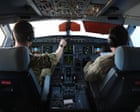
The skies over the Middle East are getting busier and a lot more dangerous. Britain just made a major military move by dispatching Royal Air Force Typhoon fighter jets to protect Saudi airspace.
If you are wondering why London is stepping up its involvement right now, it comes down to a sharp spike in cross-border drone and missile attacks targeting Saudi infrastructure. Houthi forces have ramped up pressure significantly, even striking civilian targets like Riyadh's King Khalid International Airport.
Let's look at what is actually happening on the ground and why this deployment matters.
The Reality of the New Deployment
Defence officials in London have been careful to frame the mission as strictly defensive. The newly assigned RAF Typhoons aren't flying offensive missions into Yemen. Instead, their job is intercepting incoming drones and missiles before they can hit populated areas, civilian airports, or critical energy assets.
This isn't happening in a vacuum. Britain already has deep military ties with Riyadh, including equipment, maintenance crews, and personnel stationed at bases across the kingdom. But adding fighter jets to the mix marks a noticeable escalation in operational support.
Why take this step now? Energy security and domestic economic pressures play a massive role. When regional instability threatens oil production and trade routes through the Red Sea, global markets react instantly. British leaders are feeling the heat at home, where energy prices directly impact the cost of living for everyday citizens. Protecting Saudi infrastructure is, from London's perspective, a way to help stabilize global supply chains.
Walking a Fine Diplomatic Tightrope
Foreign policy rarely comes without complications. By stepping up military cooperation with Saudi Arabia, the UK is walking a very thin line.
Critics point out that deeper military alignment risks tangling Britain in a complex regional war with a devastating humanitarian track record. The multi-year conflict in Yemen has caused immense civilian suffering, and human rights groups frequently question arms sales and operational support to the Saudi-led coalition.
At the same time, British defense planners face a stark reality. Ignoring pleas from a key regional ally isn't an option when strategic partnerships and international trade routes are on the line. Ministers have insisted that there is no purely military solution to the underlying conflict in Yemen, yet immediate defense needs require active deterrence.
What Happens Next in the Region
The big question is whether defensive air patrols will be enough to deter further escalation. Houthi leadership has shown remarkable resilience and adaptability, utilizing cheap drones and ballistic missiles that require sophisticated and expensive countermeasures to intercept.
If the frequency of attacks continues to rise, the pressure on foreign forces stationed in the region will mount. For now, the RAF is dug in, flying regular patrols, and hoping that a strong defensive shield will force a re-evaluation on the other side. Keep an eye on regional shipping costs and energy markets over the coming weeks; they will tell you immediately whether these deterrence efforts are working.