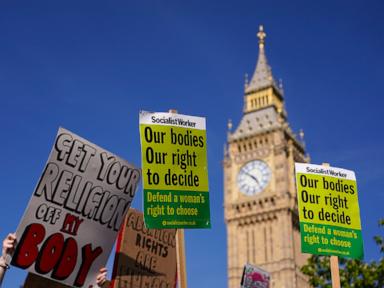
British women convicted under Victorian-era abortion laws are set to receive automatic pardons, wiping away criminal records that have followed them for decades. The policy, championed by the UK government and reproductive rights advocates, targets convictions handed down under the Offences Against the Person Act 1861—a statute passed before women even had the right to vote in Britain. By issuing blanket pardons rather than forcing individuals through agonizing, case-by-case appeals, Westminster is attempting to correct what legal scholars and medical professionals have long called a profound statutory failure.
The mechanics of this shift matter. For years, Britain operated under a strange legal contradiction. The Abortion Act 1967 legalized termination under specific medical conditions, yet it never repealed the underlying criminal offenses established in 1861. That legal oversight left a loaded weapon sitting in the British penal code. When home-use abortion pills became widely accessible during the COVID-19 pandemic, police and prosecutors suddenly began dusting off 19th-century statutes to investigate and charge women experiencing late-term miscarriages, stillbirths, and self-managed terminations.
The Victorian Trap Hidden in Modern British Law
Most people assume abortion has been fully decriminalized in the United Kingdom for nearly sixty years. It hasn't.
Under Sections 58 and 59 of the Offences Against the Person Act 1861, procuring a miscarriage remained a serious criminal offense carrying a maximum sentence of life imprisonment—the harshest penalty for abortion anywhere in Europe. The 1967 Act merely carved out medical exceptions. If two doctors signed off on the procedure within strict gestational limits, the 1861 criminal penalties did not apply. Step outside those rigid administrative lines, even by a few days or through a clerical error, and the full weight of Victorian criminal law snapped back into place.
Consider the real-world consequences of this statutory gap. In recent years, police investigations into pregnancy loss surged across England and Wales. Women arriving at hospitals with unexplained bleeding or late-stage miscarriages found themselves treated not as patients in medical crisis, but as homicide or illegal abortion suspects. Detectives seized mobile phones, combed through period-tracking apps, and scrutinized internet search histories looking for evidence of intent.
The psychological toll on these women—and the chilling effect on medical trust—became impossible for lawmakers to ignore. When a woman fears that seeking emergency obstetric care could lead to handcuffs in a hospital ward, public health breaks down.
Why Automatic Pardons Became the Only Viable Route
Standard legal remedies simply do not work for crimes of this nature. Normally, clearing a wrongful or outdated conviction requires a formal appeal through the courts or an application to the Criminal Cases Review Commission. That process demands money, legal representation, and the willingness to relive deeply personal trauma in a public courtroom.
For women convicted of ending a pregnancy, anonymity is everything. Nobody wants their name attached to a judicial review over a terminated pregnancy from ten, twenty, or forty years ago.
Automatic pardons bypass that humiliation entirely. By applying a legislative wipe across specific historical offenses—mirroring the approach Britain eventually took with the Policing and Crime Act 2017 (often called Turing's Law) to pardon men convicted under abolished anti-gay laws—the state absorbs the administrative burden. The conviction vanishes from background checks. Disclosure and Barring Service (DBS) certificates, which employers use to vet applicants for jobs in healthcare, education, and finance, will no longer flag these women as violent offenders.
Yet automatic pardons are not a magic wand. Legal analysts point out several critical friction points in how blanket pardons operate in practice:
- The Scope of the Offenses: Determining exactly which convictions qualify requires surgical precision. Lawmakers must separate cases involving non-consensual termination—such as an abusive partner slipping abortifacients into a woman's drink without her knowledge—from cases where a woman acted on her own behalf.
- Record Expungement vs. Pardon: In British legal terminology, a pardon forgives the offense, whereas a disregard removes it from official police databases entirely. Without simultaneous administrative erasure from the Police National Computer, a pardoned conviction can still surface during enhanced security clearances.
- Cross-Border Complications: Criminal justice is devolved across the UK. While England and Wales share a legal system, Scotland and Northern Ireland operate under distinct statutory frameworks. Northern Ireland only decriminalized abortion in 2019, meaning its historical caseload looks vastly different from mainland Britain's.
The Enforcement Spike That Forced Westminster's Hand
Politicians rarely overhaul criminal statutes out of pure altruism; they respond to institutional embarrassment. The push for pardons gained unstoppable momentum only after a string of high-profile prosecutions exposed how aggressively modern police forces were applying 19th-century law.
During the 2020 lockdowns, the UK government temporarily allowed women to take both mifepristone and misoprostol at home following a telemedical consultation, a policy later made permanent in England and Wales. While telemedicine drastically improved early-stage access, it also blurred the clinical verification of gestational age. If a woman miscalculated how far along she was—a common occurrence without an ultrasound—and took the medication past the legal limit, she technically committed a felony under the 1861 Act.
Instead of treating these incidents as medical complications, several police forces launched full-scale criminal probes. In one widely publicized case, a mother of three was sentenced to prison after taking abortion medication past the legal threshold during lockdown, sparking outrage from the Royal College of Obstetricians and Gynaecologists (RCOG) and the British Medical Association. Major medical bodies warned the government that criminalizing pregnancy outcomes was actively endangering women's lives.
Doctors themselves were caught in the crossfire. Confidentiality rules dictate that clinicians should only breach patient privacy to police if there is an immediate, serious threat to public safety. Yet confusion over the 1861 Act led some hospital trusts to report suspicious miscarriages directly to law enforcement, turning emergency rooms into extensions of the criminal justice system.
What Critics and Legal Conservatives Argue
The move to issue blanket pardons has not gone unchallenged. Anti-abortion groups and conservative legal commentators argue that wiping away convictions retroactively undermines the rule of law and removes vital protections for viable fetuses late in pregnancy.
Their primary counter-argument centers on gestational limits. Under British law, the standard limit for abortion is 24 weeks, the point at which medical consensus generally places fetal viability outside the womb. Critics contend that prosecutions under the 1861 Act rarely targeted women in the first trimester; instead, they almost exclusively involved late-term terminations well beyond 24 weeks. From this perspective, automatic pardons blur the ethical and legal boundary between early reproductive healthcare and late-term fetal destruction.
There is also a constitutional objection. Legal purists dislike executive or legislative pardons that sweep away convictions without judicial review, arguing that Parliament should change laws prospectively rather than rewriting judicial history. If a court properly applied the law as it stood at the time of the offense, conservatives argue, vacating the verdict retroactively weakens judicial authority.
Supporters of the pardons counter that the underlying law itself was illegitimate from the moment women gained equal citizenship. Keeping women registered as criminals under a statute drafted by an all-male Victorian parliament, they argue, is a far greater stain on British justice than a retroactive legislative correction.
The Global Ripple Effect on Reproductive Policing
Britain's reckoning with its criminal code arrives at a volatile moment globally. While the UK moves toward clearing historical records and dismantling criminal penalties for women, other Western democracies—most notably the United States following the reversal of Roe v. Wade—have moved sharply in the opposite direction, reviving dormant 19th-century statutes to restrict or criminalize pregnancy termination.
For international legal observers, the British experience serves as a stark warning about what happens when reproductive healthcare remains tethered to the penal code. Even in a country with universal healthcare and broad public support for abortion access, leaving criminal statutes on the books creates an enforcement trap. Police departments, bound by statutory duty to investigate reported crimes, will inevitably use the laws they are given.
By pairing automatic pardons with broader efforts to remove women entirely from the criminal scope of the 1861 Act, Westminster is acknowledging a fundamental reality of modern governance. You cannot regulate a complex medical procedure through Victorian felony statutes without destroying lives in the process.
For the women carrying those convictions—some of whom have lived under the quiet dread of a background check exposing their deepest personal crisis to an employer, a landlord, or their own families—the legislative shift brings a long-overdue end to state-sanctioned stigma. The criminal records are being wiped clean, leaving behind a sobering reminder of how long outdated laws can linger in the machinery of justice before anyone finally bothers to dismantle them.