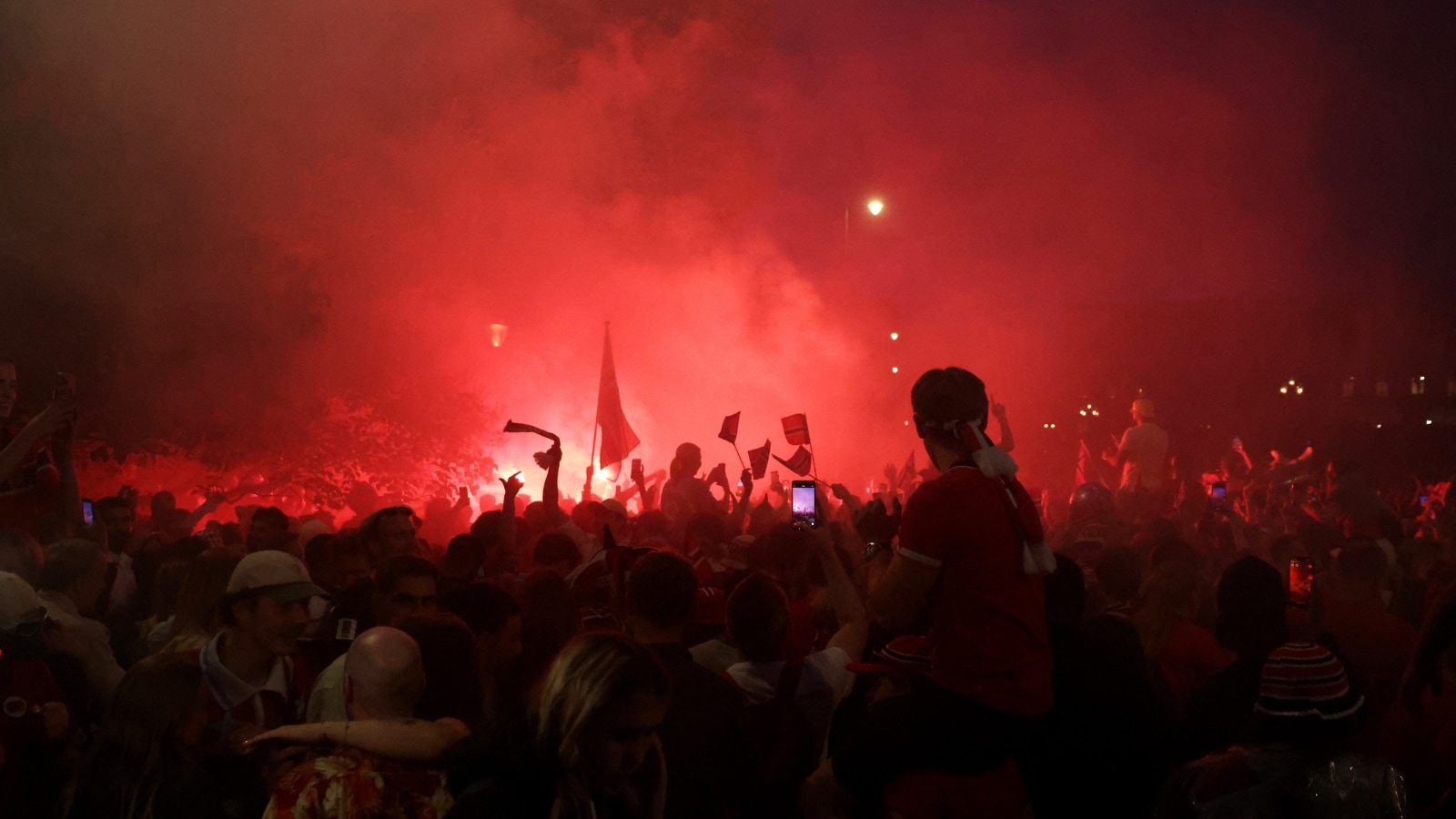
The phrase belongs to the desperate. For decades, Mexican football fans have whispered "Y si sí"—and what if we actually do it—as a protective shield against inevitable disappointment. It is a linguistic shrug of the shoulders, a manifestation of hope when logic dictates surrender. Yet, during the European Championship, Spanish national team coach Luis de la Fuente did something extraordinary. He hijacked this piece of Mexican folklore, imported it to Madrid, and used it to dismantle France.
By analyzing this psychological theft, we uncover a deeper truth about modern football. Spain did not just win Euro 2024 because of tactical superiority or the explosive wings of Lamine Yamal and Nico Williams. They won because De la Fuente systematically dismantled the traditional, arrogant identity of Spanish football and replaced it with a hungry, underdog mentality borrowed directly from the streets of Mexico City.
The Anatomy of a Coping Mechanism
To understand why De la Fuente’s use of "Y si sí" was so radical, one must understand its origin. In Mexico, the phrase is not a statement of confidence. It is a plea.
Mexican football history is defined by the tragedy of the near-miss. The national team has spent generations knocking on the door of the elite, only to have it slammed on their fingers. "Y si sí" became the ultimate rallying cry before matches where Mexico faced football royalty. It was the verbal equivalent of buying a lottery ticket. You know the odds are microscopic, but the act of holding the ticket brings a fleeting moment of warmth. It was used when Mexico faced Germany in 2018, and during countless Gold Cup scares.
It represents a culture accustomed to punching above its weight but rarely staying in the ring.
When a Spanish coach, managing a nation with three European Championships and a World Cup in its trophy cabinet, utters those words, the context changes entirely. It ceases to be a prayer. It becomes a psychological weapon. De la Fuente took a phrase designed to soften the blow of failure and turned it into an engine of execution.
The Tactical and Psychological Vacuum Post Luis Enrique
Spain entered the post-2022 era suffering from an identity crisis. Under Luis Enrique, the team had become a caricature of itself. They passed opposition teams to death, but died of boredom themselves. The tiki-taka philosophy, once a revolutionary force, had ossified into a dogmatic religion.
Spain believed they were superior. This intellectual superiority complex was their undoing.
Spain's Evolution: Dogma vs. Pragmatism
┌─────────────────────────────────┐      ┌─────────────────────────────────┐
│        The Luis Enrique Era     │      │     The De la Fuente Formula    │
├─────────────────────────────────┤      ├─────────────────────────────────┤
│ • Dogmatic possession (80%+)    │  ──> │ • Direct verticality            │
│ • Intellectual superiority      │      │ • Emotional pragmatism ("Y si sí")│
│ • Rigid positional play         │      │ • Dynamic wing play             │
└─────────────────────────────────┘      └─────────────────────────────────┘
De la Fuente, a coach with no glittering club pedigree but decades of experience in the Spanish youth systems, understood that the national team needed to sweat. They needed to shed the aristocratic robes of possession for possession's sake. They needed to feel like underdogs again.
He did not have a squad of Ballon d'Or winners. He had a teenager from Rocafonda and an athletic winger from Bilbao. He had a midfield anchor in Rodri who worked with the quiet efficiency of a diesel engine. To make this team work, De la Fuente had to rid them of the fear of losing. He had to make them embrace the chaos of the unknown.
By adopting "Y si sí" before the semi-final against a star-studded French team led by Kylian Mbappé, De la Fuente was telling his players to forget the tactical textbooks. He was asking them to embrace the sheer, unadulterated joy of the possibility of winning.
The Press Room Hijacking in Munich
The moment occurred in the bowels of the Allianz Arena. The Spanish press corps, used to the combative, twitchy press conferences of Luis Enrique, sat before a calm, balding man who looked more like a bank manager than a football revolutionary.
When asked about the threat of France, a team that had reached three of the last four major tournament finals, De la Fuente did not offer tactical platitudes. He did not talk about low blocks or transition phases.
He smiled. "Y si sí," he murmured.
The reaction in Mexico was immediate. Social media exploded with a mix of bemusement and irritation. This was their phrase. It was the intellectual property of a footballing nation that has suffered enough to earn the right to use it. To see a European giant adopt it felt like cultural gentrification.
But De la Fuente knew exactly what he was doing. He was relieving his young squad of the immense pressure of Spanish expectation. For twenty-four hours, Spain were not the favorites who had to uphold the honor of the 2010 golden generation. They were just eleven guys asking a simple question.
And what if we win?
How the Borrowed Mantra Translated to the Pitch
The beauty of De la Fuente's psychological play is that it mirrored Spain's tactical shift. Under previous managers, Spain played with a paralyzing fear of making a mistake. Pass sideways. Recycle. Keep the ball. Do not take a risk because a turnover violates the philosophy.
"Y si sí" is the footballing equivalent of a direct vertical pass.
It is Lamine Yamal cutting inside on his left foot from thirty yards out against France. Logic dictates he should pass to the overlapping fullback. The manual says a seventeen-year-old does not shoot from there against Mike Maignan. But the internal monologue of that specific Spanish team had changed.
What if it goes in?
The Anatomy of Lamine Yamal's Goal vs. France
1. Yamal receives the ball on the right flank.
2. He cuts inside, ignoring the safe lateral passing option.
3. Instead of recycling possession, he calculates the low-probability shot.
4. The strike curves into the top-left corner.
5. The manifestation of the "Y si sí" mindset in a single motion.
It did. The ball kissed the post and changed the trajectory of Spanish football history.
Nico Williams played with the same reckless abandon on the opposite wing. He did not wait for the team to slowly suffocate the opponent. He ran at his defender. If he lost the ball, he ran at him again. The entire squad played with a liberating lack of reverence for the occasion. They played like a team that had nothing to lose, which is the ultimate illusion for a country as historically successful as Spain.
The Bitter Irony of Footballing Migration
There is a profound irony in how this played out for Mexico. While Spain used the phrase to propel themselves to a European title, the Mexican national team was experiencing one of the darkest periods in its modern history.
Eliminated in the group stage of the 2022 World Cup, followed by a disastrous Copa América campaign, Mexican football has never felt further from the elite. The phrase "Y si sí" has turned sour in its homeland. It is no longer a source of romantic hope; it has become a mockery of a system that refuses to fix its structural rot.
While Mexico continues to prioritize commercial friendlies in the United States over sporting development, their psychological coping mechanisms are being exported and weaponized by the nations they dream of emulating.
It proves that tactics are only half the battle. You can copy a training drill, you can buy the same GPS tracking vests, and you can hire the same video analysts. But you cannot easily replicate the emotional frequency of a team that believes in its own myth. De la Fuente understood that Spain's old myth was dead. He needed a new one, even if he had to steal it from across the Atlantic.
The New Blueprint for International Management
The success of Spain’s campaign offers a harsh lesson to international managers who obsess over tactical dogmatism. In the brief, intense windows of international tournaments, there is no time to implement a complex, club-style tactical system.
The best international coaches are not tacticians; they are vibes managers.
They are psychologists who can convince twenty-six millionaire athletes to buy into a collective delusion for four weeks. Lionel Scaloni did it with Argentina by turning the squad into a Praetorian guard for Lionel Messi. Didier Deschamps has done it for years with France by managing egos and playing a cold, calculating brand of tournament football.
De la Fuente did it by making Spain play with the hunger of an underdog. He took the pressure off their shoulders and placed it on the opposition. By the time England met Spain in the final, the English players looked exhausted by the weight of their history. The Spanish players looked like they were having the time of their lives on a public park pitch.
When Mikel Oyarzabal slid in to score the winning goal in the eighty-sixth minute of the final, it was not the culmination of a decade of tactical planning. It was the result of a team that kept asking the same simple question, over and over, until the universe finally answered.