You stand on the edge of a bridge, adrenaline pumping, trusting that the people you paid know exactly what they're doing. You assume the harness is secure. You assume the math adds up. Most of all, you assume the rope is actually tied to you.
A horrifying incident at the Ponte do Esqueleto (Skeleton Bridge) in São Paulo, Brazil, proved that these basic assumptions can be fatal. A 21-year-old physical education graduate named Maria Eduarda Rodrigues de Freitas died after jumping from a height of roughly 130 feet. The reason is as baffling as it is tragic. The crew simply forgot to attach the safety rope before launching her off the platform. In similar news, we also covered: What Most Brits Get Wrong About the Latest Thailand Travel Warnings.
This wasn't a mechanical failure. The equipment didn't snap. It was sheer, catastrophic human error. If you're someone who loves chasing adrenaline rushes on vacation, this tragedy exposes a massive blind spot in the global adventure tourism industry that you need to know about.
Anatomy of a Preventable Disaster at Skeleton Bridge
The Skeleton Bridge, located between Limeira and Cordeirópolis, is a well-known hub for extreme sports. It's an abandoned railway bridge that has become a magnet for rope jumping and bungee jumping enthusiasts. On a Saturday morning, Maria Eduarda arrived at the site, excited for the jump. She even posted a lighthearted photo on her Instagram stories showing her wristbands, jokingly asking who was crazy enough to let her jump off a bridge. Lonely Planet has provided coverage on this critical topic in great detail.
Minutes later, that joke turned into a nightmare.
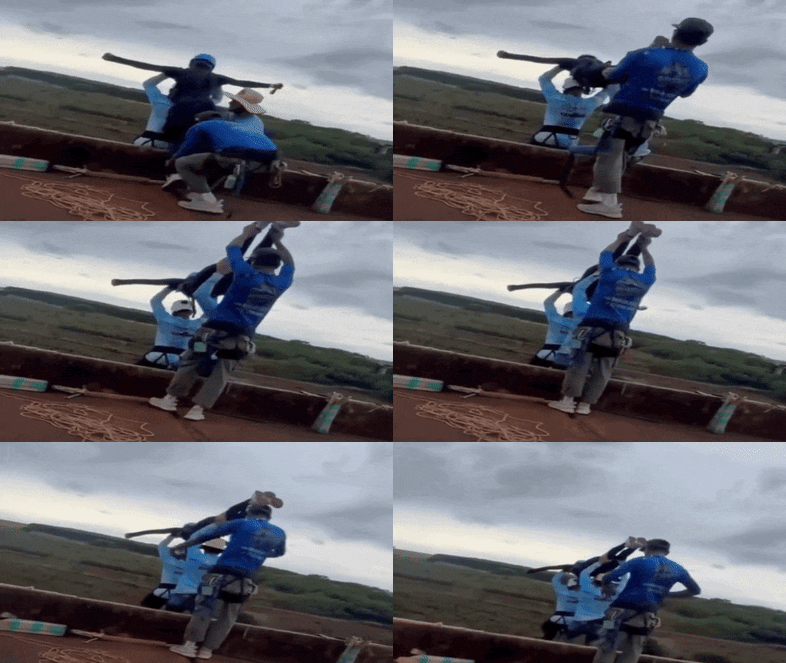
Video footage captured by bystanders shows the crew handling the activity, wearing T-shirts branded with the company name, "Entre Cordas." In the footage, the operators calmly guide Maria Eduarda to the edge and launch her. On the ground right next to them, the safety rope sits completely unattached.
The horror in the video is immediate. A split second after she goes over the edge, bystanders start screaming frantically, "The rope, people, the rope!"
She fell the entire 40 meters to the ground, sustaining multiple fatal injuries. Emergency responders rushed to the scene, but there was nothing they could do. She was pronounced dead on the trail beneath the bridge. Following the plunge, two of the operators fled into the surrounding woods, prompting a police search involving a helicopter. Authorities eventually arrested six people connected to the operation, and the company quickly deleted its social media presence.
The Illusion of Safety in Adventure Travel
When you sign up for an extreme sport, you expect a certain level of risk. You sign a waiver acknowledging that things can go wrong. But there's a line between inherent sport risk and criminal negligence.
The Entre Cordas company was charging roughly $35 per jump and had several more dates advertised for the upcoming months. For a budget price, participants trusted an organization with their lives. The reality is that adventure tourism regulations vary wildly depending on where you are in the world.
In some countries, extreme sports operators are subjected to rigorous, surprise government inspections, strict licensing laws, and mandatory redundant safety checks. In other places, anyone can buy equipment, set up a social media page, and start throwing people off bridges. The Skeleton Bridge is an unmonitored, abandoned piece of infrastructure. That alone should have been a red flag, but the presence of an organized company with matching uniforms gave a false sense of legitimacy.
This isn't an isolated issue unique to Brazil. From unregulated ziplines in Central America to sketchy scuba operators in Southeast Asia, the global adventure market is filled with outfits running on shoe-string budgets and minimal oversight.
The Safety Red Flags You Cannot Ignore
You don't have to stop seeking adrenaline, but you do have to stop outsourcing your survival entirely to strangers. If you plan on doing any extreme sports on your travels, you need to spot the warning signs before you put on a harness.
- No redundant checks: A legitimate operation always uses a two-person verification system. One person hooks you up, and a second, independent guide checks the work. If one guy does everything while chatting with his buddies, step away.
- The price is too low: High-quality climbing ropes, heavy-duty harnesses, and liability insurance cost a lot of money. If a company offers an extreme experience for the price of a casual dinner, they're cutting corners somewhere. It's usually on staff training or equipment retirement.
- Chaos at the launch site: Watch the crew operate before it's your turn. Are they distracted? Are they rushing people through like a factory line? In the Brazil video, the environment looked casual, almost careless. Distraction kills.
- No physical base or clear licensing: If an operator functions entirely out of the back of a truck at an abandoned location and has no official licensing displayed, you are gambling with your life.
How to Protect Yourself Before the Jump
Don't just look at Instagram photos or TripAdvisor reviews to judge an adventure company. Reviews tell you if people had fun, not if the gear was inspected yesterday.
First, ask about their safety protocols. Ask them directly who inspects their gear and how often. A professional company will be proud to tell you about their safety standards. If they get defensive or shrug it off, take your business elsewhere.
Second, use your own eyes. When you're being hooked up to a system, look at the connections. In rope jumping or bungee jumping, there should be a primary attachment and a secondary backup. If you look down and see an empty carabiner or a rope lying flat on the deck that should be attached to your waist, speak up. Never let a guide rush you or make you feel stupid for asking questions.
What happened to Maria Eduarda Rodrigues de Freitas wasn't a freak accident. It was the predictable outcome of an unregulated operator ignoring basic safety habits. Let it be the reason you look twice, ask the hard questions, and refuse to jump if something feels off.