History isn't just buried in dust. Sometimes it sits right on the surface, waiting for modern bulldozers to wreck it.
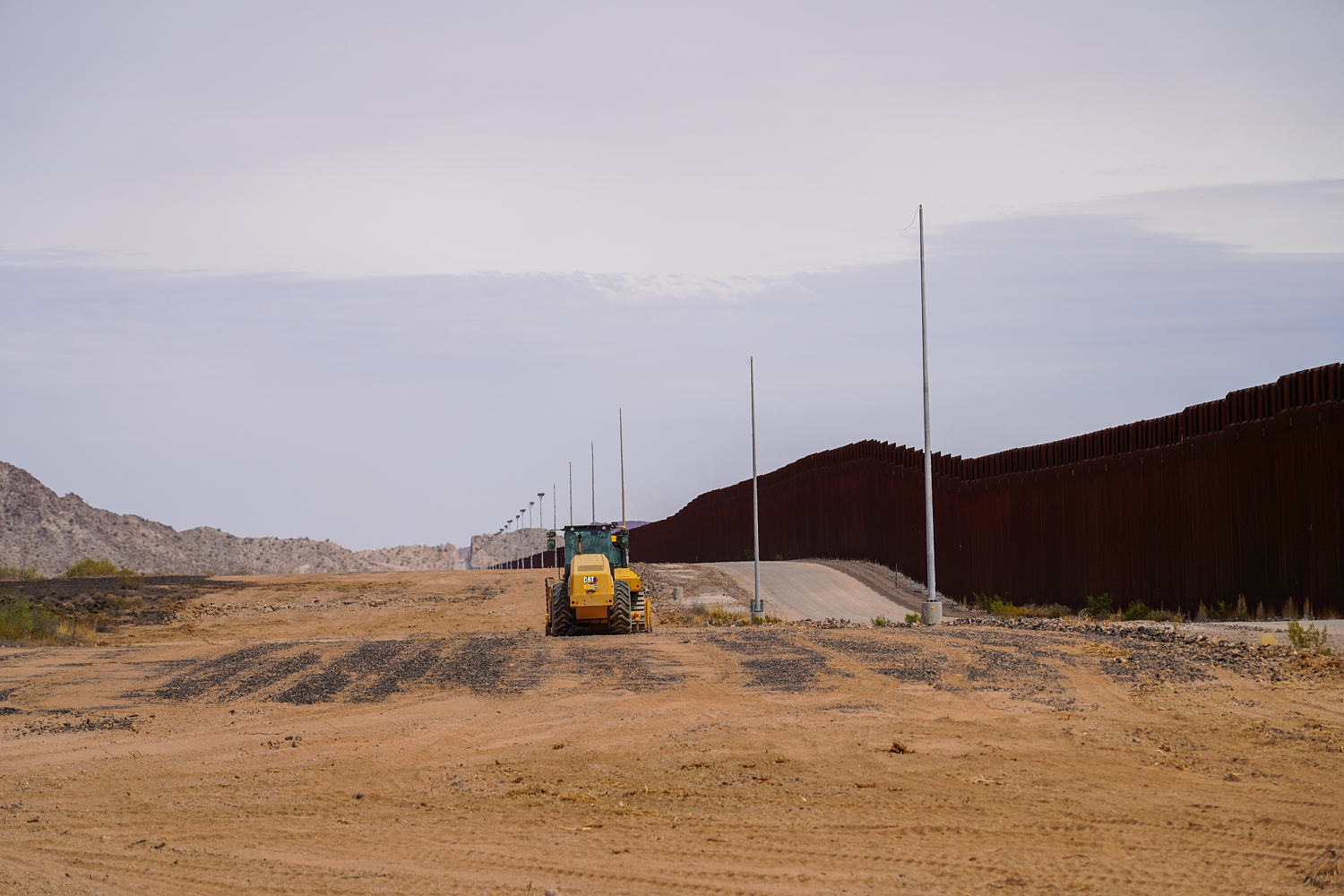
When construction crews rolled heavy machinery across the Sonoran Desert to build sections of the United States-Mexico border barrier
Why Trump Border Wall Construction Damaged Ancient Ground Carvings Older Than Stonehenge
news
Bulldozers don't care about history. When heavy machinery rolled across the arid expanses of Arizona and New Mexico during the push to expand the southern border wall, the mission was speed and containment. Heritage sites stood in the path. Ancient treasures paid the price.
Centuries before Stonehenge took shape in England, Indigenous communities etched massive geometric and zoomorphic designs directly into the desert floor across the American Southwest. These geoglyphs, known as intaglios, are sacred. They are fragile. They are irreplaceable. Yet, during the rapid deployment of border infrastructure, parts of these ancient ground carvings were sliced through, gouged, and permanently altered by construction crews clearing terrain and laying heavy barriers.
You hear a lot about border policy through a political lens. Security versus humanitarian concerns. Budget allocations versus enforcement strategies. But a massive piece of the conversation gets left out entirely: the irreversible destruction of irreplaceable archaeological heritage.
The Quiet Crisis in the Desert
Let us be completely honest about how land management works during a national emergency declaration. Environmental and historical protection laws routinely get sidelined or fast-tracked. When billions of dollars flow into an expedited construction project, federal oversight shrinks.
Archaeologists and Tohono O'odham tribal members watched in horror as heavy equipment tore through sensitive ecological and cultural zones. These aren't just piles of dirt. Intaglios are created by scraping away the dark desert varnish—a thin, oxidized coating on surface pebbles—to reveal the lighter soil underneath. Once disturbed or crushed by heavy tracks, the visual record of a culture that thrived thousands of years ago vanishes forever. You cannot patch an intaglio. You cannot pave over it and pretend it is fine.
The damage inflicted during the border wall construction wasn't just an unfortunate accident. It was the predictable result of ignoring cultural resource surveys to meet arbitrary political deadlines.
Why Ancient Geoglyphs Matter
Most people look at the desert and see empty space. That is a massive mistake. For Indigenous nations, the landscape is a living archive.
Intaglios serve as spiritual markers, astronomical calendars, and maps of ancestral memory. Some scholars date certain southwestern ground carvings back more than four thousand years. To put that in perspective, these earthworks were meticulously crafted when ancient Egyptians were just beginning to figure out monumental stone architecture.
When construction equipment cuts a scar straight through an ancient geoglyph, it severs a direct physical link to the past. It erases the handiwork of artists and spiritual leaders whose descendants still view those lands as sacred.
Federal agencies like Customs and Border Protection have legal obligations to consult with Native American tribes before undertaking destructive projects on public lands. During the height of the wall construction rush, those consultations were bypassed, rushed, or treated as mere bureaucratic checkboxes rather than meaningful dialogues.
The Legal Blind Spots and Expedited Waivers
How did this actually happen legally? The answer lies in the REAL ID Act of 2005. This legislation gave the Department of Homeland Security sweeping authority to waive dozens of federal laws—including the National Environmental Policy Act, the Endangered Species Act, and the National Historic Preservation Act—to expedite physical barriers along the border.
When a waiver gets signed, environmental reviews vanish. Historic preservation mandates disappear. Contractors operate with zero federal oversight regarding what lies beneath their treads.
This isn't just about one administration or a single construction season. It exposes a systemic flaw in how national security priorities can completely override cultural preservation. When the law explicitly permits the destruction of archaeological sites in the name of border enforcement, history loses every single time.
What Actually Needs to Happen Now
Stopping further destruction requires holding federal agencies accountable to standard archaeological protocols. Even in high-security zones, mandatory cultural resource monitoring must be non-negotiable.
If you care about protecting our shared human heritage, pay attention to local tribal sovereignty fights. Support organizations like Archaeology Southwest that actively document, monitor, and fight for the preservation of vulnerable desert landscapes. Demand that future infrastructure projects incorporate archaeologists before the bulldozers start moving, not as an afterthought when the damage is already done.
History once lost can never be reclaimed. We need to stop trading our deepest ancestral roots for temporary political theater.