The air at the state line does not care about jurisdiction. Up on the high desert plateau where Colorado bleeds into Utah, the wind moves with a fierce, unpredictable autonomy. It whips through the canyonlands, carrying the scent of dry sage, baked red dirt, and, too often, the sharp tang of pine smoke.
To a traveler driving through, it is a place of breathtaking, silent majesty. But to the people who live here, and to the thin ribbon of men and women who defend it, this landscape is a beautiful beast. When it catches fire, it devours.
We tend to look at wildfires from a safe, digital distance. We see satellite maps painted with ominous red blobs, text alerts flashing on our phones, and standard news tickers detailing acreage burned and containment percentages. The language of modern tragedy has become sterile. We read words like incident command, resource allocation, and fatality report, and our brains file them away as statistics.
But statistics do not bleed. They do not leave behind boots by the front door, or empty chairs at the breakfast table, or a profound, echoing silence in a small-town firehouse.
The Weight of the Yellow Shirt
Step into the boots for a moment. Imagine a hypothetical young wildland firefighter—let’s call him Ethan. He is twenty-three, possesses knees that do not yet ache, and carries a heart full of that specific, stubborn altruism unique to the young.
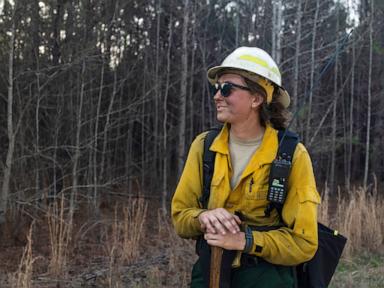
His uniform is a heavy Nomex shirt, colored a distinct, high-visibility yellow. It smells permanently of campfires and sweat. When the call comes in, Ethan does not think about the invisible line separating one state from another. He does not consider funding structures or bureaucratic boundaries. He only sees the column of black smoke rising against the blue West, a dark pillar signaling that someone’s livelihood, or someone’s life, is in immediate peril.
Wildland firefighting is not like structural firefighting. There are no hydrants in the backcountry. There are no ladders to throw against burning windows. Instead, it is a brutal, manual war of attrition fought with chainsaws, McLeod tools, and bare hands. You dig dirt. You cut brush. You hike up 40-degree slopes carrying forty pounds of gear while the ambient temperature hits triple digits, and the fire itself creates its own terrifying weather system.
It is exhausting, bone-crushing work. But more than the physical toll, it is an exercise in profound vulnerability. You are entirely at the mercy of the atmosphere. A sudden shift in wind direction—a single, erratic gust off the desert floor—can turn a controlled line into a death trap in a matter of seconds.
That is the invisible stake every time the crew steps off the transport truck. They are trading their safety for a stranger's horizon.
When the Ridge Went Silent
The history of the Colorado-Utah border is etched with the memories of those who went into the smoke and never walked out. Years ago, a specific ridge on this rugged frontier became holy ground. A fire, fueled by historic drought and whipped by a sudden, demonic front, trapped a crew trying to establish a firebreak.
The radio traffic from that afternoon tells a story of rising tension, sudden realization, and then, the most terrifying sound in the world: static.
When the smoke finally cleared, lives had ended. The fire had passed, leaving behind a blackened, smoking scar on the earth and a devastating void in communities hundreds of miles away. The news reports that followed were standard, dutiful, and brief. They listed the names, the ages, the hometowns. They held the facts up to the light, but they missed the soul.
They missed the fact that one of the fallen firefighters was supposed to get married three weeks later. They missed the reality of a father who would never teach his daughter how to cast a fly rod into the roaring fork of the river. They missed the crushing weight of the grief that settles into a community when its protectors are taken all at once.
This is the true cost of fire season. It is not measured in the millions of dollars spent on retardant drops or the logistics of moving engine crews across the country. It is measured in the quiet, agonizing adjustments made by the families left behind, trying to navigate a world that keeps spinning even though their universe has ground to a complete, violent halt.
The Gathering at the Frontier
Recently, the living returned to the border. They did not come to fight a fire this time, but to fight the collective amnesia that threatens to wash away the sacrifices of the past.
A memorial service on the state line is a stark affair. There are no cathedral ceilings or stained-glass windows. Instead, the sky serves as the roof, and the red dust of the desert floor acts as the carpet. Hundreds of people gathered—current firefighters with their yellow shirts pristine for once, family members holding creased photographs, and locals who simply wanted to say thank you to the ghosts who saved their towns.
The atmosphere was thick with a shared, unspoken understanding. In the wildland community, there is a fierce, almost monastic bond. It does not matter if you ride with a crew from Utah, an engine from Colorado, or a hotshot squad from California. If you scrape dirt in the dark, you belong to the same tribe.
During the service, a lone trumpeter played Taps. The notes did not echo; the vastness of the desert swallowed the sound almost immediately, carrying the melody out over the canyons where the fire had once raged.
It was a reminder of how small we are against this landscape, and how incredibly brave one must be to stand against it.
The Lessons Kept in the Dirt
Why do we look back? Why drag the pain of the past out into the harsh sunlight of the present?
Because memory is a shield.
Every tragedy in the backcountry teaches a lesson that is written in the dirt. The tactics changed after that fateful day on the border. The safety protocols were rewritten. The lookup, communication, escape routes, and safety zones—the foundational commandments of wildland firefighting—were reinforced with the gravity of lost lives.
To forget the people who died is to forget the lessons bought with their breath. If we treat their sacrifice as a footnote in an old news cycle, we endanger the crews who are packing their bags for tomorrow's fire.
But beyond the safety manuals and the tactical shifts, the remembrance is an act of deep, human defiance. It is a statement that says: You stood between the fire and us, and we will not let the dust claim your name.
The families stood together as the sun began to dip below the canyon rims, painting the sky in shades of bruised purple and brilliant orange—the very colors of the element that had taken so much from them. There were tears, certainly. But there was also laughter. Stories were swapped about pranks played in the base camps, about terrible MRE meals shared under the stars, and about the unshakeable joy of being young and believing you could save the world.
The fire took their futures, but it could not touch the dignity of what they chose to do with their present.
The crowd slowly dispersed, trucks starting up and kicking up plumes of red dust as they headed back toward the highway, back toward their respective states. The flags at the memorial site fluttered in the evening breeze. The state line went back to being invisible, just a line on a map that meant nothing to the wind, nothing to the fire, and absolutely nothing to the love that remains behind.