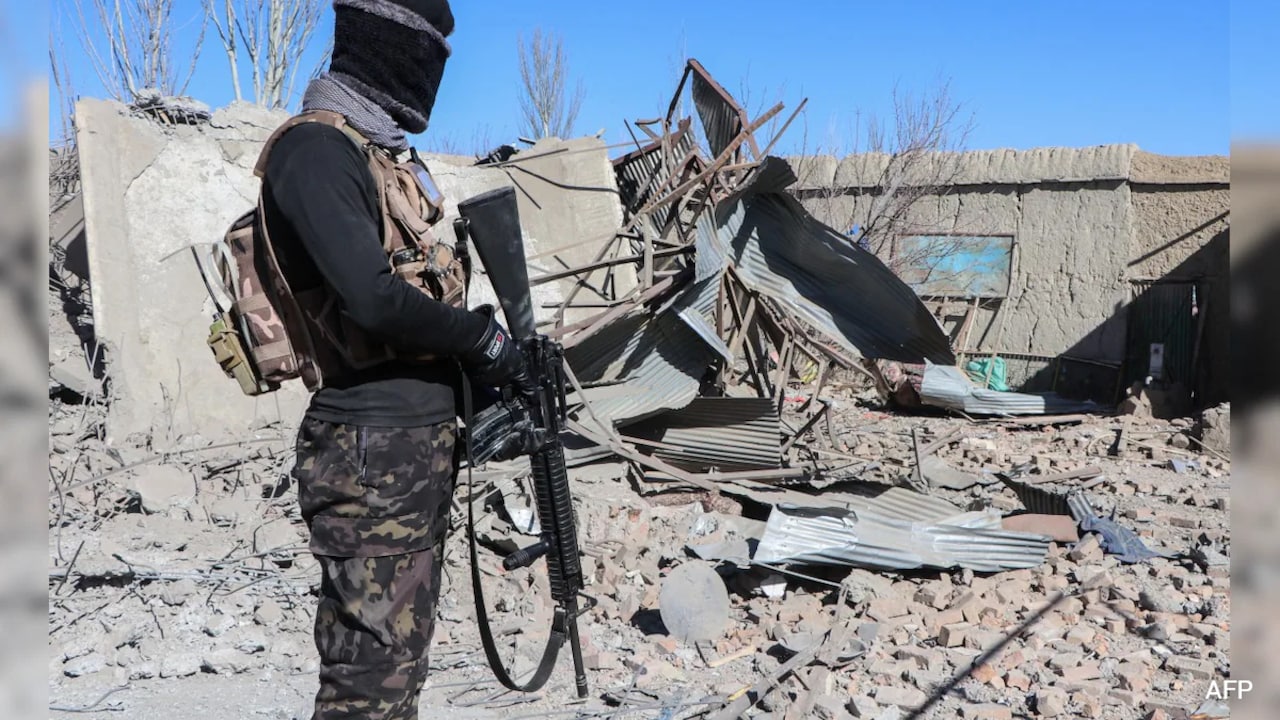
The explosions do not begin in the capitals. They start in the dirt, along a jagged scar cut through mountains where maps hold very little power. When air strikes hit or artillery shells land near disputed ridges, the shockwaves travel far beyond the immediate blast radius. They ripple through intelligence headquarters, diplomatic cables, and tribal networks that predate modern states. For decades, the boundary dividing Pakistan and Afghanistan has functioned less as a political demarcation and more as an open wound. Every exchange of fire is treated as an isolated incident by breathless news feeds, yet each clash is merely the latest symptom of a deep structural failure that neither side knows how to fix.
To understand why neighboring states find themselves locked in recurring cycles of military escalation, one must look past the immediate headlines of border skirmishes and drone incursions. The friction is rooted in a fundamental collision of expectations. Islamabad demands absolute security from cross-border militancy, expecting a sovereign neighbor to police its periphery with ruthless efficiency. Kabul, operating under a government that emerged from decades of asymmetric warfare, views territorial sovereignty as non-negotiable and rejects external pressure as an infringement on its authority. This ideological deadlock turns every security crisis into a contest of pride, where backing down is perceived as fatal weakness. You might also find this connected article insightful: The Voice in the Static And the Long Road to the Altar.
History Written In Barbed Wire
Borders are rarely neutral lines. They are political artifacts born from conquest, administrative convenience, or colonial ambition. The boundary separating Pakistan and Afghanistan is perhaps the most contested artifact of its kind in South Asia. Drawn by British colonial administrators in the late nineteenth century, the Durand Line sliced directly through traditional ethnic homelands, splitting Pashtun communities across two distinct administrative domains. Successive governments in Kabul have historically refused to recognize the legitimacy of this boundary, viewing it as an imposition born of empire rather than a mutually agreed frontier.
Pakistan inherited this porous perimeter upon independence and quickly realized its defensive vulnerability. For decades, the strategy relied on strategic depth, a doctrine that sought friendly regimes in Kabul to prevent a two-front geopolitical encirclement by hostile powers. That doctrine worked in theory during periods of foreign occupation, but it created monstrous downstream consequences. By nurturing and hosting proxy militant networks to maintain influence across the mountains, successive security planners cultivated a force that eventually turned inward. The militants trained to fight foreign occupiers in the valleys of Afghanistan eventually built operational alliances with domestic factions determined to overthrow the state in Islamabad. As extensively documented in recent coverage by TIME, the effects are notable.
When political dynamics shifted and a hardline ideological movement seized power in Kabul, Islamabad anticipated a compliant neighbor that would curb anti-Pakistan insurgent groups. That expectation collided with hard reality. The new rulers in Afghanistan faced their own domestic dissent, economic collapse, and intense international isolation. Suppressing ideological allies who had fought shoulder-to-shoulder with them against foreign troops was never going to be a simple administrative task. Instead of an obedient buffer state, Pakistan found itself facing a government that viewed cross-border ethnic ties and religious solidarity as more compelling than bilateral security agreements.
The Ghost Of Militancy And Miscalculation
Insurgency thrives in the spaces where governance fails. The rugged terrain stretching along the frontier provides ideal hiding spots for armed factions operating outside the control of any conventional military. The Tehrik-i-Taliban Pakistan utilizes these remote valleys as staging grounds for attacks targeting security personnel and infrastructure inside Pakistan. These assaults have escalated in frequency and lethality over recent years, draining state resources and eroding public confidence in the security apparatus.
For military planners in Islamabad, inaction is politically untenable. Domestic political pressure demands a visible response whenever armed groups strike urban centers or military outposts. Consequently, retaliatory measures—ranging from artillery shelling to targeted air operations—are authorized with increasing regularity. Yet these tactics carry massive collateral and diplomatic costs. When bombs hit civilian homes near the frontier, outrage surges across Afghanistan, fueling intense anti-Pakistan sentiment among the local population. This populist anger boxes the administration in Kabul into a corner, forcing officials to issue fiery condemnations and retaliate in kind.
This dynamic creates a dangerous feedback loop. Every military strike intended to deter future attacks instead generates new grievances, swelling the recruitment pools for militant factions. Young men who lose family members or property in cross-border kinetic actions find themselves drawn toward extremist ideologies out of a desire for vengeance or economic survival. The violence feeds itself, sustained by mutual distrust and the absence of any credible political framework to manage disputes.
Sovereignty Under Siege
Territorial integrity is the foundational currency of modern statehood. When foreign aircraft cross an international boundary to strike targets without prior authorization or bilateral coordination, the targeted government faces a profound existential dilemma. Remaining silent signals weakness and invites further incursions. Responding militarily risks a full-scale conventional escalation that neither impoverished nation can afford.
The administration in Kabul frames every cross-border operation as a direct violation of international law and an assault on national dignity. Officials point out that unilateral military actions do not solve the underlying drivers of regional instability; instead, they harden positions and close off avenues for diplomatic compromise. From this perspective, Pakistan's security demands are used as a pretext to project power and bully a weaker neighbor.
Conversely, Pakistan argues that sovereignty implies responsibility. If a sovereign state is unable or unwilling to prevent its territory from being used as a launching pad for deadly attacks against a neighbor, that neighbor retains the inherent right of self-defense under international norms. Security analysts in Islamabad argue that months of patient diplomatic engagement yielded no tangible action from Kabul to dismantle militant camps, leaving kinetic action as the only remaining instrument of deterrence.
This clash of legal and moral frameworks leaves no room for middle ground. Both arguments carry logical weight within their respective national echo chambers, yet they are completely irreconcilable. As long as Islamabad prioritizes immediate force protection and Kabul prioritizes symbolic resistance to foreign pressure, the frontier will remain a theater of perpetual friction.
Economic Fallout At The Checkpoints
Borders are not merely military zones; they are economic lifelines. The mountainous passages connecting Pakistan and Afghanistan have historically hummed with commercial traffic, facilitating trade in fresh produce, textiles, and manufactured goods. For landlocked Afghanistan, access to Pakistani ports is essential for international commerce. For Pakistan, Afghan markets represent a vital outlet for regional exports.
Whenever political tensions spike, the first casualties are the border crossings. Authorities on one or both sides frequently order closures in response to security incidents or diplomatic spats. Thousands of trucks laden with perishable goods find themselves stranded for weeks under brutal weather conditions, rotting in long queues while customs officials argue over paperwork and security protocols.
The economic toll of these disruptions is catastrophic for local merchants and ordinary citizens. Small traders who rely on daily border commerce face financial ruin, while supply chain bottlenecks drive up inflation on both sides of the frontier. Smuggling networks, meanwhile, adapt rapidly to official closures, profiting immensely from the chaos by moving contraband through illicit mountain trails completely outside state taxation or regulatory oversight.
By weaponizing trade routes as tools of political coercion, governments inflict severe economic self-harm. Merchants are alienated, local economies are crippled, and the underground war economy expands at the expense of legitimate commerce. The ordinary citizen bears the heaviest burden, caught between the heavy boot of state security and the ruthless opportunism of criminal syndicates.
The Strategic Impasse
Military solutions have exhausted their utility. Decades of counter-insurgency operations, border fencing projects, and punitive cross-border strikes have failed to deliver lasting peace. The frontier remains as volatile as ever, proving that physical barriers cannot substitute for political accommodation and genuine economic integration.
The path forward requires a fundamental shift in mindset. Both capitals must abandon the illusion of total victory or total defiance. For Pakistan, recognizing the limits of coercion is essential; kinetic actions can disrupt immediate threats, but they cannot compel a hostile regime to change its internal calculus without cooperation. For Afghanistan, acknowledging that harboring or tolerating anti-Pakistan armed groups invites continuous destabilization is equally vital for national survival.
Intelligence sharing and joint border management mechanisms, once dismissed as unworkable, offer the only viable exit from the current quagmire. These mechanisms cannot succeed in an atmosphere of open hostility; they require patient back-channel diplomacy, verifiable commitments, and a shared recognition that regional instability threatens both regimes equally.
Until political leaders muster the courage to prioritize long-term stability over short-term domestic posturing, the border will continue to bleed. Families living in the shadow of the mountains will brace for the next mortar shell, merchants will watch their goods rot at closed gates, and two nations bound by history and geography will remain locked in a destructive embrace, marching blindly toward the next avoidable crisis.